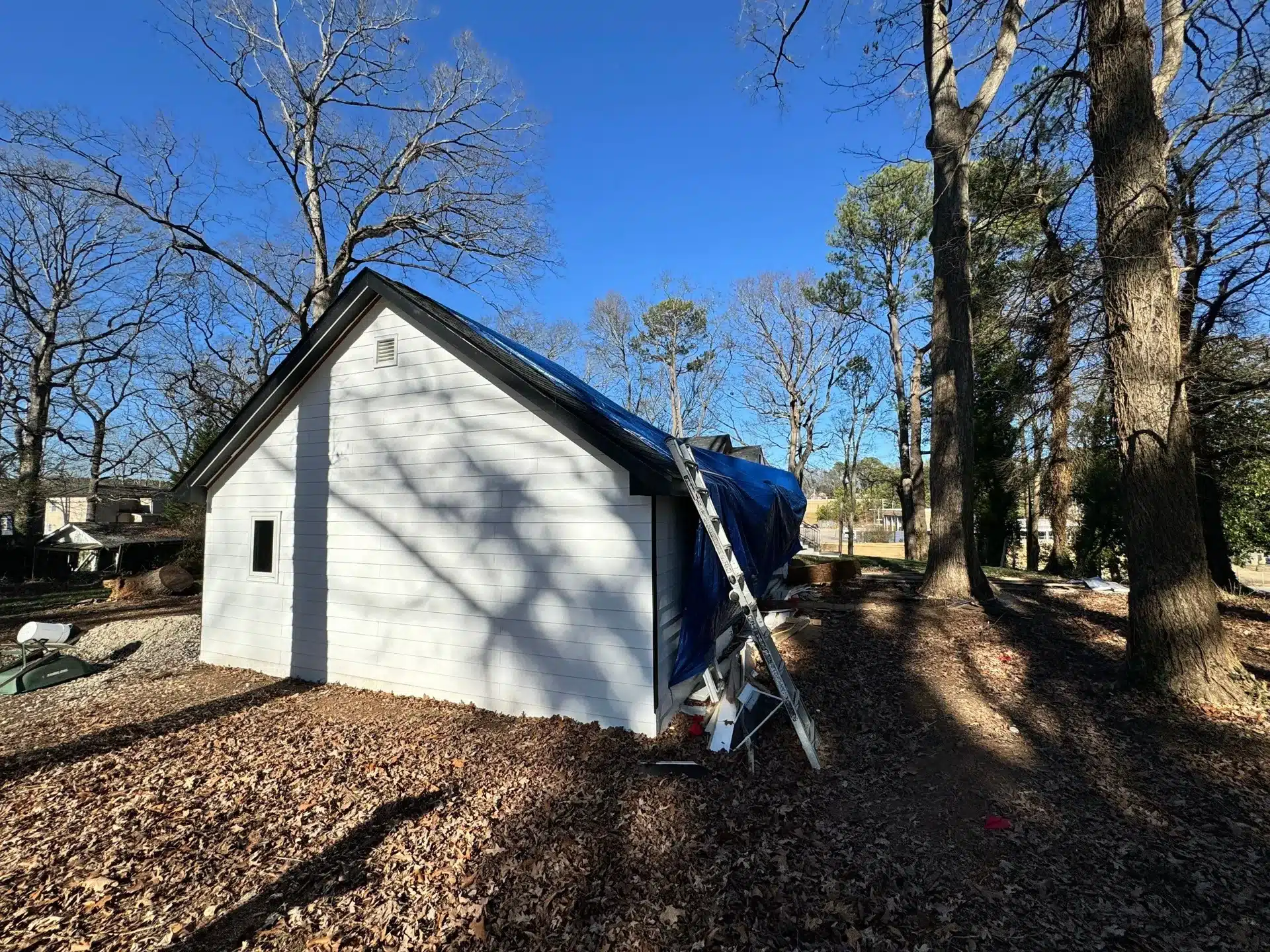
Atlanta is far enough inland to be unprepared.
Tropical storms reach north Georgia with the wind weakened and the rain intact. The damage here is water and trees, in a metro without much hurricane habit.
What a tropical storm actually does 250 miles inland.
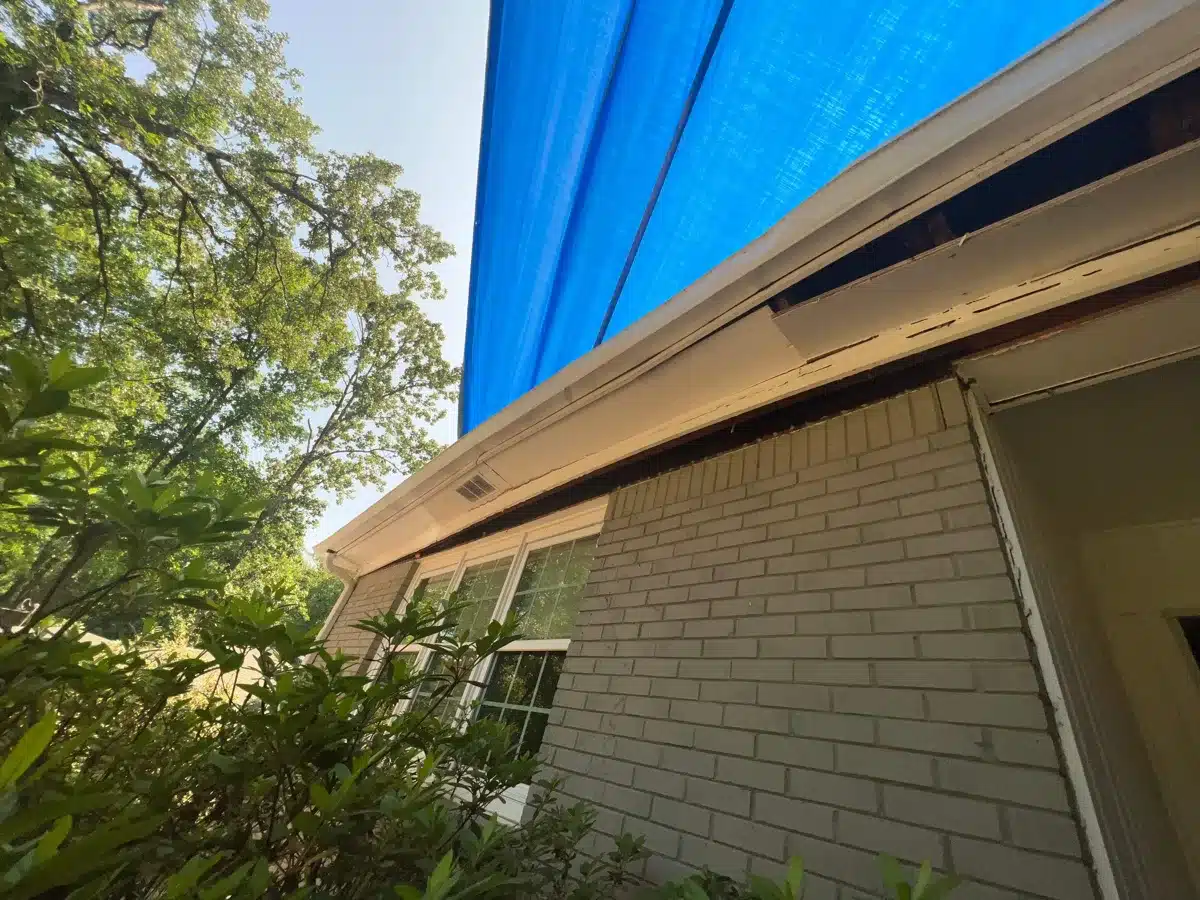
By the time a Gulf or Atlantic storm reaches the north metro, it's usually a tropical depression or its remnants. The wind has weakened. The moisture hasn't. These systems drop very heavy rain over many hours, and that's what does the damage here.
Two problems stack up. Ground already soaked has nowhere to put several more inches, so water runs into places that have never flooded before, and it brings trees down with it: a saturated root system plus moderate wind is enough to topple a mature oak that shrugged off stronger gusts in dry weather. A tree on the house is the classic inland hurricane loss.
The second is duration. Storm damage here is often a series of smaller hits over a weekend, and the total overwhelms gutters, roof drainage and basement waterproofing. Demand for restoration crews also spikes across the whole region at once, so calling early matters more than usual.
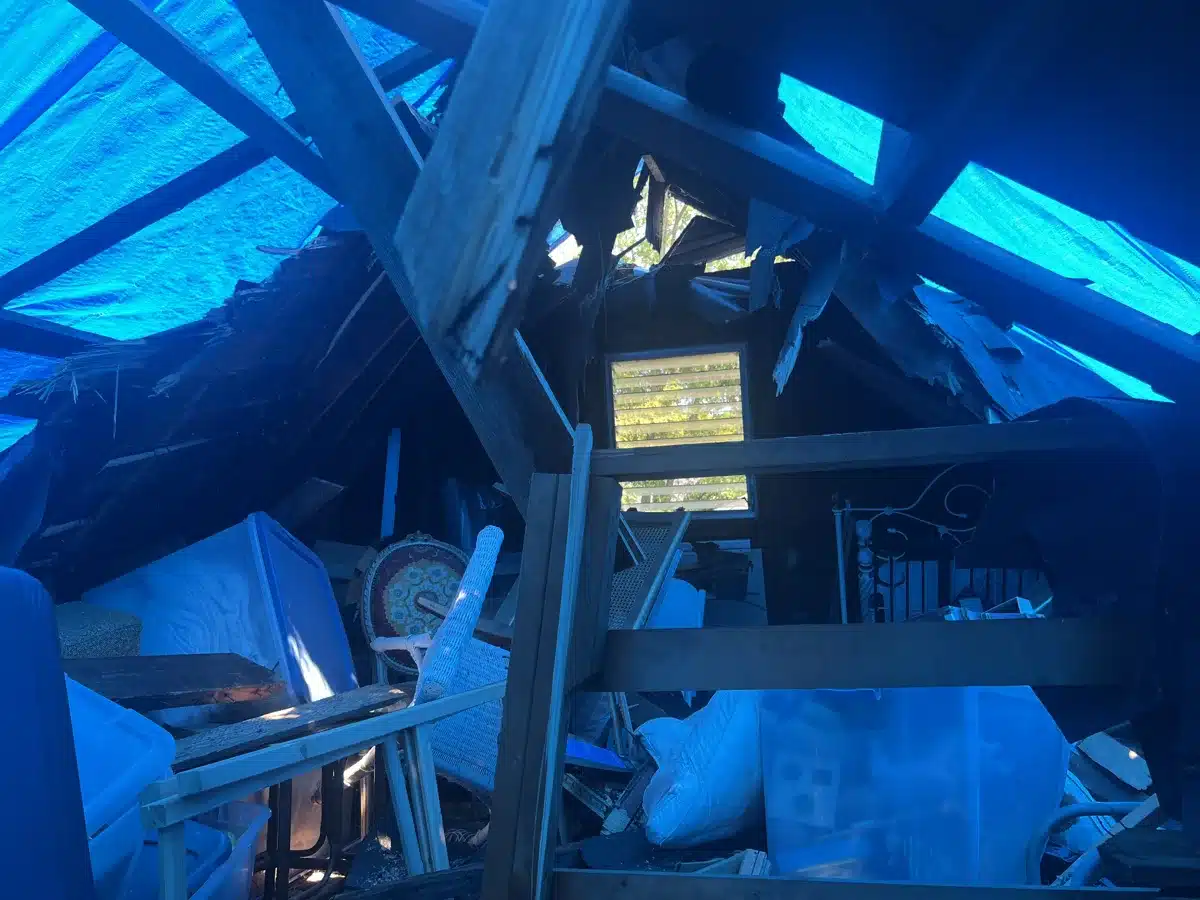
A tree strike is two losses in one.
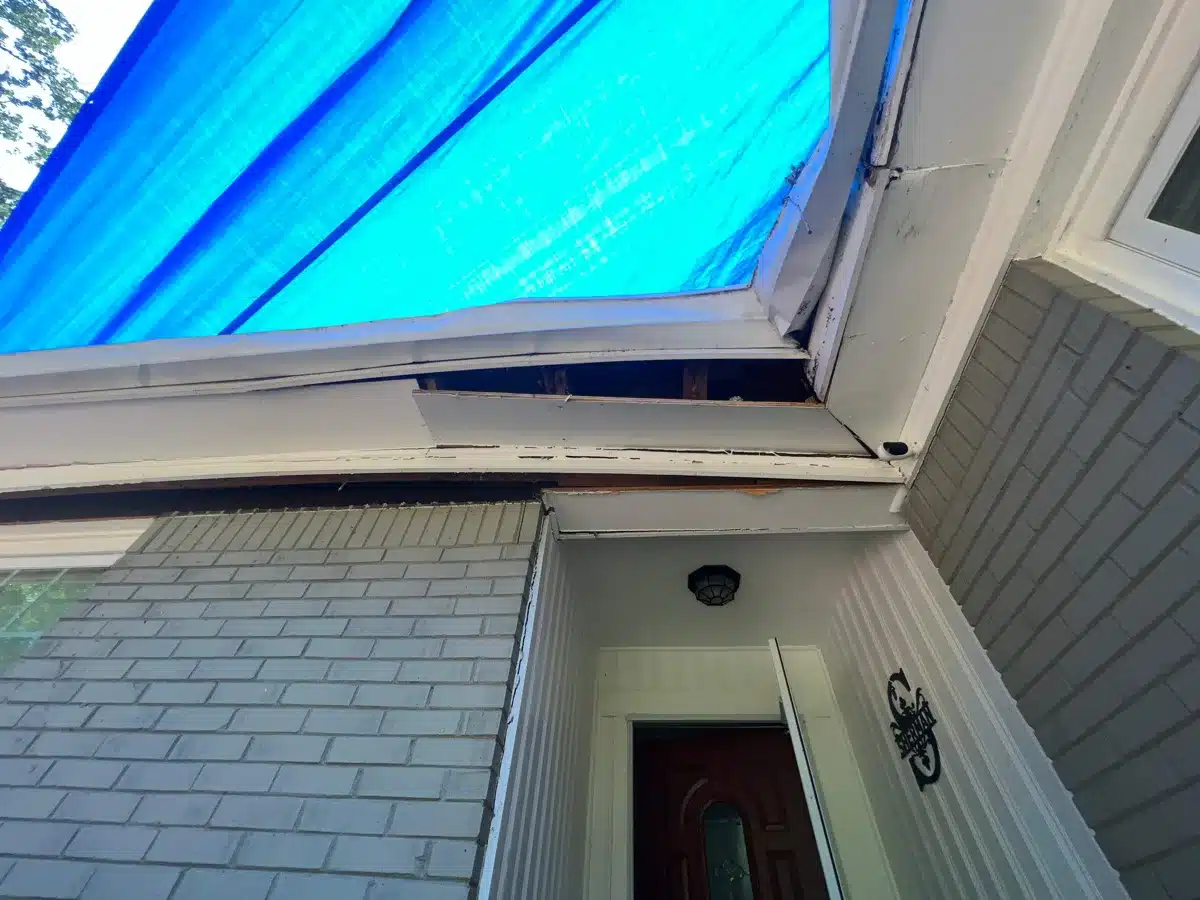
A limb through the roof causes structural damage and an opening, and the opening lets rain in for as long as the storm sits over the metro.
Both need documenting separately. The impact damage and the water damage that follows are often scoped, and argued, as separate items.
More storm damage services.
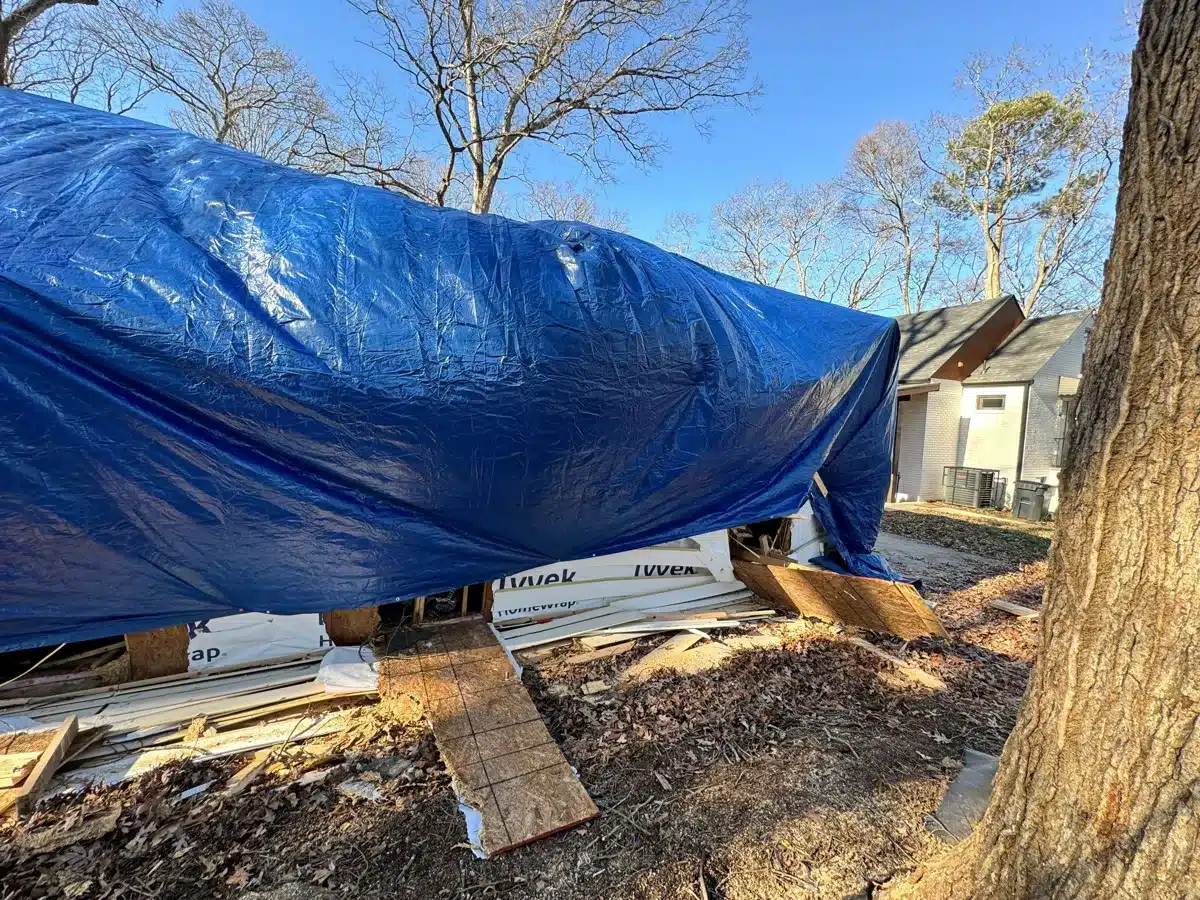
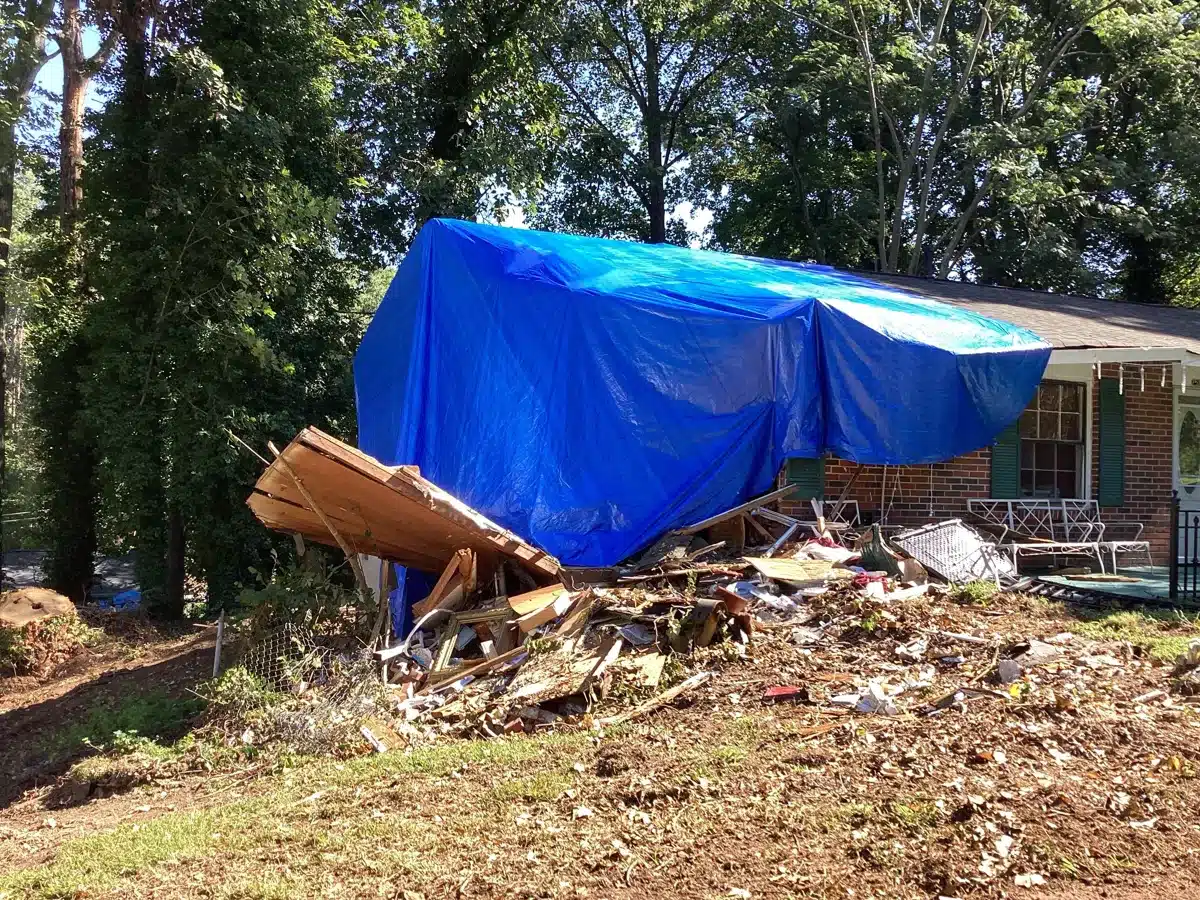 Emergency Storm Response & TarpingTarping, board-up and water extraction as soon as it's safe.
 Flood Damage RestorationWater that crossed the ground carries whatever the ground carried.
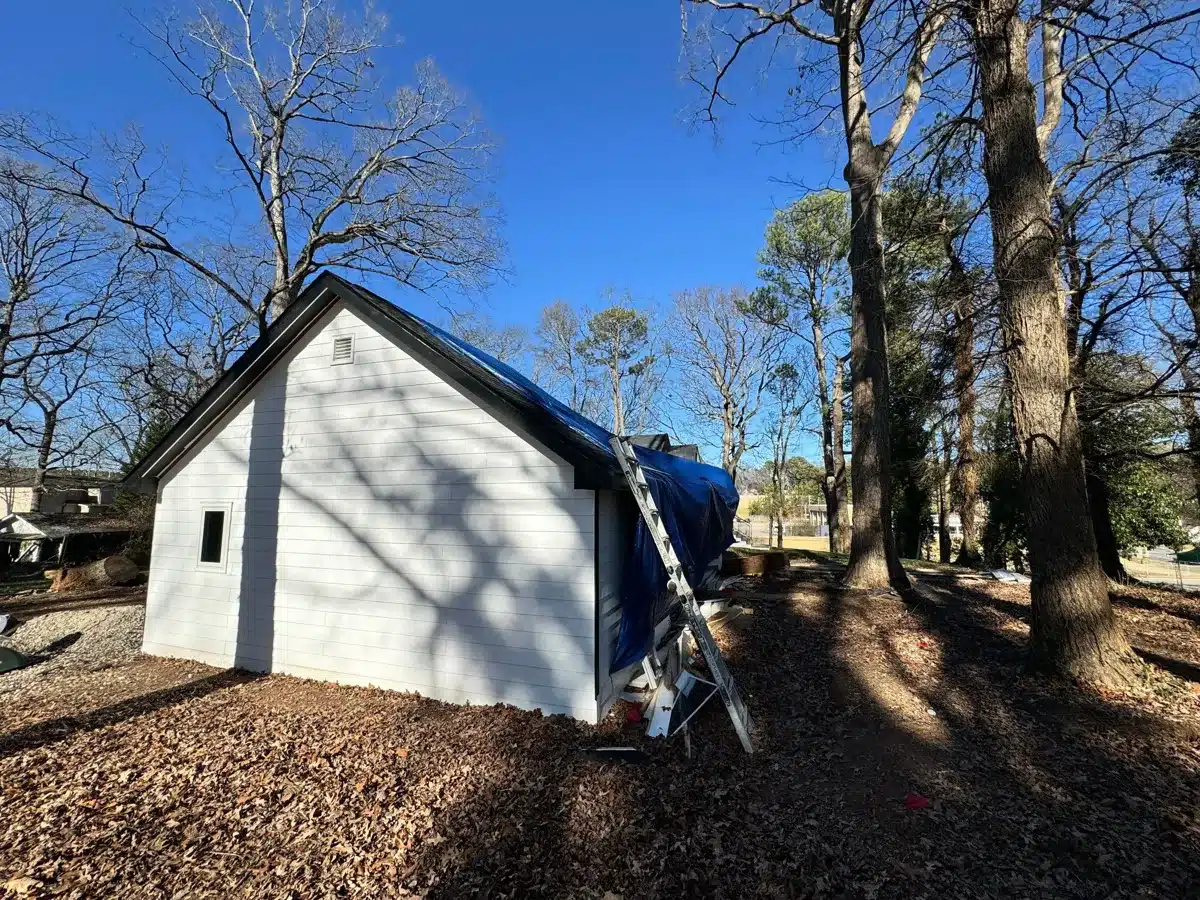 Wind Damage RepairStraight-line winds lift shingles and drop them back in place.
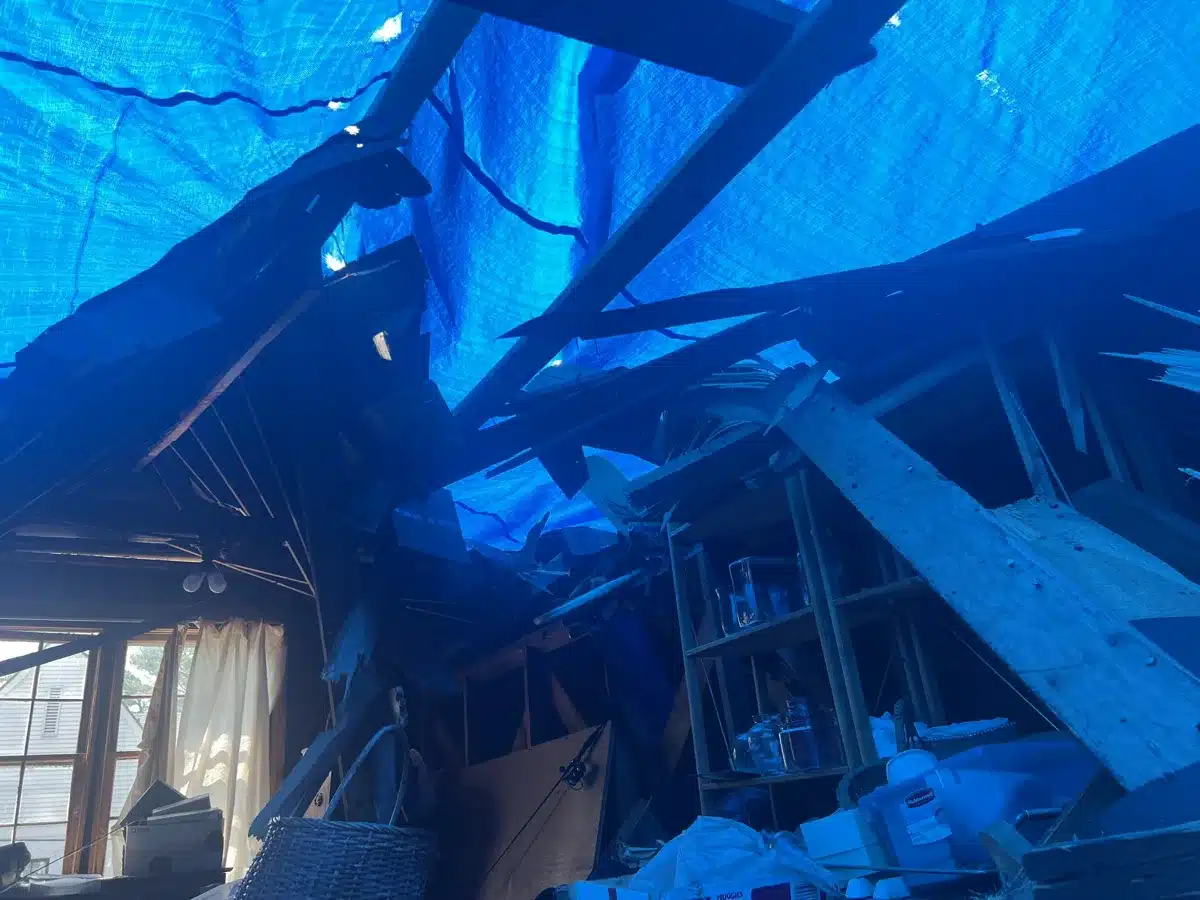 Tornado Damage RepairTornado damage is the one case where the first question is whether the building is safe to enter at all.
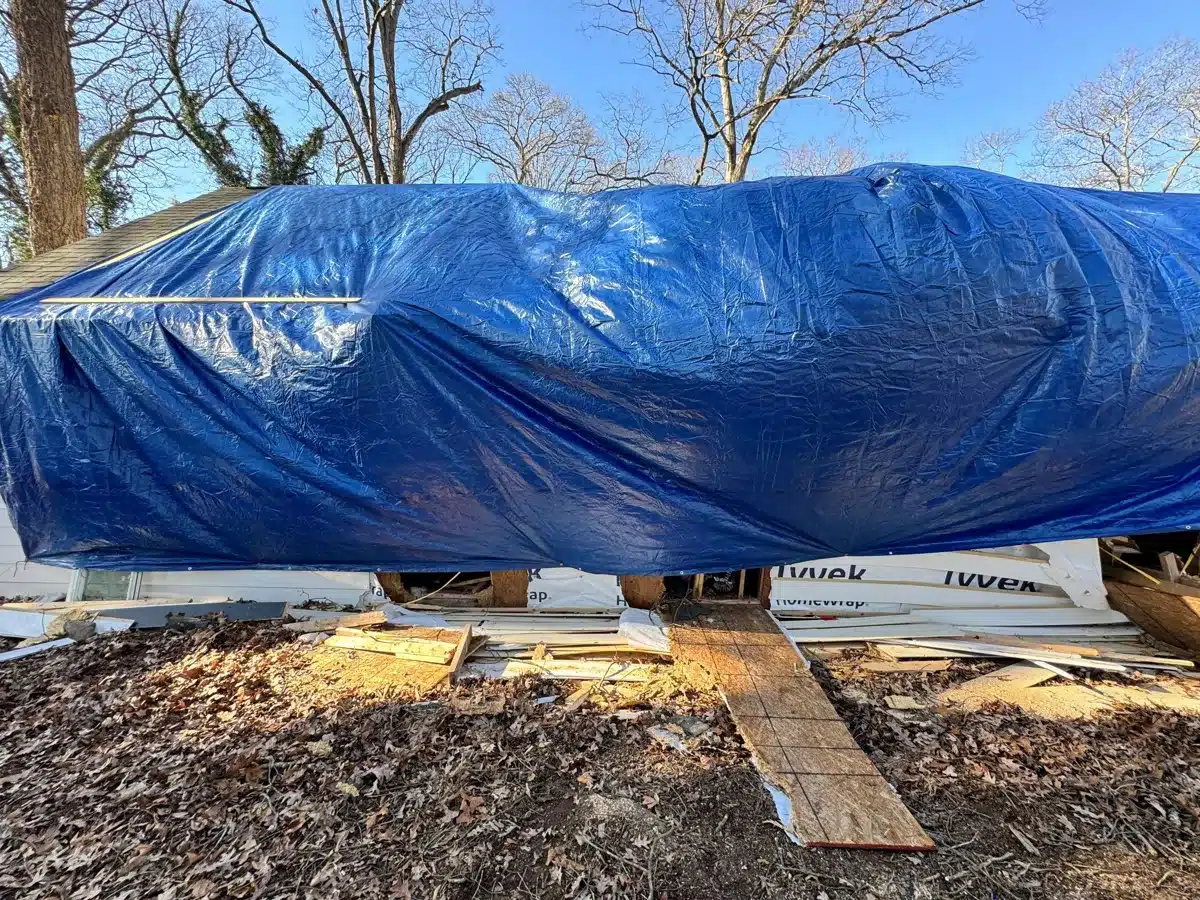 Post-Storm Repair & ReconstructionMost of what goes wrong in storm work happens in the handoff between the emergency crew and the rebuild crew.
 Storm Damage overviewHow we handle storm damage from the first call to the rebuild.