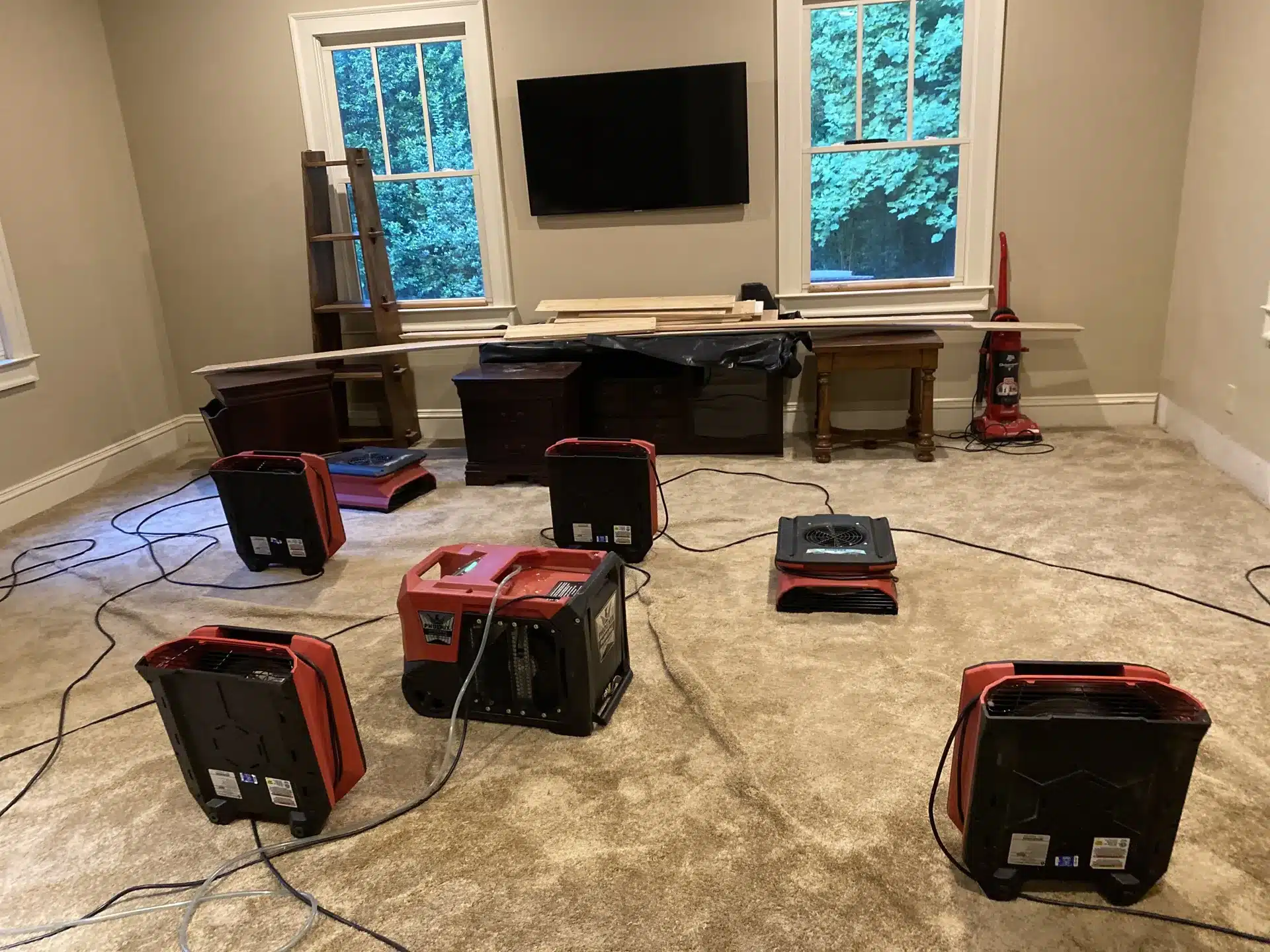
Extraction, structural drying and moisture mapping for homes and businesses across Alpharetta and the north metro. The first hours decide whether this becomes a mold job.

Water doesn't sit still. It travels along framing, wicks up drywall and moves under flooring into cavities you can't see, carrying whatever it passed through on the way.
The industry sorts water into three categories: clean water from a supply line, gray water from an appliance, and black water from sewage or flooding. A clean-water loss doesn't stay clean forever. Left standing, it degrades into a category that needs a different scope, different protective equipment and a larger claim.
Mold needs moisture, something to feed on and time. In a Georgia summer, time is the only thing in short supply; drywall paper, carpet backing and framing supply the rest. That's why our first move is extraction, and why we map moisture before we write a scope. Drying what you can see and missing what you can't is how a water claim reopens as a mold claim three months later.
Six stages, each with its own equipment and its own documentation.
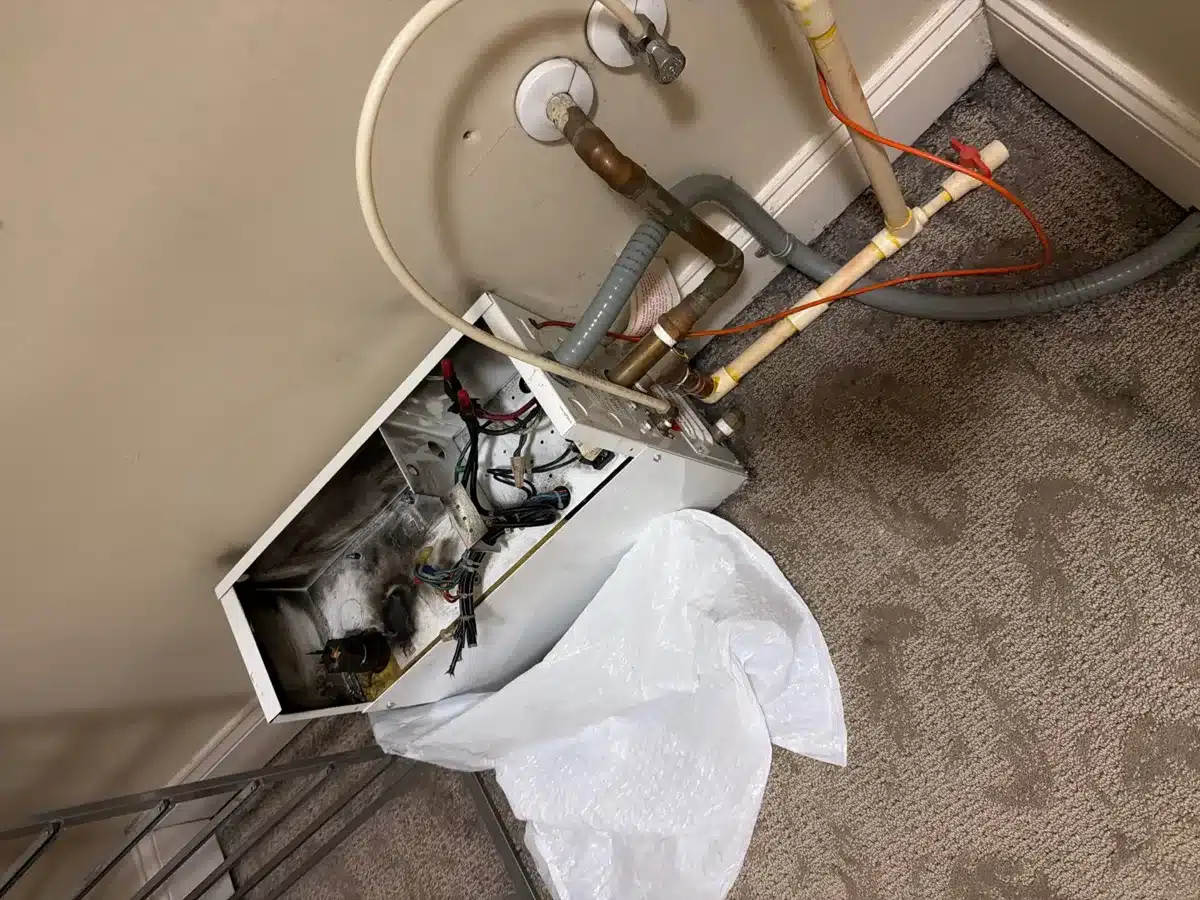
Start hereEmergency water servicesDispatch, shutting off the source and stabilizing the property, day or night.
Learn more
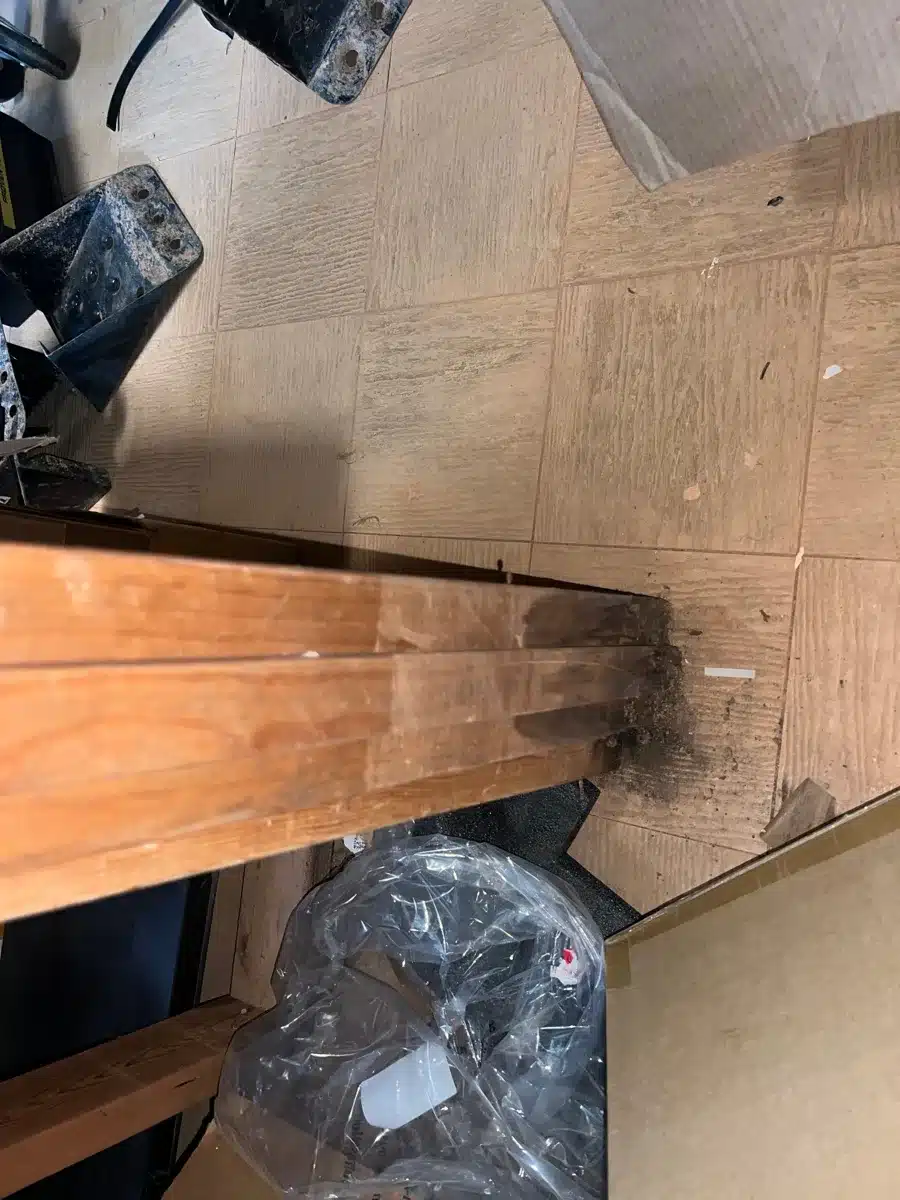
Water removalLearn more
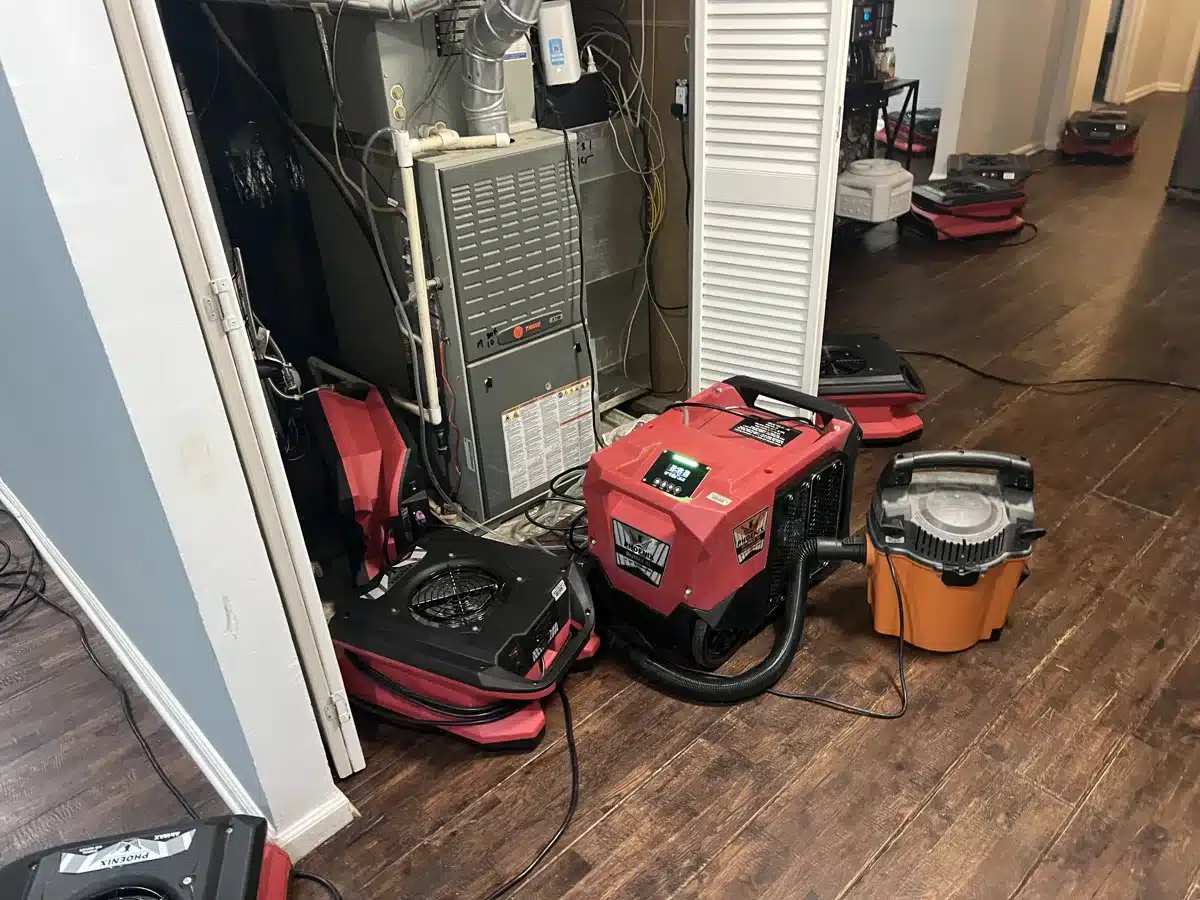
Structural dryingLearn more
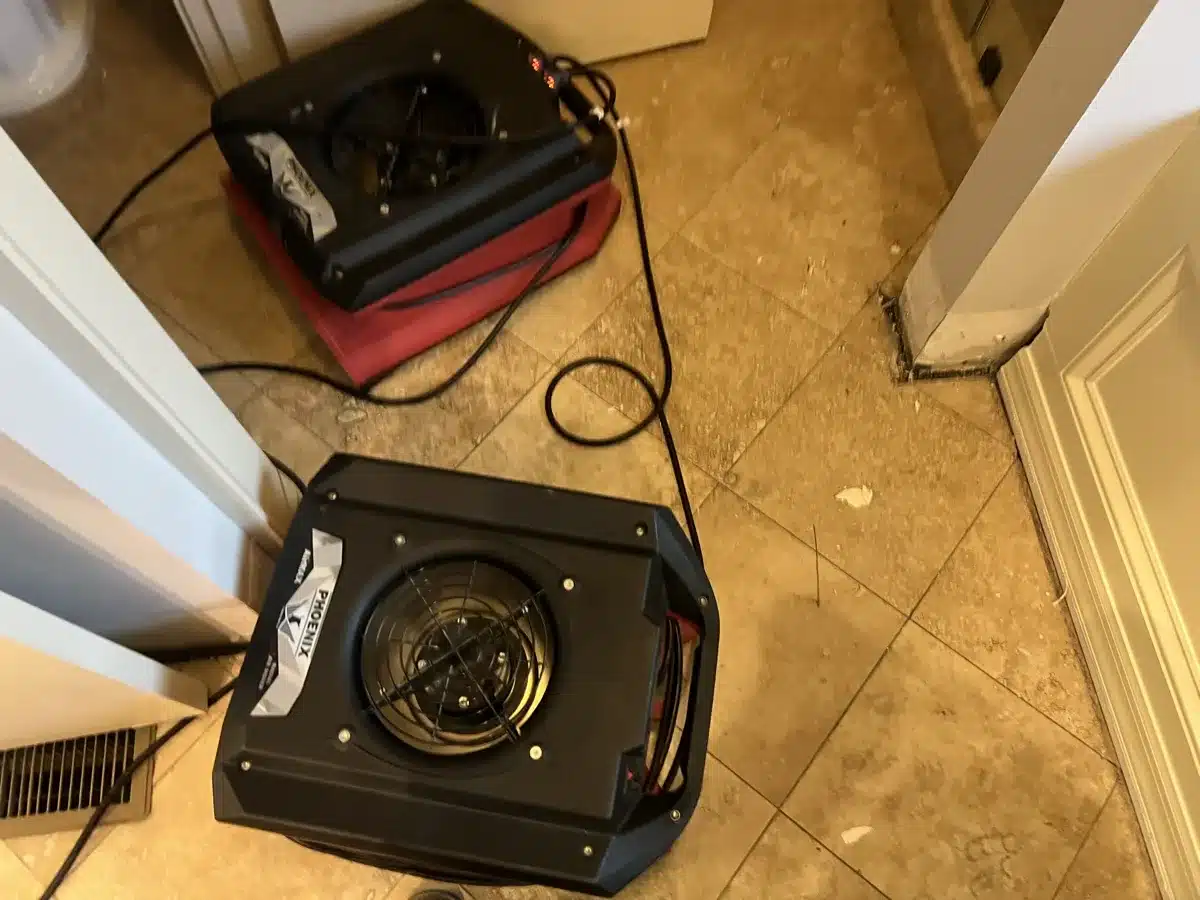
DehumidificationLearn more
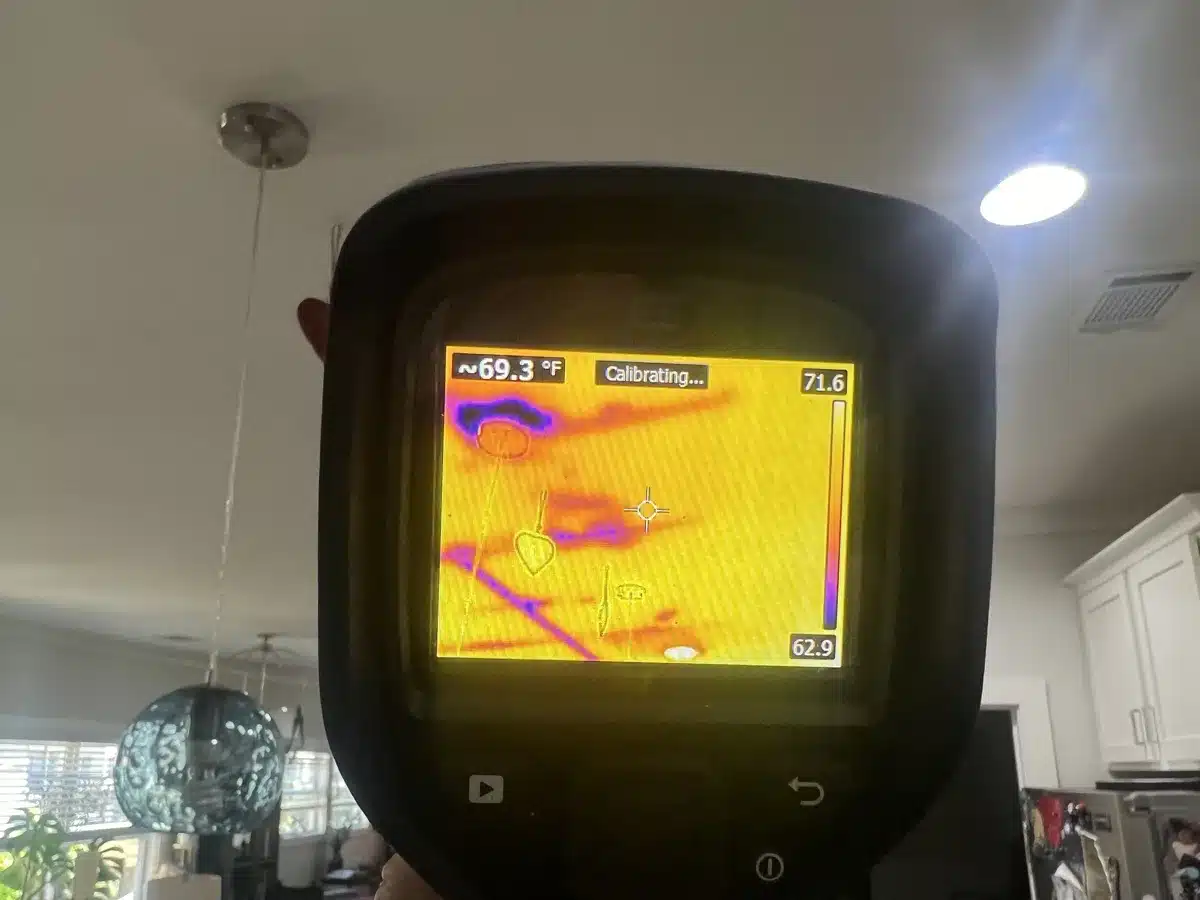
Thermal inspectionLearn more
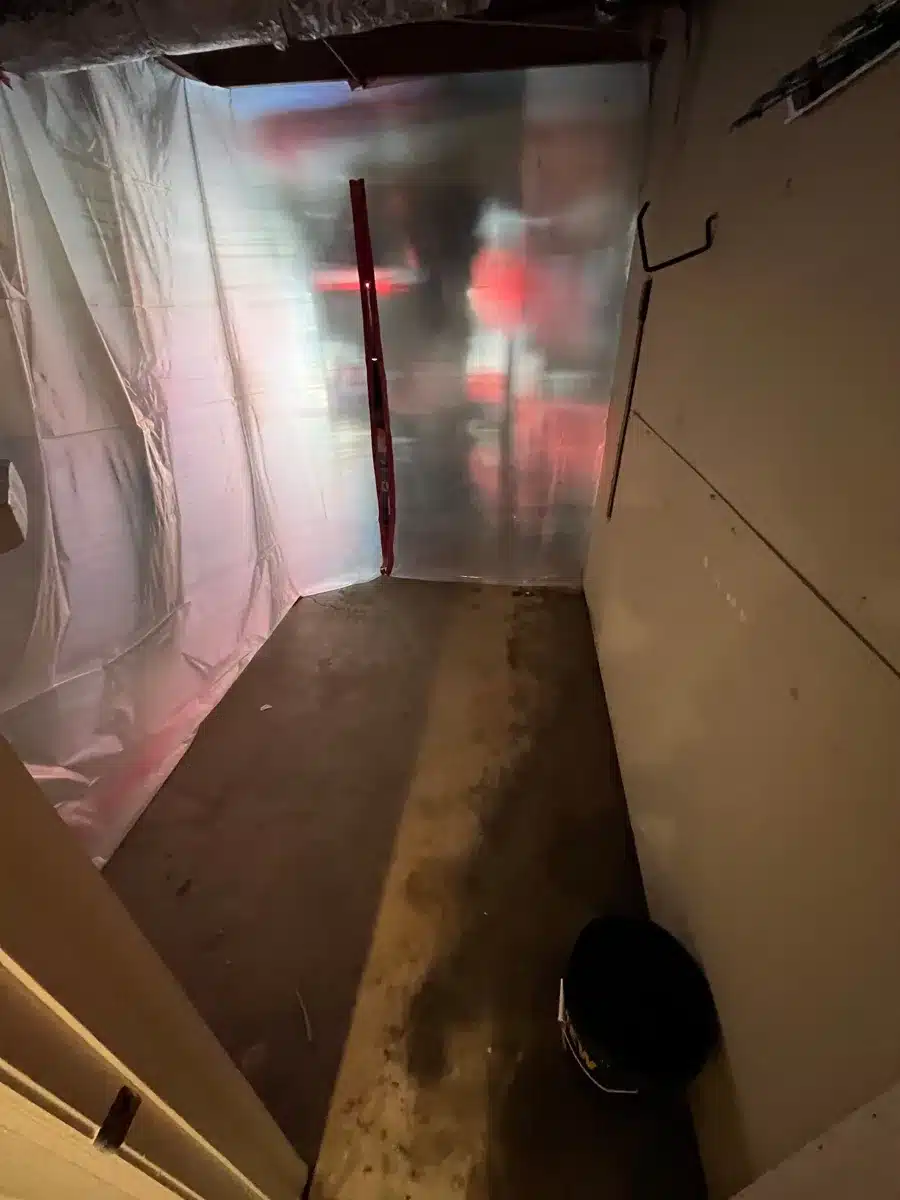
DisinfectionAntimicrobial treatment wherever gray or black water has touched materials.
Learn more
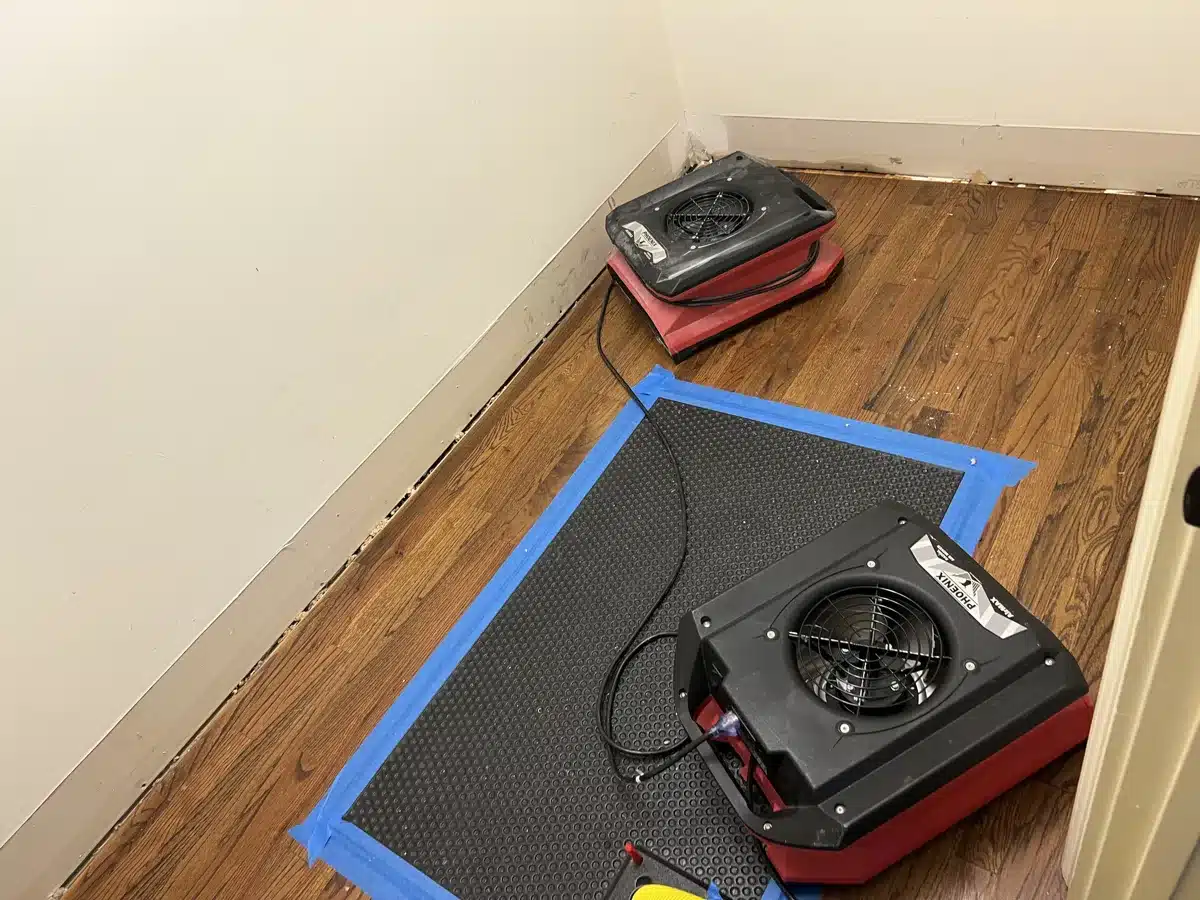
A floor can feel dry and still be holding moisture in the subfloor, the sill plate and the base of the walls. Thermal imaging and moisture meters show where the water actually went.
That decides how much material has to come out. Less guesswork means less demolition, a smaller claim and a shorter job.
Water losses are approved on evidence: readings, photographs and daily logs. We build that file as we work.
Georgia law doesn't require you to use the restoration company your insurer recommends. The choice is yours.
Thermal images and moisture readings across every affected area before equipment goes in.
The type of water and how much is soaked set the scope. Both get written down and justified.
Readings recorded every day until the dry standard is met. This is the record adjusters ask for.
A written quote within 24 hours, so the review is about the work.
Verified dry, then reconstruction to pre-loss condition by the same team.
Rated 4.5 on Google across 203 reviews from Atlanta-area homes and businesses. Our customers name the technicians who showed up — Juan, Jayson and the rest of the crew — which is what happens when the same people turn up rather than whoever was available.
"Great customer service and communication throughout the project. I would definitely recommend giving them a call."
Dan, thank you so much! We're glad the communication made the process easier, that's something we really care about. We appreciate the recommendation!
"Jayson and Juan were so very helpful and kind and worked fast. I really appreciate every bit of work they put in here today."
Thank you so much for the kind words, Kathleen — we're thrilled Jayson and Juan could be so helpful and efficient. I'll be sure to pass your compliments along to them and the rest of our team.
"Juan and his crew did an amazing job getting the damaged parts out of my room after my HVAC unit leaked water."
"He was exceptional."
Susan, thank you for the kind words! We're so glad you had a great experience and appreciate you taking the time to share this!
Still not sure? Ask the advisor in the corner, it can look at a photo too, or call and a person will answer.
Extraction should start the same day. In Georgia humidity, mold can take hold within roughly 24 to 48 hours, and once it does, the scope and the claim both change.
Sudden and accidental water, like a burst pipe or failed supply line, is typically covered. Long-term seepage and maintenance issues typically aren't. We document the loss either way, so the decision is made on evidence.
No. You choose your contractor.
Most homes dry in three to five days. We take readings daily and stop when the readings say it's dry, not when the calendar does.
Usually, with clean water. Sewage or a large affected area often means staying elsewhere for a few days, which many policies cover under loss of use.
Water, fire, mold or storm — if it's happening now, don't wait on a form. Call and a person will answer.
Second opinions, insurance questions, or damage that can wait until morning — this reaches us either way.