Water Damage Restoration in Alpharetta: What to Expect
Water damage moves fast. The first 24 to 48 hours determine how much of your home can be saved and how complicated your claim becomes. Knowing what a professional restoration crew actually does, step by step, helps you make good decisions when the stress is highest.
Stop the source first, then call a restoration crew immediately.
We document before we touch anything, protecting your insurance claim from the start.
Extraction, structural drying, and moisture mapping are the core of every water job.
Readings are taken every day until the structure is dry to a measured standard.
One team, from the first call to the final repair, handles your job start to finish.
Start here
When Water Gets Into Your Home, Time Is the Main Variable.
If you have active water damage in Alpharetta right now, the most important thing you can do is shut off the water source and call a restoration company immediately. That is not an exaggeration.
Within hours
Water moves into wall cavities, subfloors, and insulation within hours.
24 to 48 hours
After 24 to 48 hours, mold can begin to colonize wet materials.
72 hours
After 72 hours, structural components that could have been dried in place may need to be removed entirely.
Water damage restoration in Alpharetta follows a defined process. We work in Fulton, Forsyth, Cherokee, Cobb, north DeKalb, and west Gwinnett counties, and the calls we receive most often involve burst pipes, appliance failures, roof leaks, and sewage backups. Each situation is different, but the restoration sequence is the same. Understanding that sequence helps you know what to expect and what questions to ask any crew that shows up at your door.
How the job runs
Three stages, one team.
Tap a stage to read exactly what happens and why.
How We Assess the Damage Before We Move Anything.
The first thing our crew does on arrival is assess the category of water involved.
Category 1Category 1 water comes from a clean source like a supply line.
Category 2Category 2 is gray water, meaning it carries contaminants such as washing machine discharge.
Category 3Category 3 is black water, which includes sewage or floodwater and requires strict containment and personal protective equipment for your safety and ours.
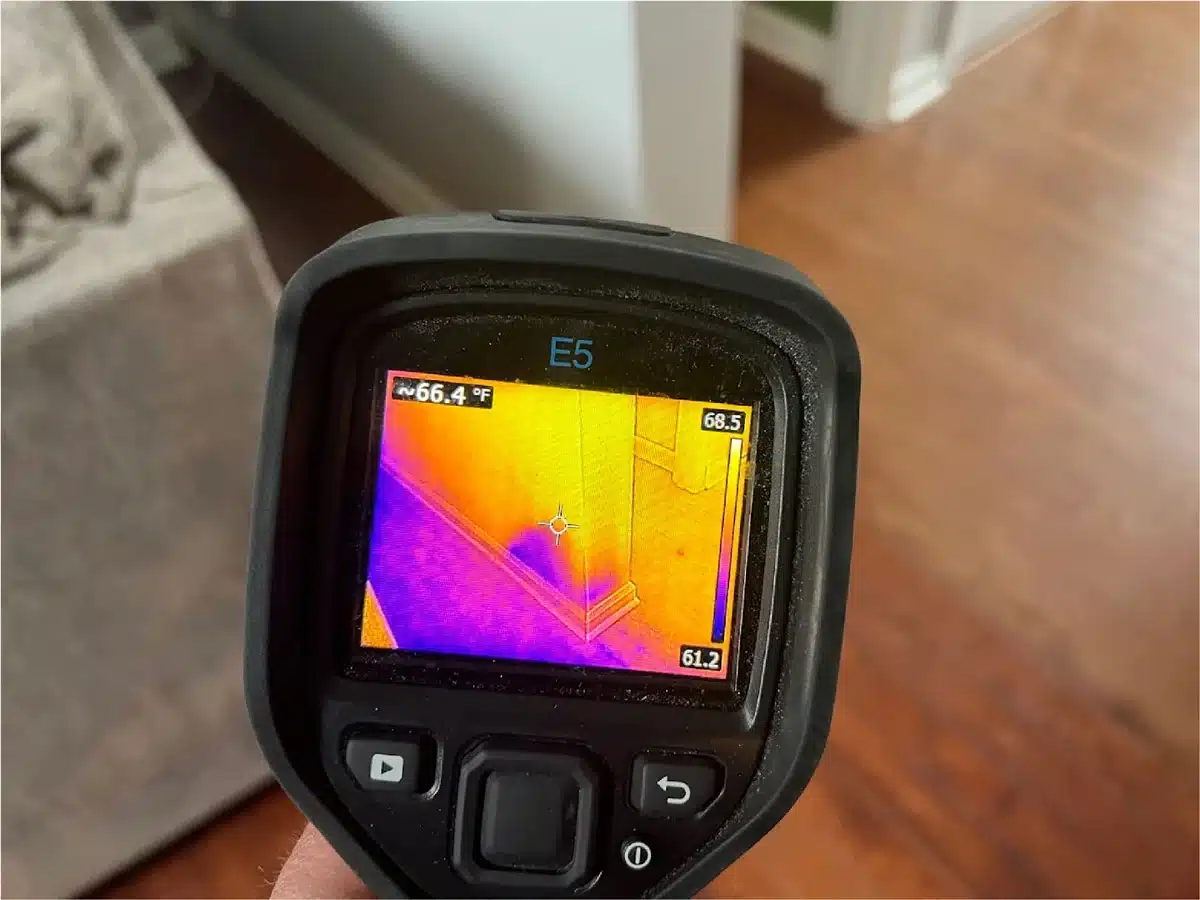
We document before we touch anything. That means timestamped photos, moisture readings taken with calibrated meters, and thermal imaging when the situation calls for it. Thermal imaging shows us moisture hiding behind walls and under floors that a visual inspection would miss. We record all of this in a drying log that follows the job from day one to completion. Your insurance adjuster will ask for documentation. We build that file from the moment we arrive.
After documentation, we give you a written quote within 24 hours. You know what work will be done and why before any equipment goes into your home.
Extraction, Structural Drying, and Moisture Mapping.
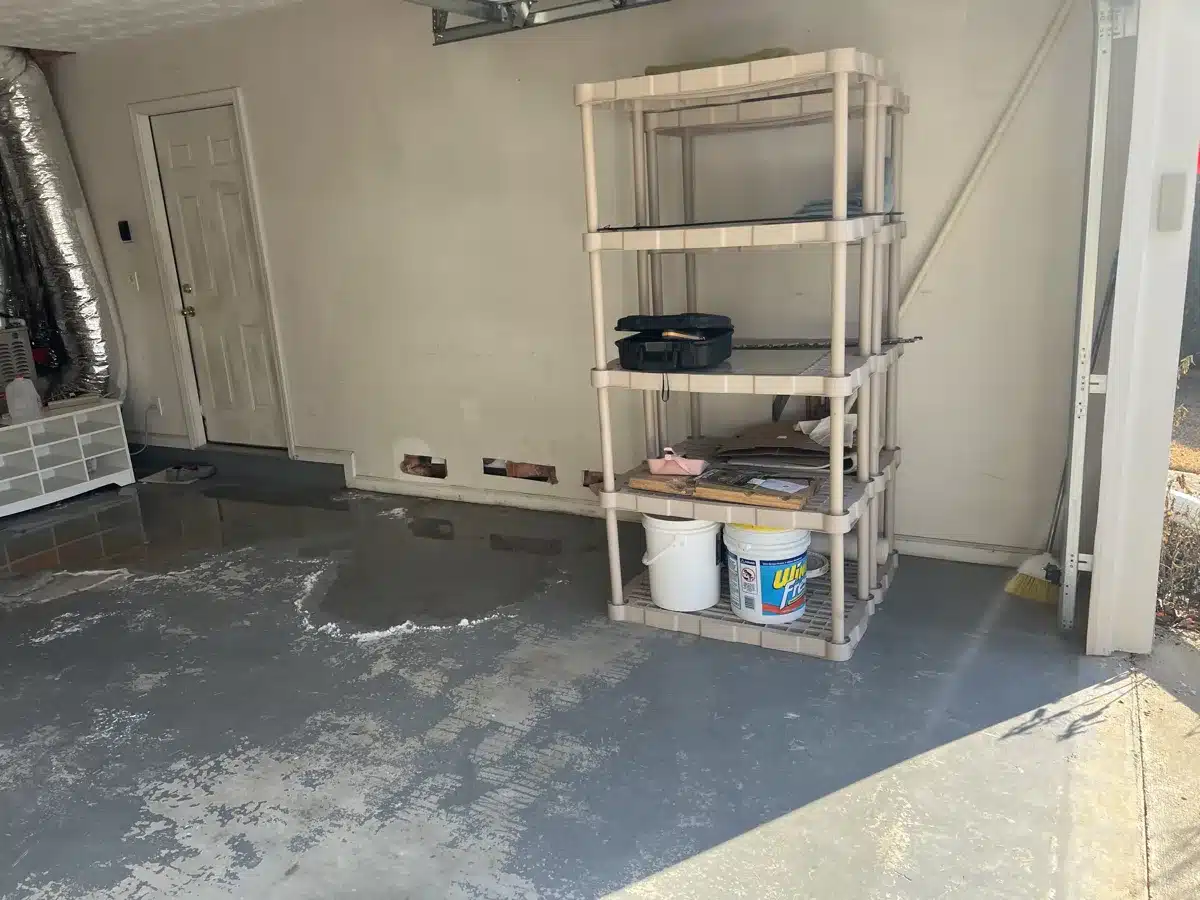
Once the assessment is complete and you have approved the scope of work, extraction begins. We use truck-mounted and portable extraction units to pull standing water out of flooring and saturated materials. Extraction is not the same as drying. Removing bulk water is only the first step.
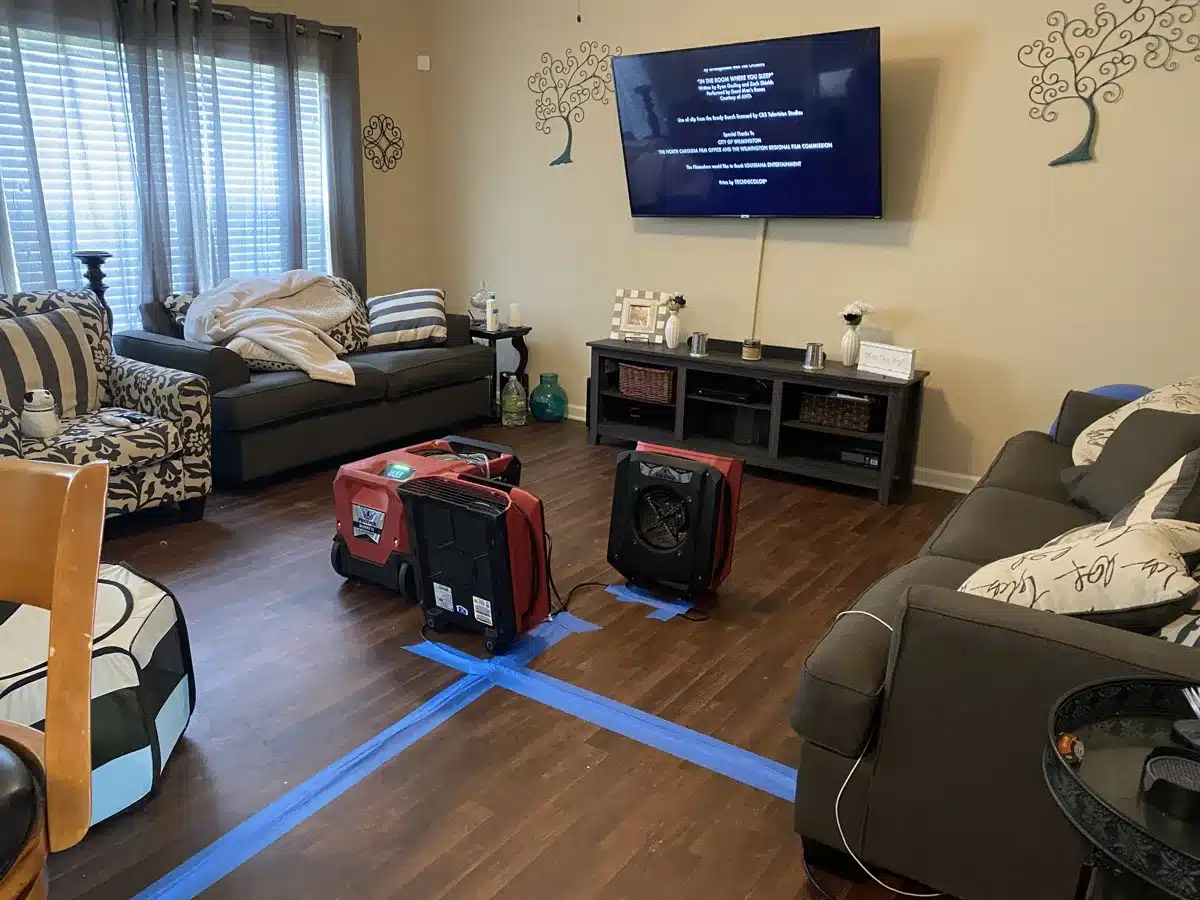
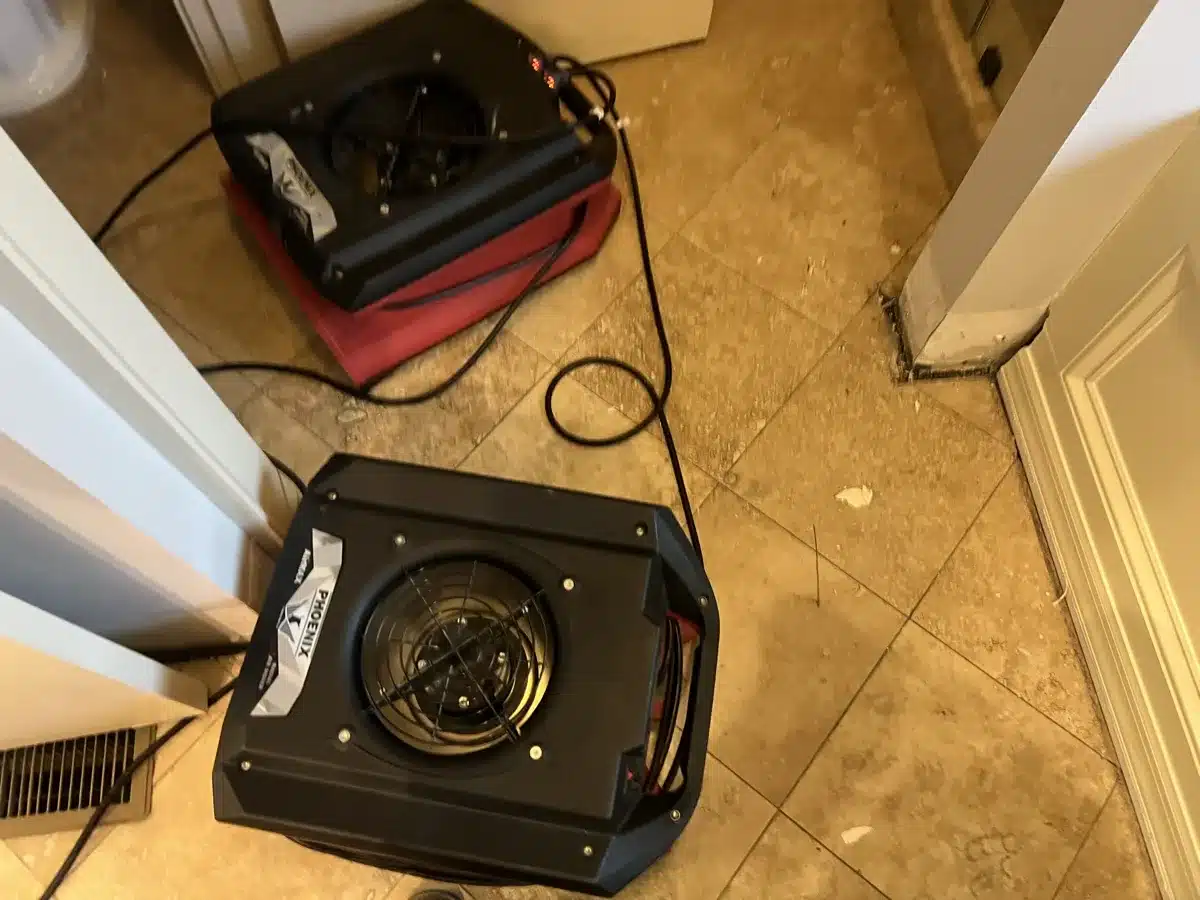
Structural drying comes next. This is the process of using commercial air movers and dehumidifiers to lower the moisture content of the building materials themselves, not just the surface. We set equipment in a calculated pattern based on the size of the affected area, the type of materials, and the moisture readings we took during assessment.
Moisture mapping means we take readings at the same points every day and record them. This tells us exactly where the structure is drying, where it is not, and whether equipment placement needs to change. We dry to a measured standard, not a visual one. A floor can look dry and still hold enough moisture to feed mold growth for months. Our drying logs show the numbers moving in the right direction, day by day, until materials reach acceptable moisture content for the region and the material type.
Repairs That Bring Your Home Back to Pre-Loss Condition.
Restoration means more than drying. After structural drying is complete, we assess what materials need to be removed and replaced. Drywall, insulation, flooring, cabinetry, and trim that held water beyond the point of drying will be removed during remediation and replaced during the repair phase.
Our goal is pre-loss condition. That term means your home should look and function the way it did before the damage occurred. We handle both sides of that work. You do not coordinate a drying crew, then find a separate contractor for repairs, then manage the handoff between them. One team, from the first call to the final repair, handles your project. That matters for your schedule and for your claim, because gaps between contractors create gaps in documentation and accountability.
We work directly with your insurance adjuster and can walk through our drying logs and repair scope with them. We never promise what your policy will cover, because that is your adjuster's call. What we can do is give them a clean, complete file that holds up to review.
Your insurance claim
Why Documentation Protects You During the Claims Process.
Insurance claims for water damage in Alpharetta can become complicated quickly. Adjusters look at the timeline of the damage, the category of water, the extent of affected materials, and whether the work was done to industry standards. A restoration company that documents poorly, or not at all, puts your claim at risk.
When the job is complete, that file exists. If questions come up during the claim, we have the answers on paper.
This approach also protects you if there is a dispute about what was damaged, what was dried, or what needed to be replaced. Clear records remove ambiguity from those conversations.
What we commit toEvery job
Every job we run produces a daily drying log with moisture readings, photos, equipment placement records, and notes on any changes made to the drying plan.
We document before we touch anything, and we keep documenting until the structure is restored right.
Questions
Common questions, answered straight.
Still not sure? Ask the advisor in the corner, it can look at a photo too, or call and a person will answer.
How quickly can you respond to water damage in Alpharetta?
A person answers our line 24 hours a day, 7 days a week. We serve Alpharetta and the surrounding north metro Atlanta area, including Fulton, Forsyth, Cherokee, Cobb, north DeKalb, and west Gwinnett counties. Our goal is to have a crew on-site as quickly as possible, because the first hours after water damage are the most important for limiting the overall scope of the job.
Do I need to move out while drying equipment is running?
In most cases, no. Commercial air movers and dehumidifiers are loud, but most homeowners can stay in unaffected areas of the house while equipment runs. If the damage involves Category 3 water, such as sewage, or if a large portion of the home is affected, we will discuss your options honestly so you can make the right decision for your family.
How long does structural drying take?
Most residential water damage jobs dry in three to five days with proper equipment and daily monitoring. Heavily saturated materials, concrete slabs, or jobs where water was present for an extended time before discovery can take longer. We take readings every day and give you a straightforward update on where the drying stands.
Will my insurance cover water damage restoration?
We cannot tell you what your policy covers, because that determination belongs to your adjuster. What we can tell you is that we build a thorough documentation file from day one and we are available to walk your adjuster through our work. Many homeowners find it helpful to call their insurer before work begins to understand their deductible and coverage limits.
What is the difference between water mitigation and water restoration?
Mitigation refers to the steps taken to stop further damage: extraction, drying, and removing materials that cannot be saved. Restoration is the repair phase, where materials are replaced and the home is returned to pre-loss condition. Some companies only do one or the other. We handle both, which keeps your project on a single timeline with one point of contact.
Can water damage lead to mold if the house looks dry?
Yes. Mold begins to grow when moisture levels inside wall cavities, subfloors, or insulation stay elevated, even when the surface looks and feels dry. That is why we use calibrated moisture meters and thermal imaging rather than visual inspection alone. We dry to a measured standard, and we verify that standard with daily readings before we close the job.
Ready to Talk Through Your Water Damage Situation.
Water damage restoration in Alpharetta moves fast when it is handled right. If you are dealing with water in your home right now, the most important step is to call someone who will show up, document the damage, and give you a straight answer about what needs to happen next. We do not run call centers. A person answers when you call. We document before we touch anything, we dry to a measured standard, and we stay with your project through every repair until your home is restored right. Call Blackridge Restoration at (470) 201-2929. We are here around the clock.
A person answers, 24 hours a day, every day of the year
We contact your insurer directly and send you a written quote
 Emergency Water ServicesIf water is moving through your property right now, the next hour matters more than any decision you make this week.Learn more
 Water Removal & ExtractionExtraction is the cheapest, fastest stage of a water loss.Learn more
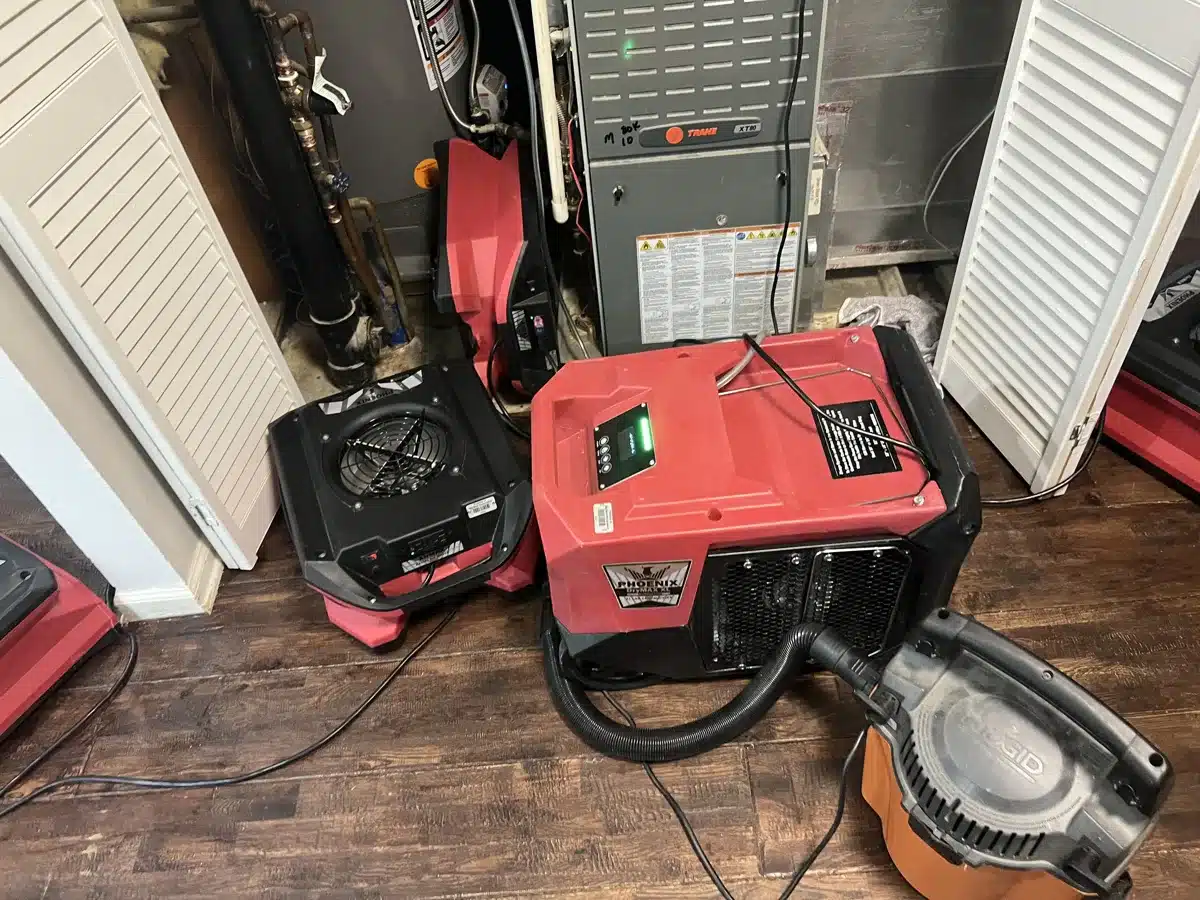 DehumidificationWithout dehumidification, evaporated water just condenses somewhere cooler, usually inside a wall.Learn more
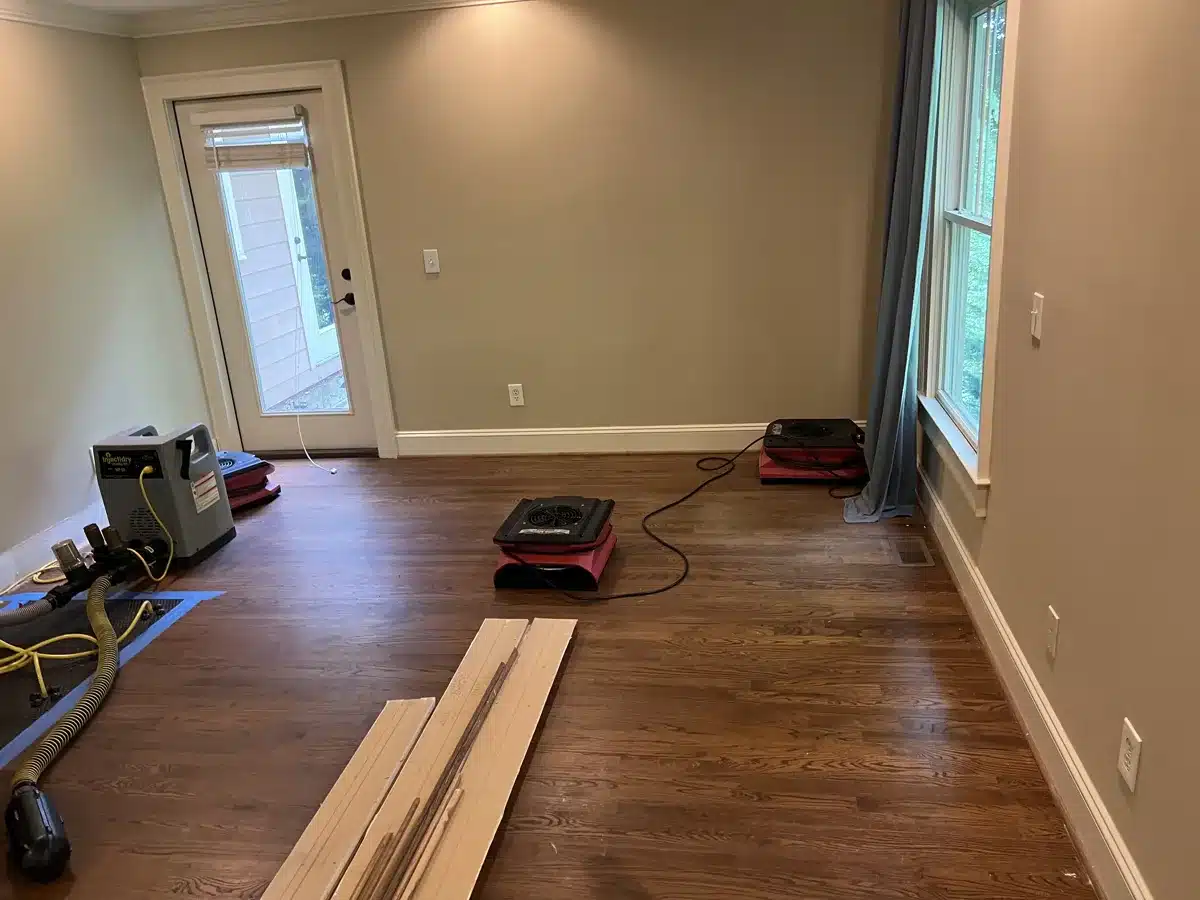 Thermal Imaging & Moisture InspectionInfrared shows where moisture has traveled without tearing anything out.Learn more
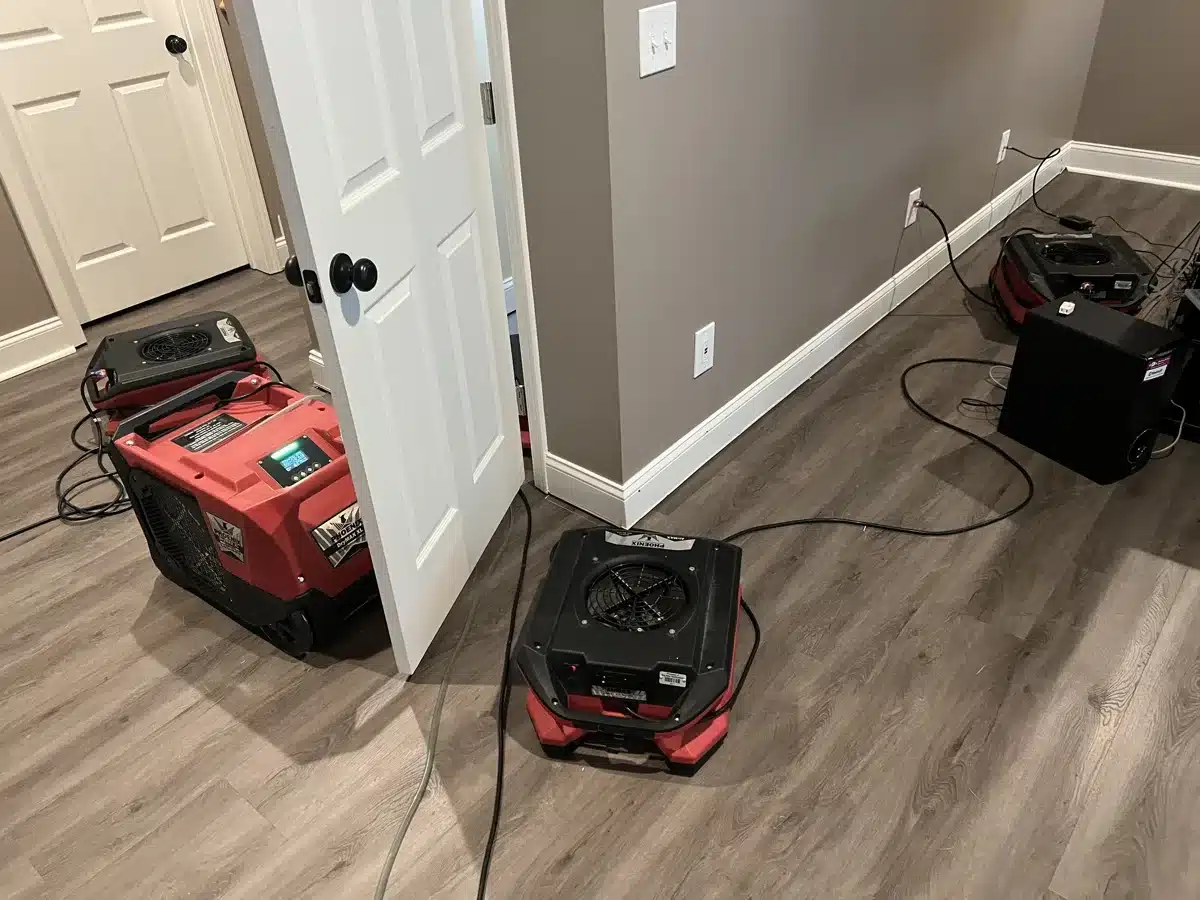 Disinfection & Antimicrobial TreatmentWater that came through an appliance, a drain or a flooded yard leaves more behind than moisture.Learn more
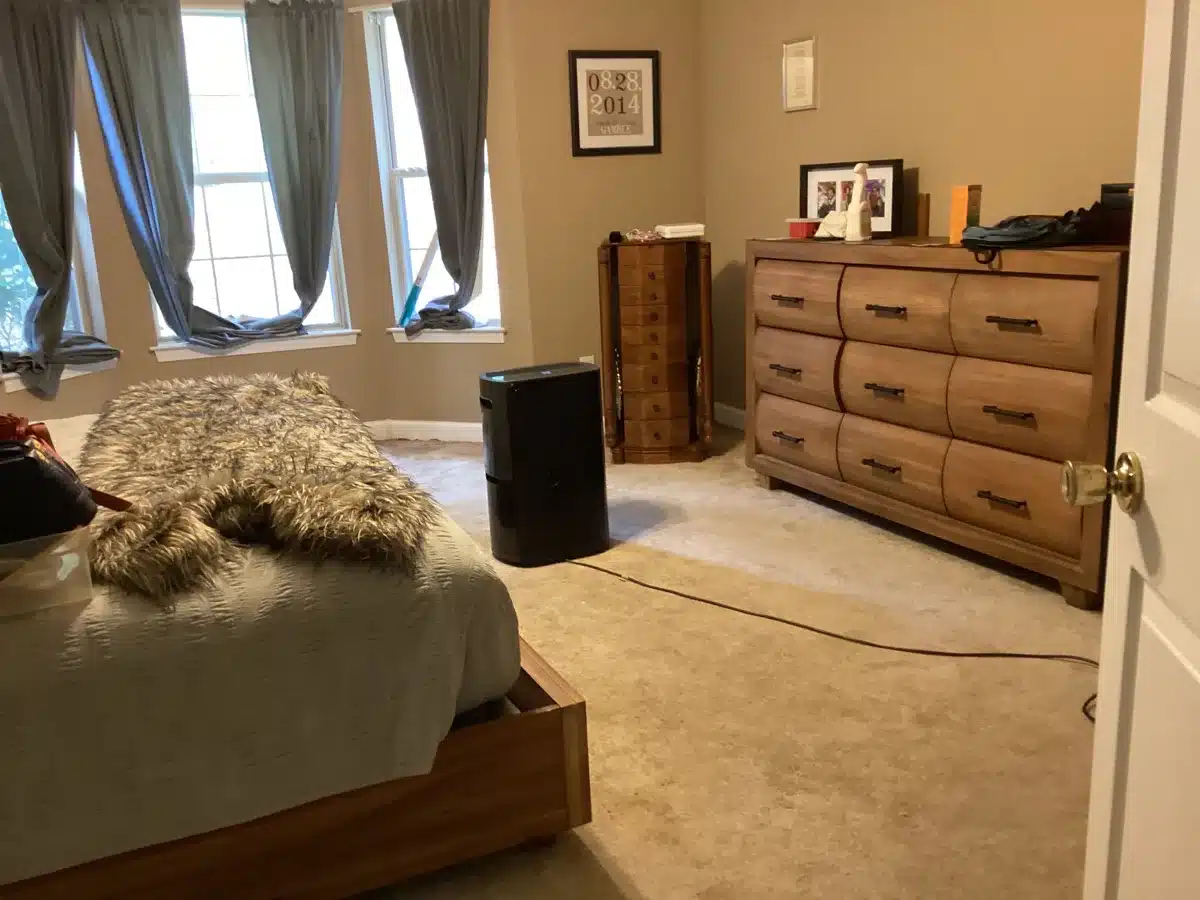 Water Damage overviewHow we handle water damage from the first call to the rebuild.Learn more