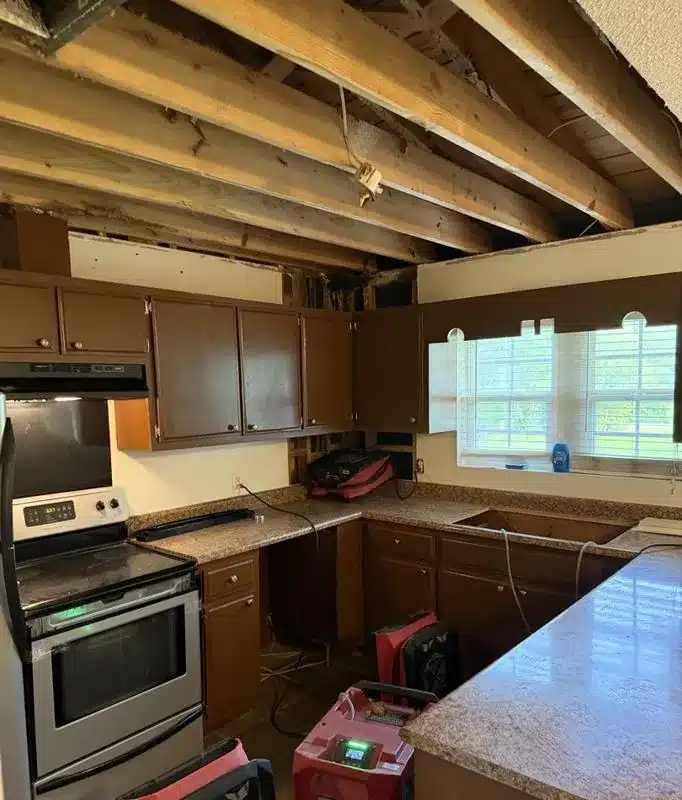
Dry is a measurement, not an opinion.
Framing, subfloor and drywall hold water long after the surface feels dry. We dry to a documented standard and prove it with daily readings, which is also what your adjuster wants to see.
What "dry" actually means.
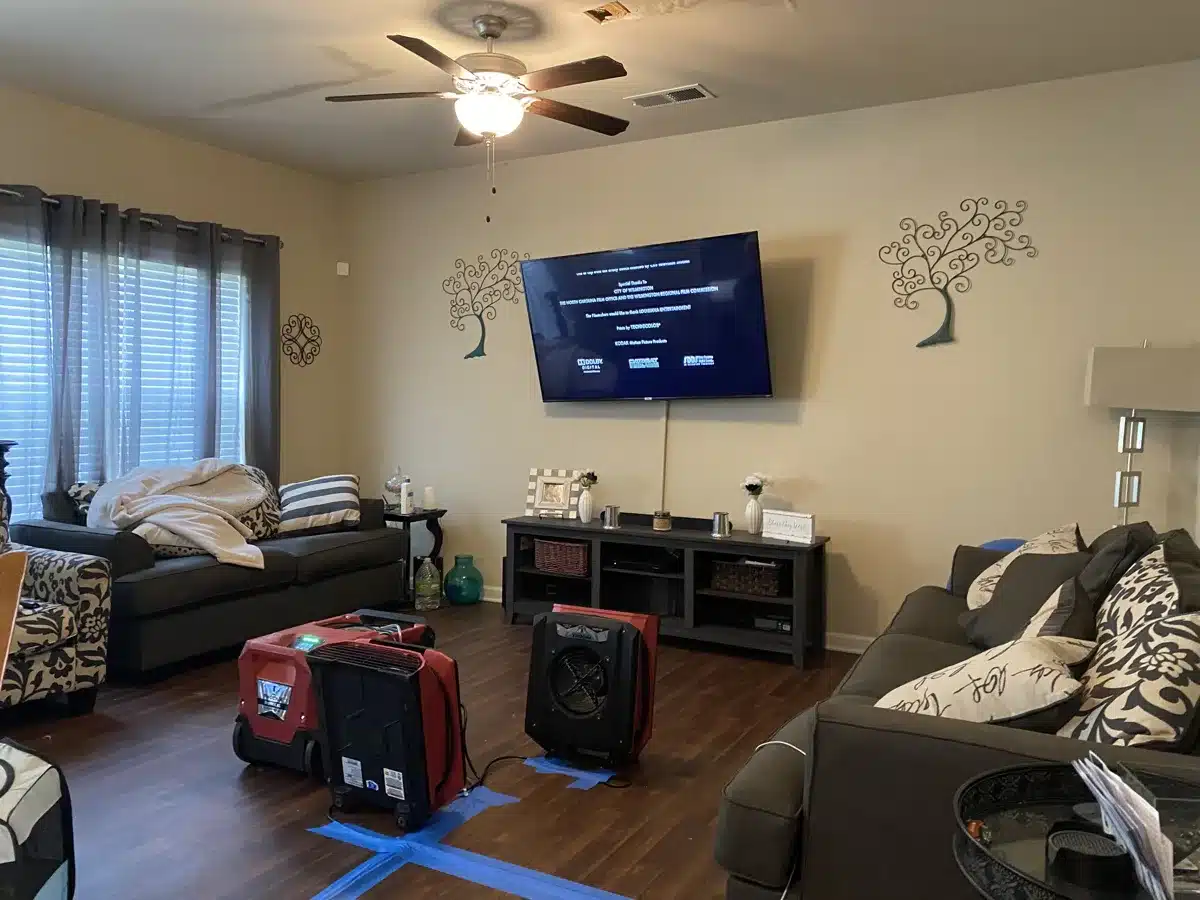
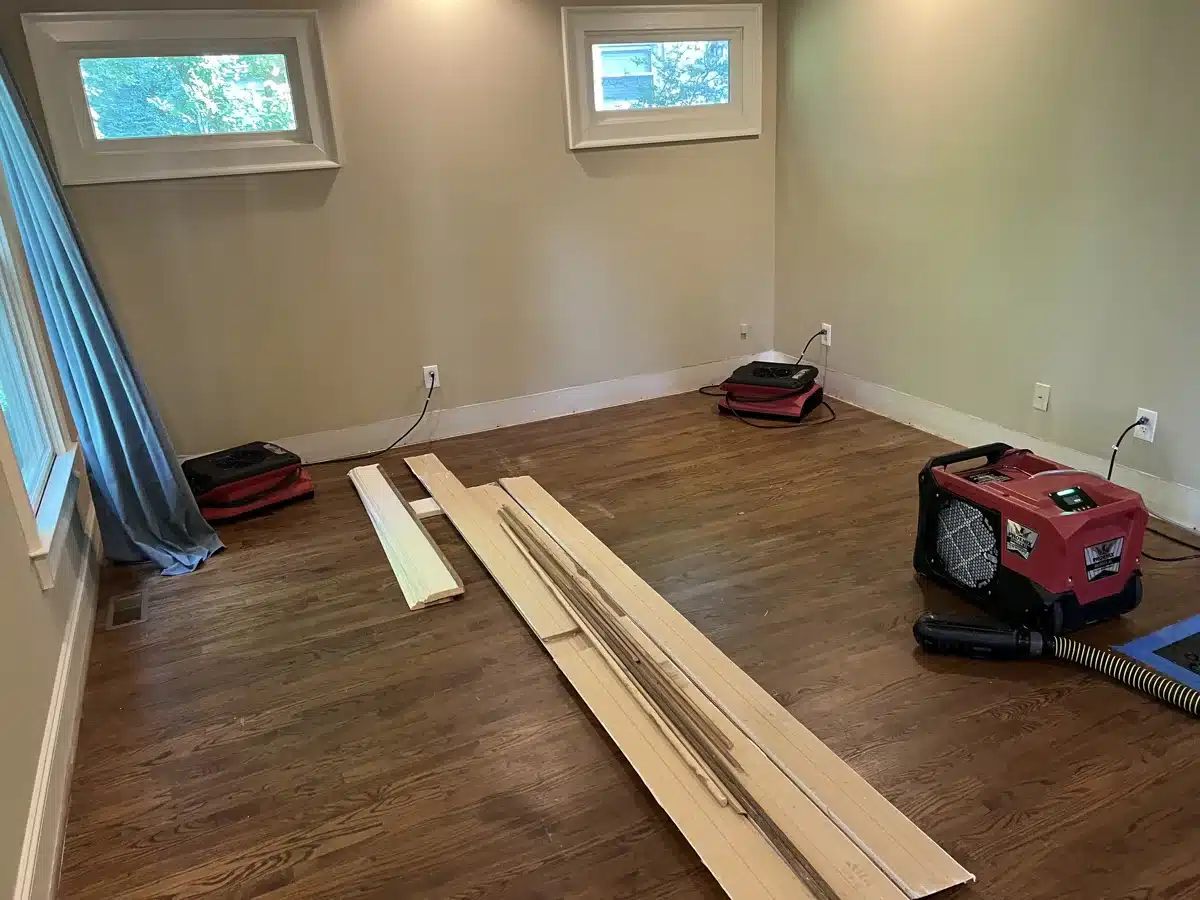
Structural drying is controlled science: managing air temperature, humidity and the moisture in materials so water moves out of the building instead of around it. Four things get controlled: removing any remaining liquid, airflow across wet surfaces, dehumidification so the air can keep absorbing moisture, and temperature, because warmer air holds more.
Getting the balance wrong has consequences. Airflow without dehumidification just moves moisture somewhere colder, where it condenses, often inside a wall or above a ceiling. Dehumidification without airflow dries the air but not the materials. That's why equipment is calculated for the affected space rather than guessed.
The target is a dry standard: the moisture level of the same material in an unaffected part of the same building. We take that reference reading at the start and keep drying until the wet materials match it. Not until the schedule says so, and not until it feels dry. Daily readings create the record that proves it, which matters for the claim now and for your position if a moisture problem is ever alleged later.
Measured, not assumed.
A pin meter reads the moisture inside a material. A thermal camera shows temperature differences that point to where moisture is likely to be.
Together they show where water actually sits, which decides what has to be opened up and what can be dried in place. Guessing either way costs you: too little demolition leaves wet material buried, too much inflates the claim.
More water damage services.
 Emergency Water ServicesIf water is moving through your property right now, the next hour matters more than any decision you make this week.
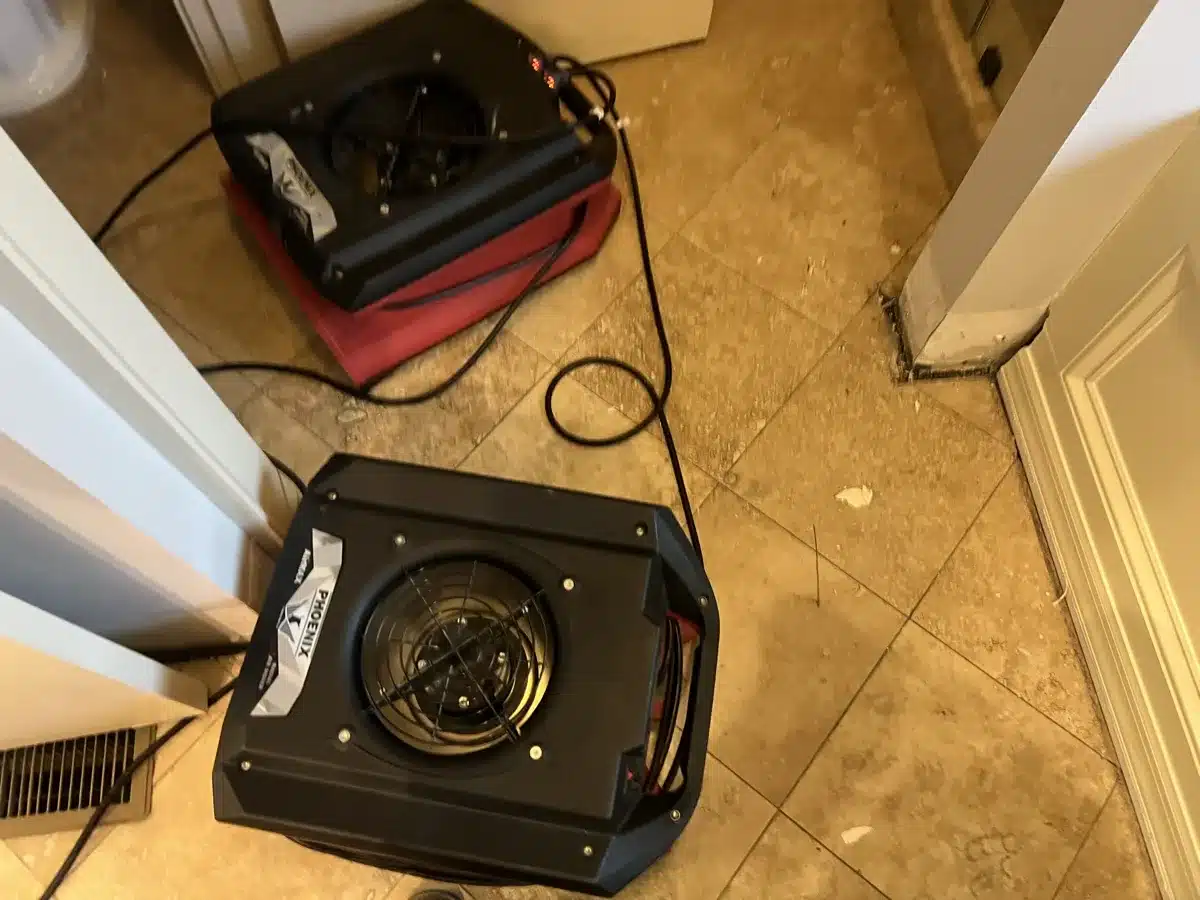 Water Removal & ExtractionExtraction is the cheapest, fastest stage of a water loss.
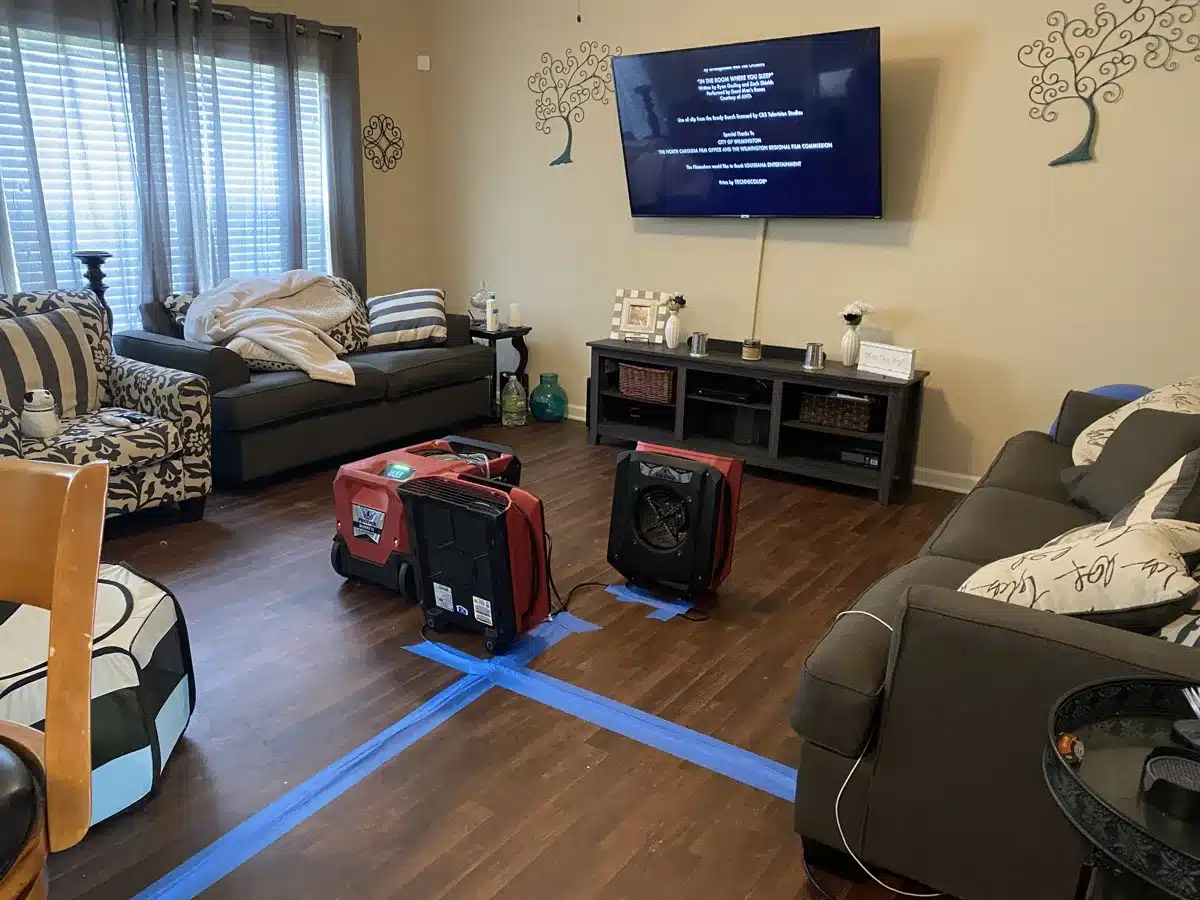
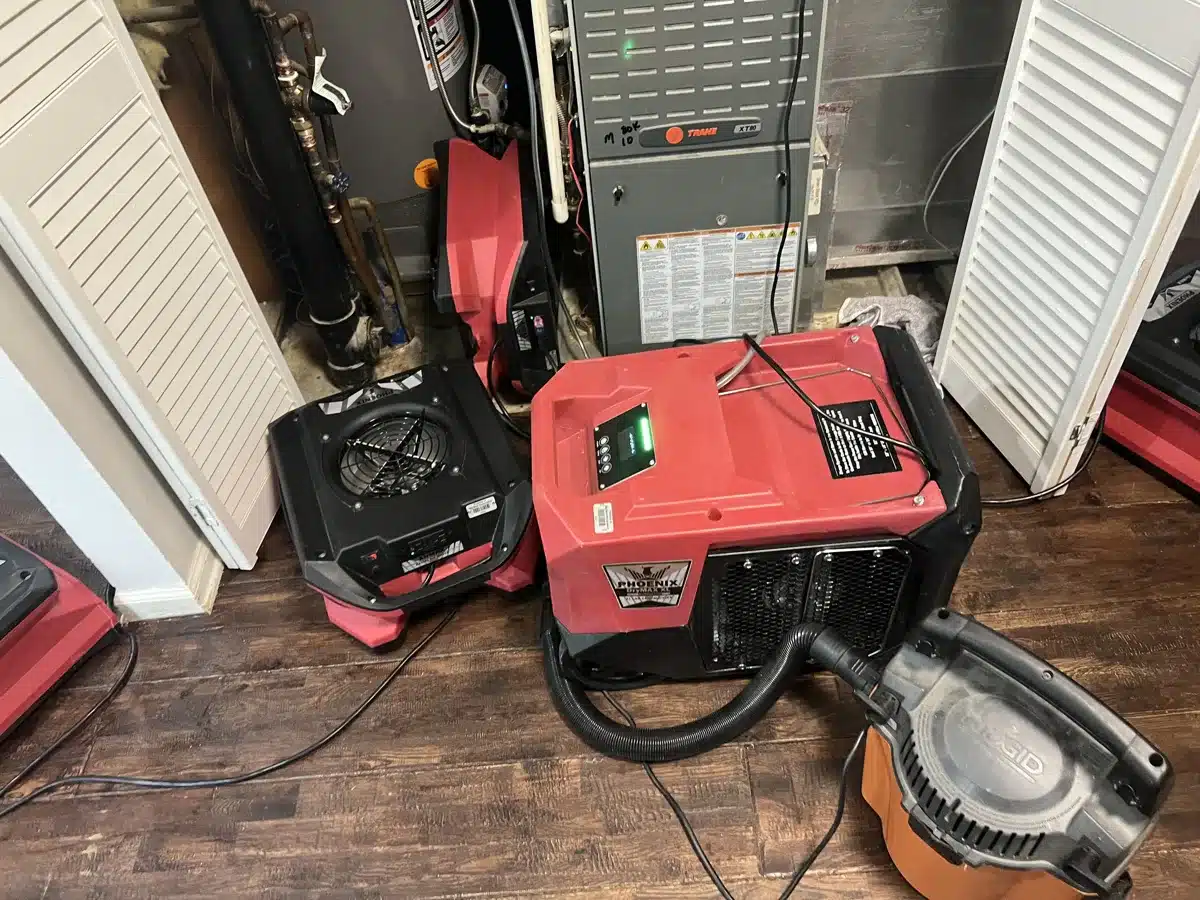 DehumidificationWithout dehumidification, evaporated water just condenses somewhere cooler, usually inside a wall.
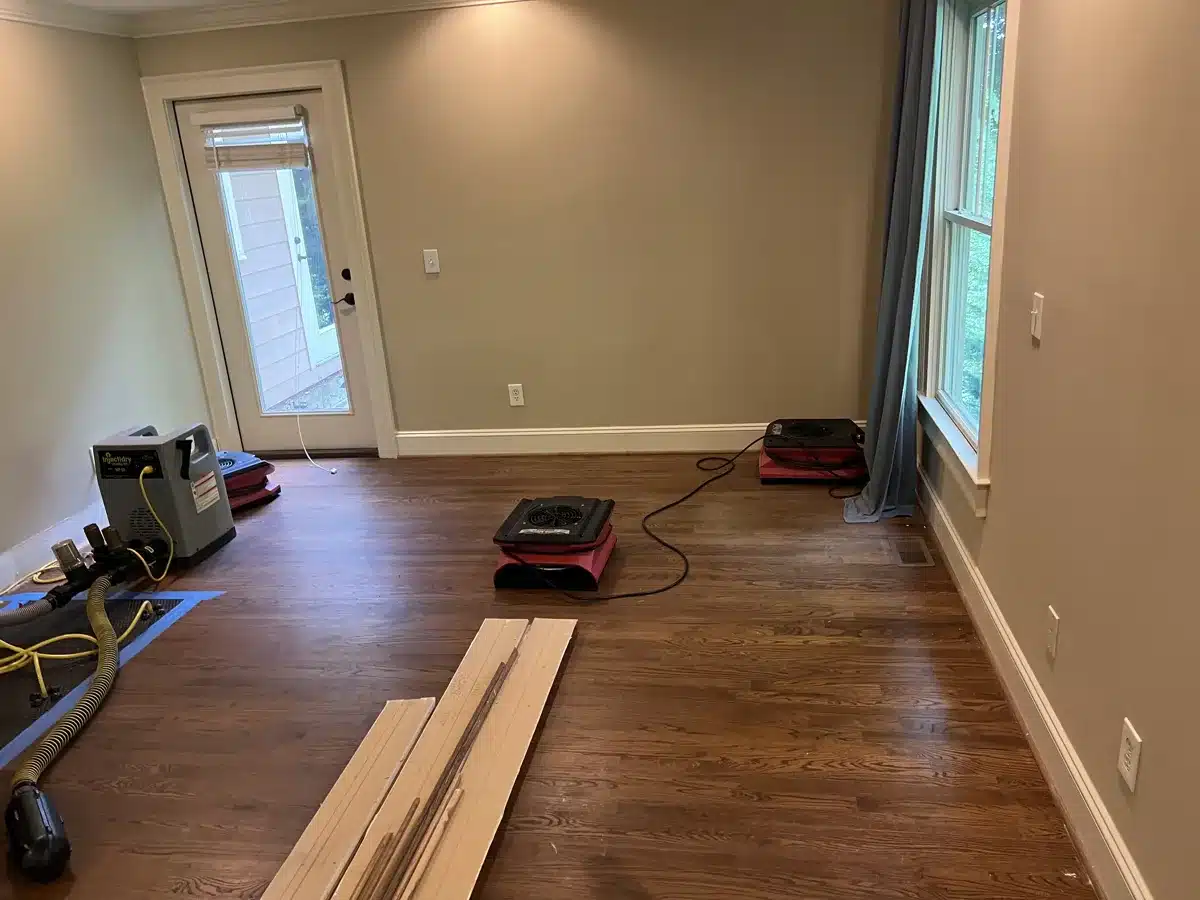 Thermal Imaging & Moisture InspectionInfrared shows where moisture has traveled without tearing anything out.
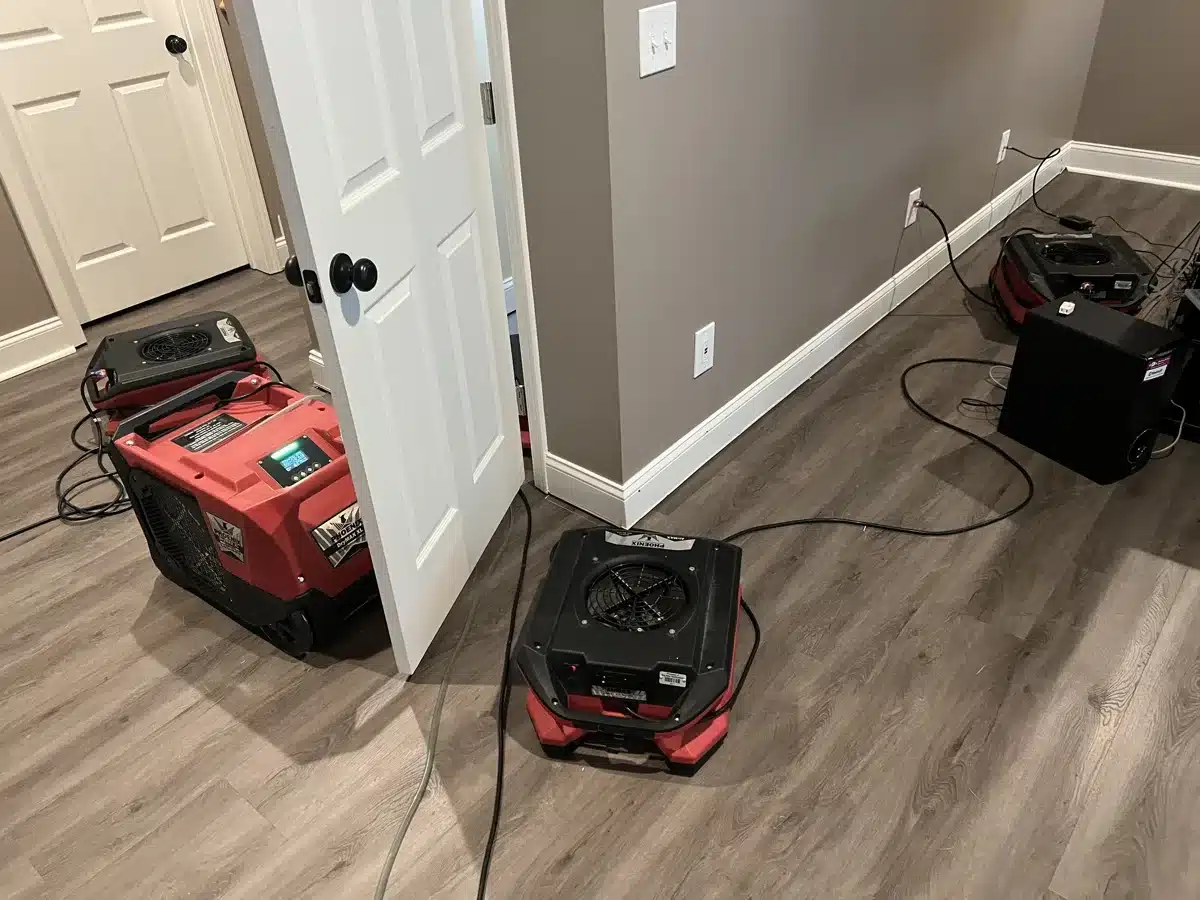 Disinfection & Antimicrobial TreatmentWater that came through an appliance, a drain or a flooded yard leaves more behind than moisture.
 Water Damage overviewHow we handle water damage from the first call to the rebuild.