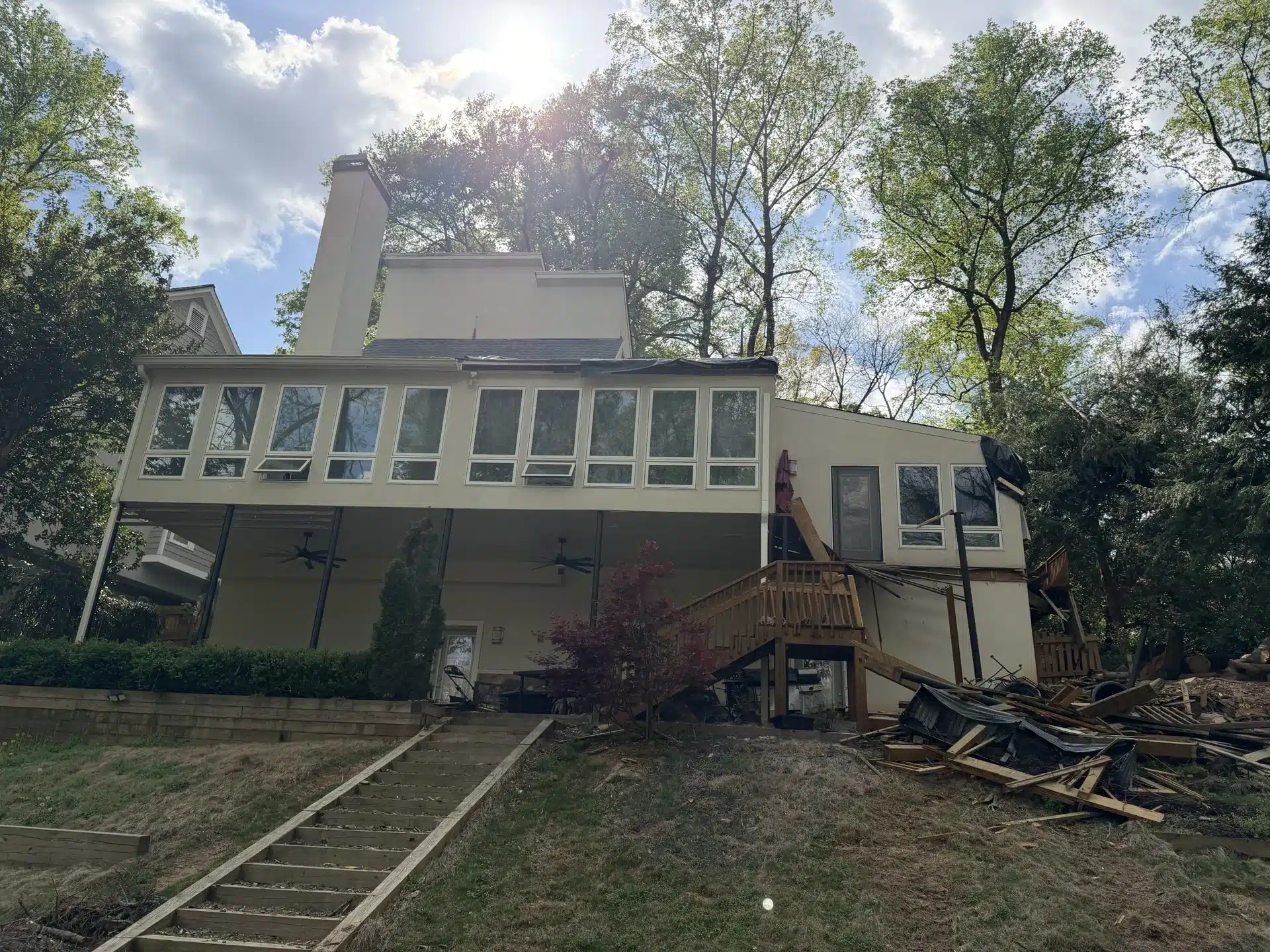
Close the roof before the next band arrives.
Tarping, board-up and water extraction as soon as it's safe. In Georgia the second storm often does more damage than the first, because the first one made the opening.
Why the emergency phase is its own job.
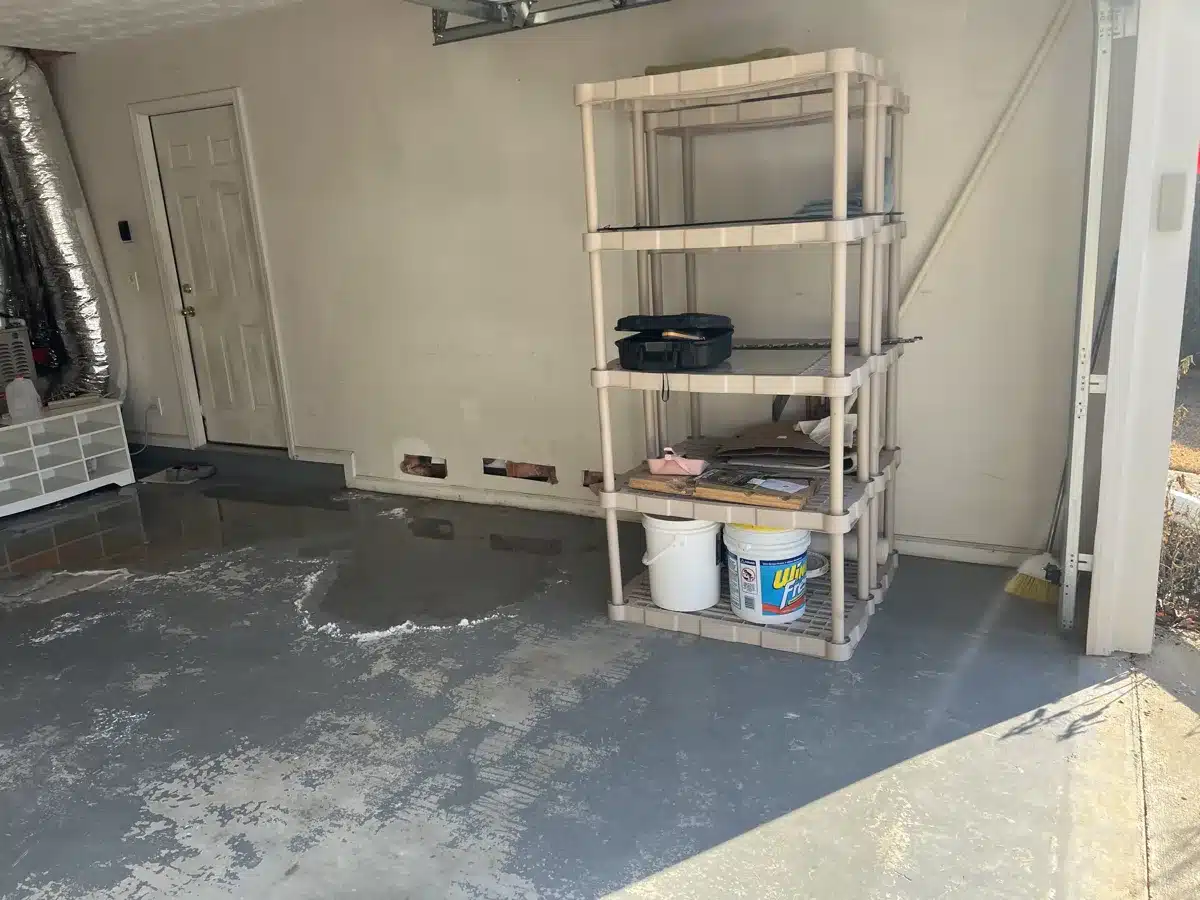
Storm work splits into two phases on different clocks. Emergency work is measured in hours and has one job: stop more water and weather getting in. Permanent repair is measured in weeks and waits on adjusters, engineers, materials and permits.
Mixing them up costs money. Waiting for a full repair estimate before covering an opening means every shower in between adds damage, and a carrier may decline that damage as a failure to mitigate. Most policies require you to take reasonable steps to prevent further loss, and delay is exactly what that clause is about.
Order matters too: photograph the damage before it's covered. A tarp over a hole makes the original damage much harder to prove, and adjusters see a lot of tarps. After a widespread storm, we prioritize occupied homes and active leaks over cosmetic damage, and we'll tell you where you stand rather than promise an arrival time we can't keep.
What comes in at the roof shows up two floors down.
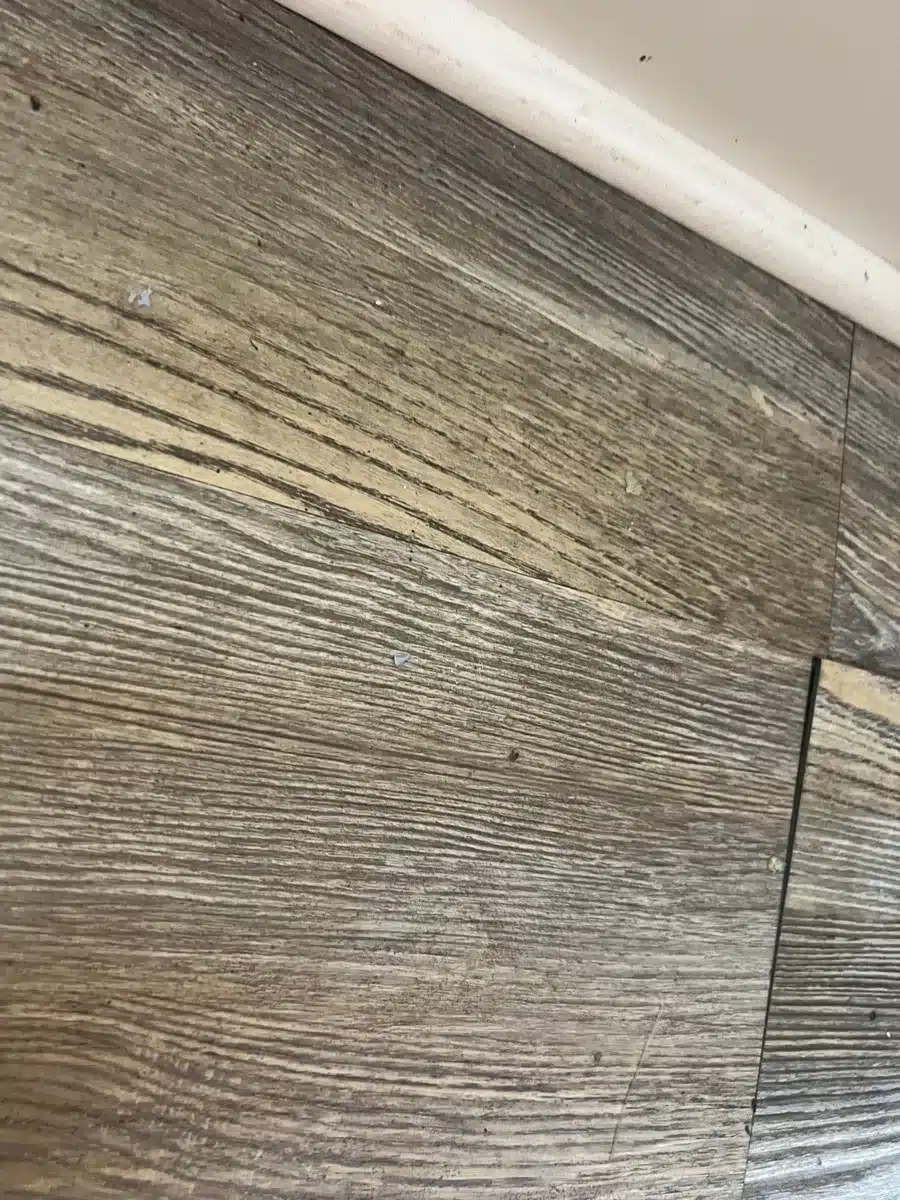
Water coming in at a lifted ridge runs along the rafters, soaks insulation and pools above ceiling drywall before it appears in a room with no visible roof damage.
We assess the whole path on the first visit, because the damage inside is usually further along than anyone has noticed.