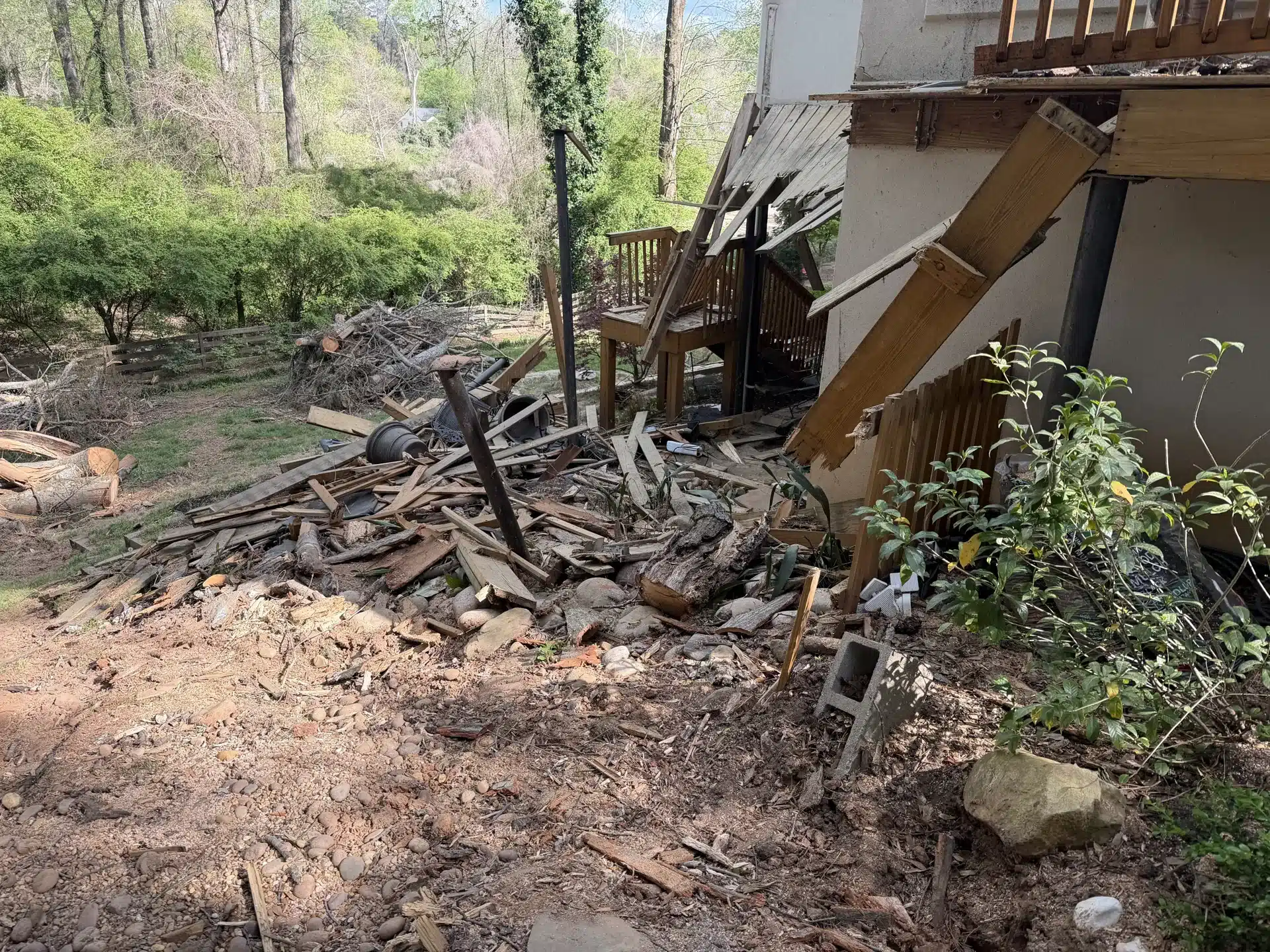
Floodwater isn't a burst pipe.
Water that crossed the ground carries whatever the ground carried. We treat it as contaminated from the start, which changes what can be saved and what has to come out.
The coverage problem nobody mentions until it happens.
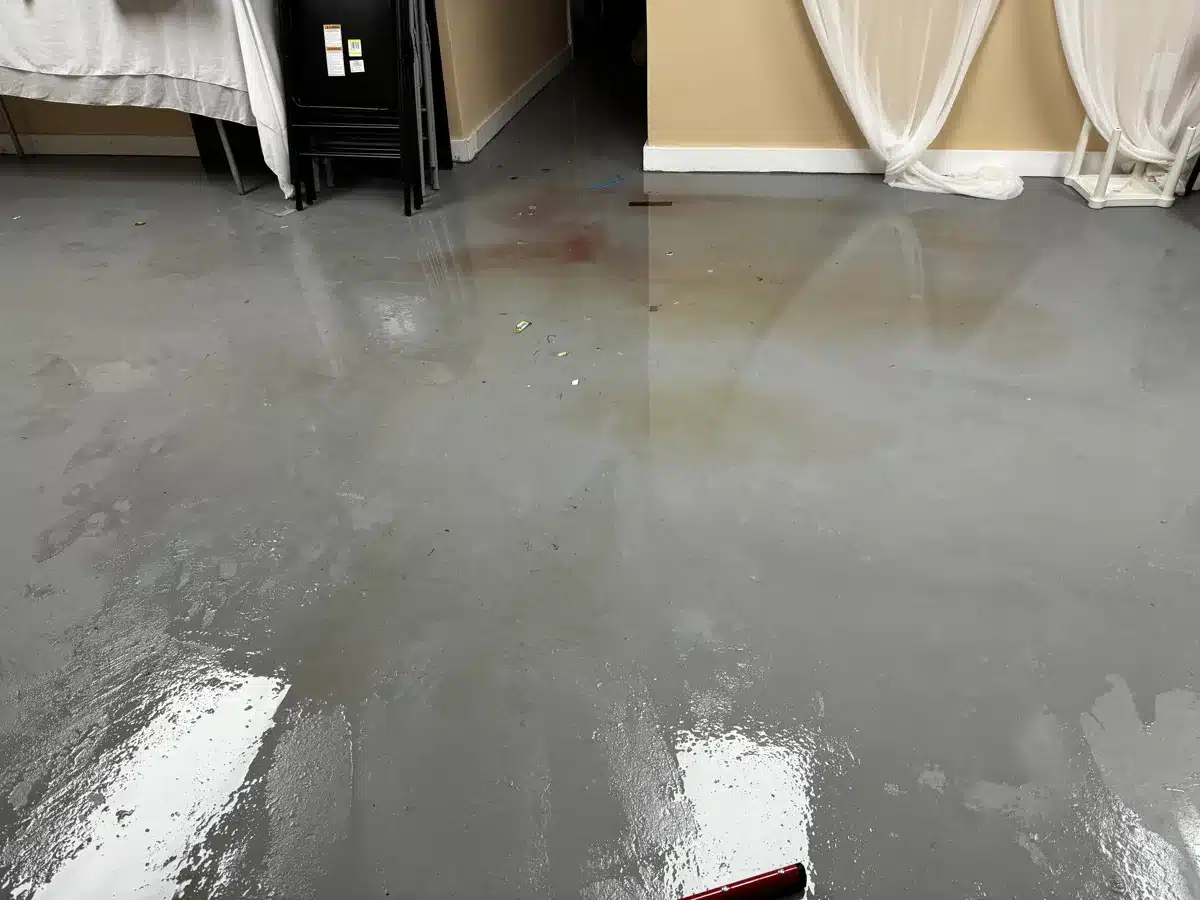
Start here: standard homeowners policies generally don't cover flooding. Rising surface water and overflowing creeks are excluded almost everywhere. Flood coverage comes from a separate NFIP or private flood policy, and many households find that out at the worst moment.
The line carriers draw is where the water came from. Rain coming through a storm-damaged roof is generally a covered storm loss. The same rain coming in because the creek at the bottom of the yard rose is a flood, and a different policy question. Sewer backup is usually a third category, often needing its own endorsement.
North Fulton and Cobb have plenty of homes near creeks that rise fast in heavy rain, and flash flooding after a stalled thunderstorm is a more common cause here than any named storm. Being outside a mapped flood zone isn't the reassurance it sounds like. We document the water's source and entry path carefully, because that's what the coverage decision turns on.
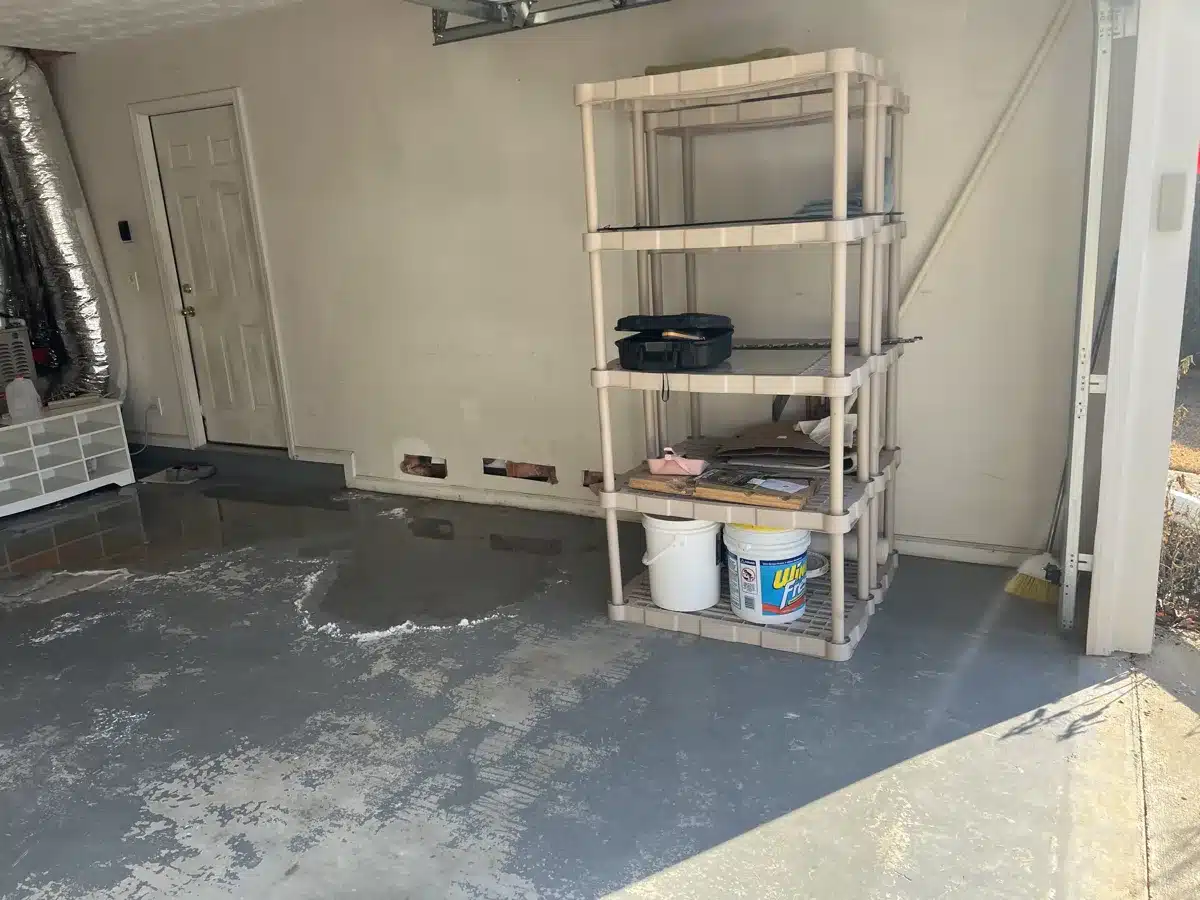
Flood cuts aren't vandalism.
Cutting drywall at a set height above the water line looks drastic. It's the standard approach, because soaked drywall and insulation can't be reliably decontaminated in place, and opening the wall is the only way to dry the framing behind it.
Cutting to a clean line also makes the rebuild straightforward.