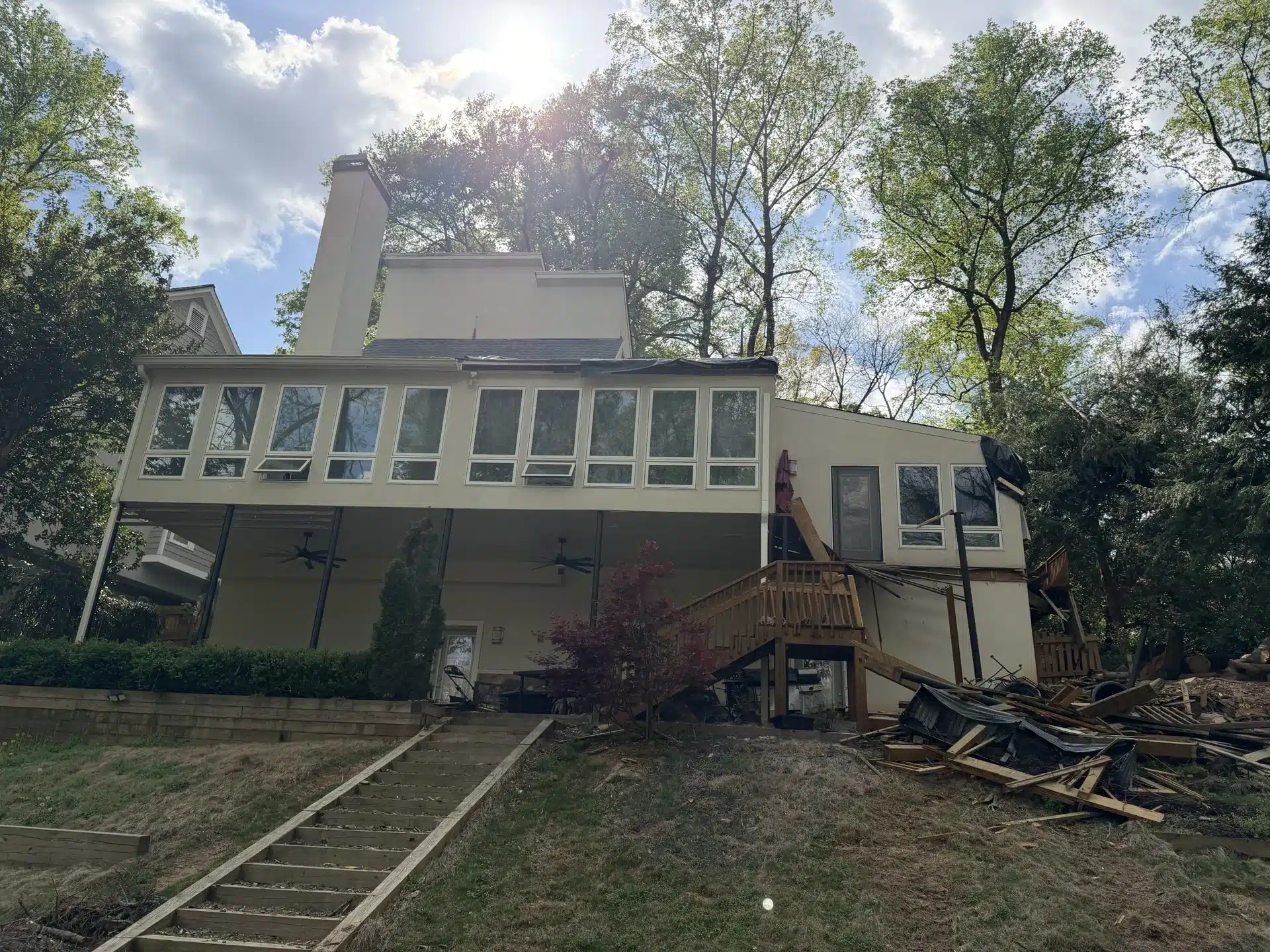
Most wind damage doesn't look like damage.
Straight-line winds lift shingles and drop them back in place. The roof looks fine from the driveway and leaks the following spring. We check what actually happened to the roof and the rest of the exterior.
Straight-line wind is the real threat here, not tornadoes.
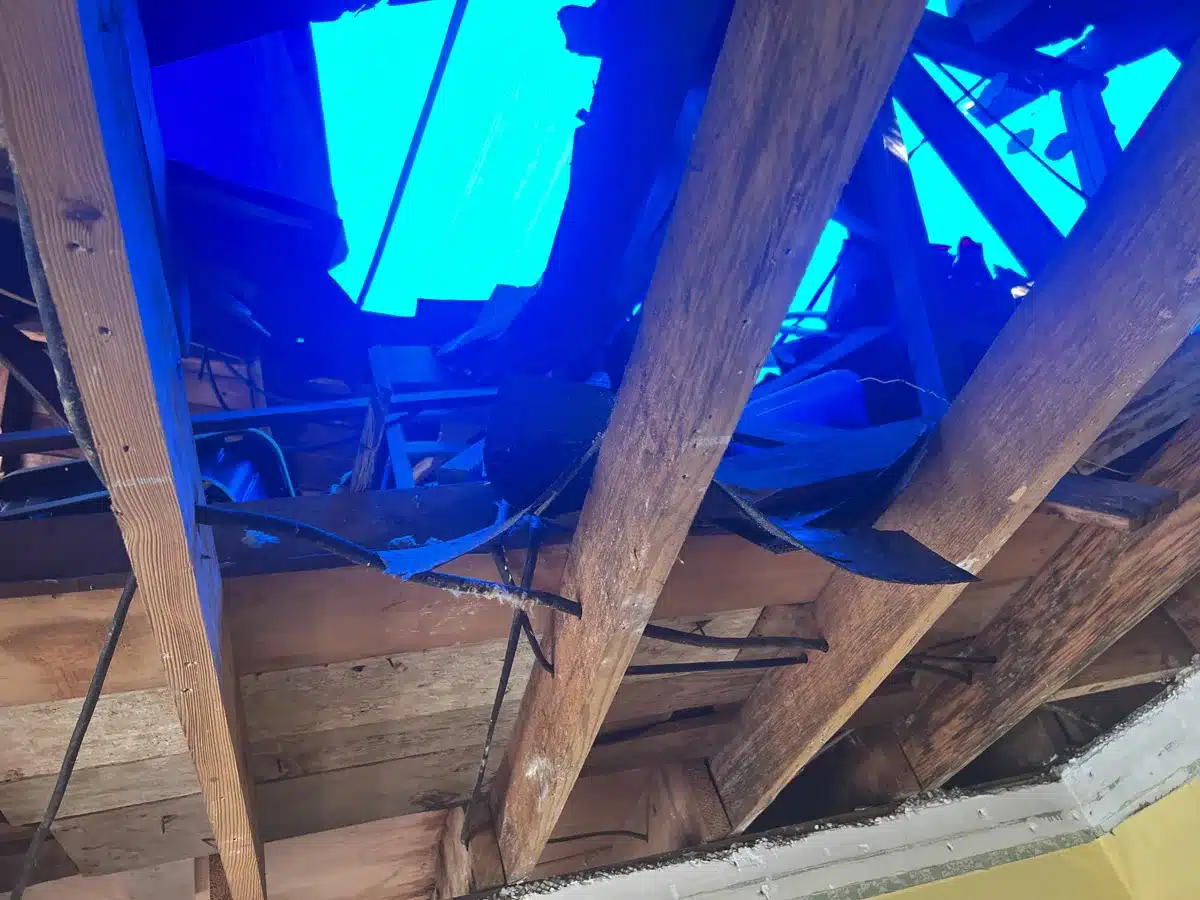
Tornadoes get the attention. Straight-line winds do most of the damage in north Georgia, arriving with ordinary severe thunderstorms several times a year. Downbursts can produce gusts like a weak tornado across a much wider area, which is why whole neighborhoods lose shingles on the same afternoon.
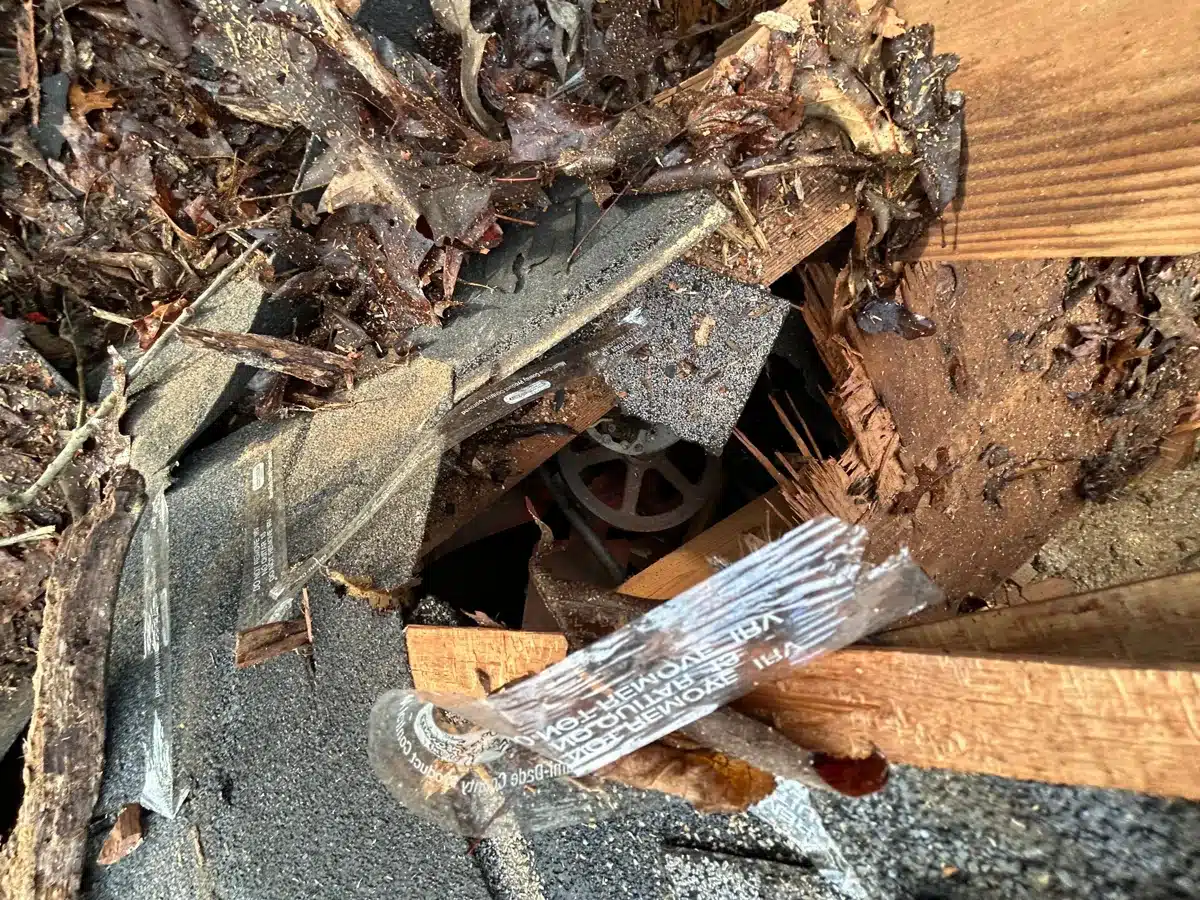
The damage is usually subtle. Wind gets under a shingle's edge, breaks its seal and lifts it; the shingle drops back looking normal. What's gone is the seal. The next wind lifts it more easily, and wind-driven rain gets underneath in the meantime. Damage found this way is routinely blamed on a storm months earlier, which is exactly the argument you don't want with an adjuster.
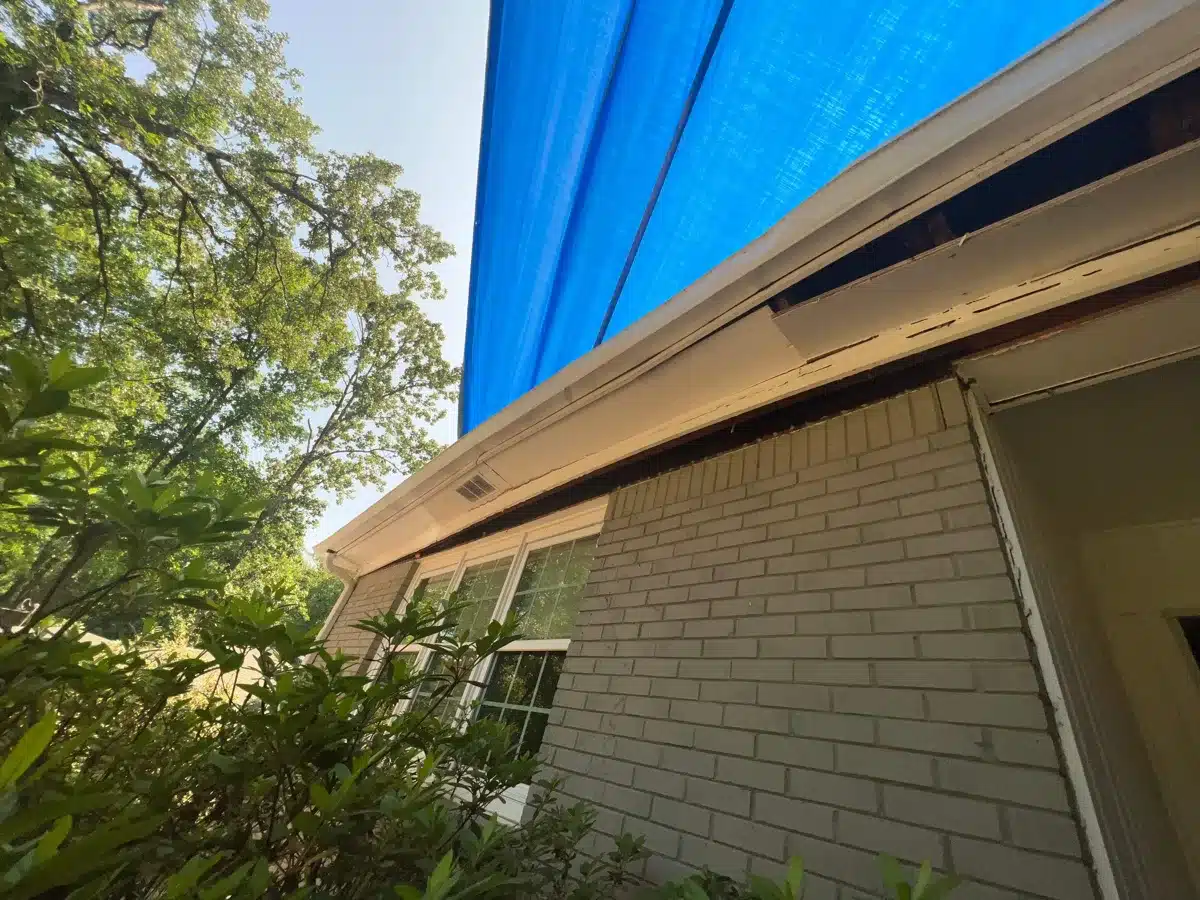
The same thing happens elsewhere on the house: siding pulled over its nail heads but sitting flush, loosened soffit and fascia letting rain into the attic, ridge vents shifted a fraction. None of it is visible from the ground, and all of it leaks.
The leak shows up months later.
An unsealed shingle lets in a little water with every wind-driven rain. It soaks the roof deck and insulation before anything reaches a ceiling, so the stain that finally appears is the end of a long process, not the start.
Caught at the roof, it's a repair. Caught at the ceiling, it's a restoration.
More storm damage services.
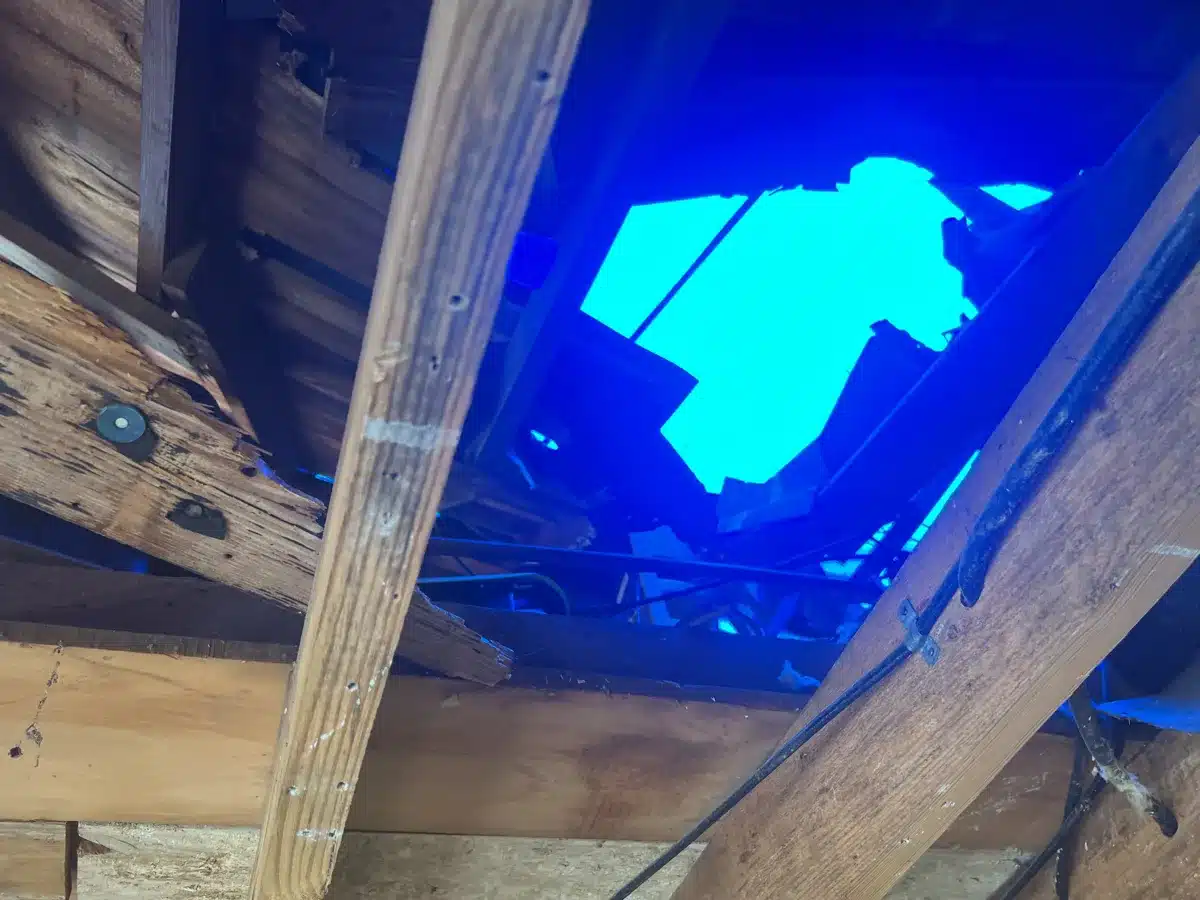 Emergency Storm Response & TarpingTarping, board-up and water extraction as soon as it's safe.
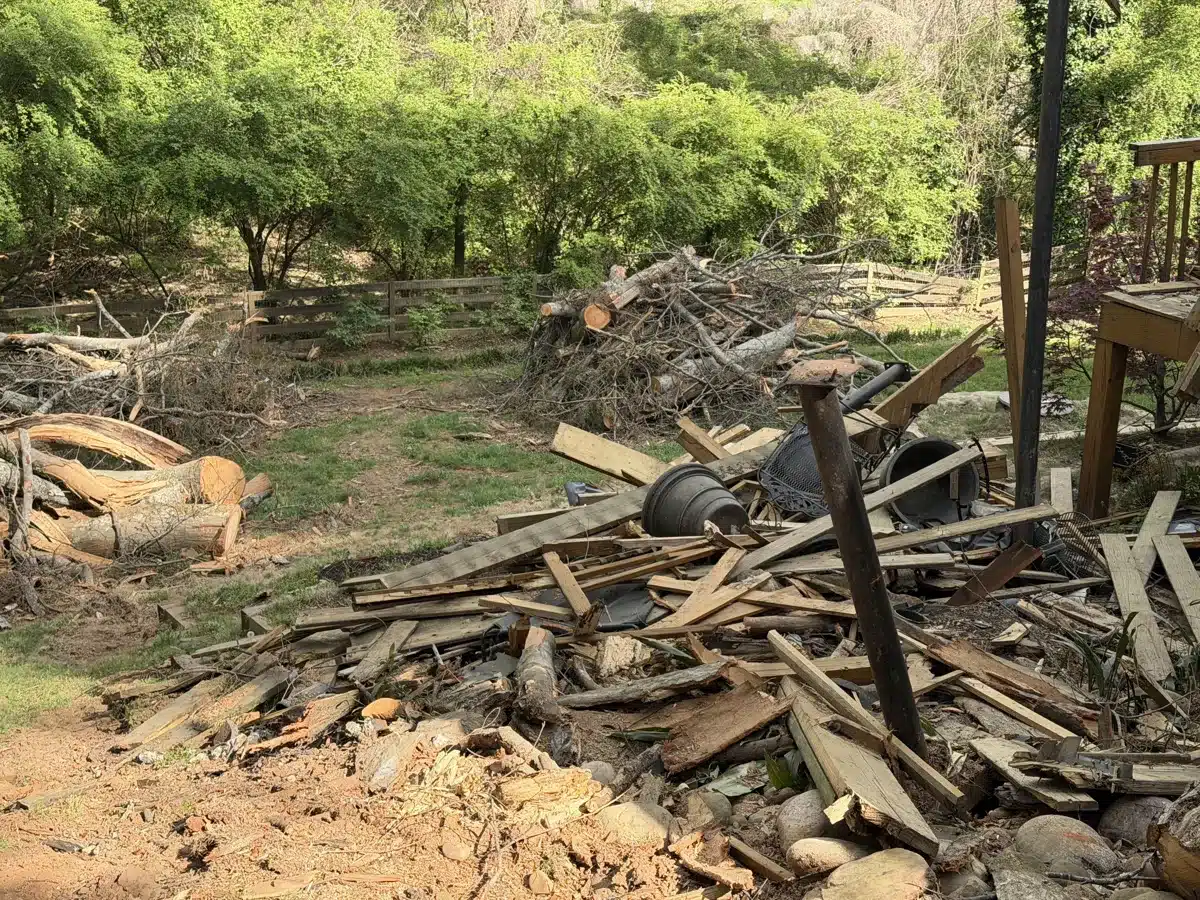 Flood Damage RestorationWater that crossed the ground carries whatever the ground carried.
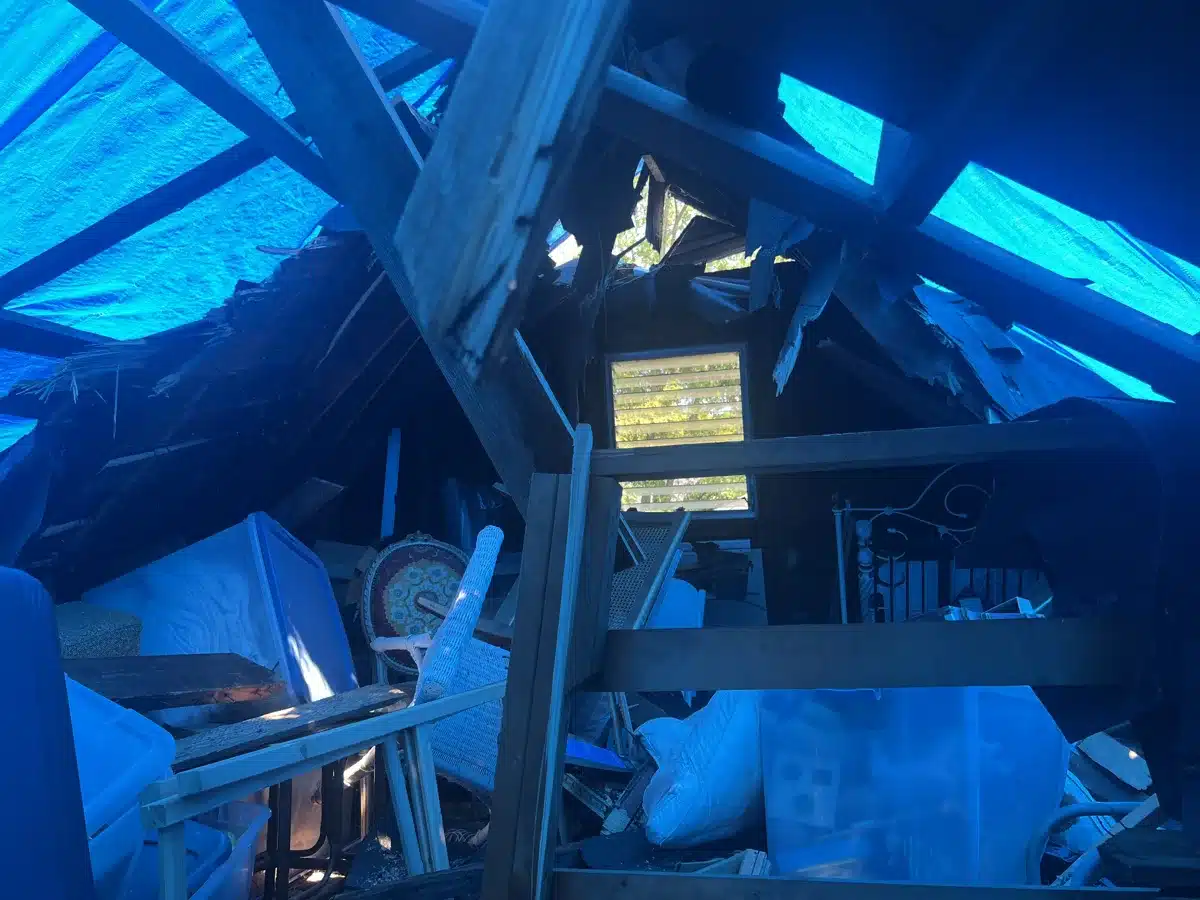 Hurricane & Tropical Storm Damage RepairTropical storms reach north Georgia with the wind weakened and the rain intact.
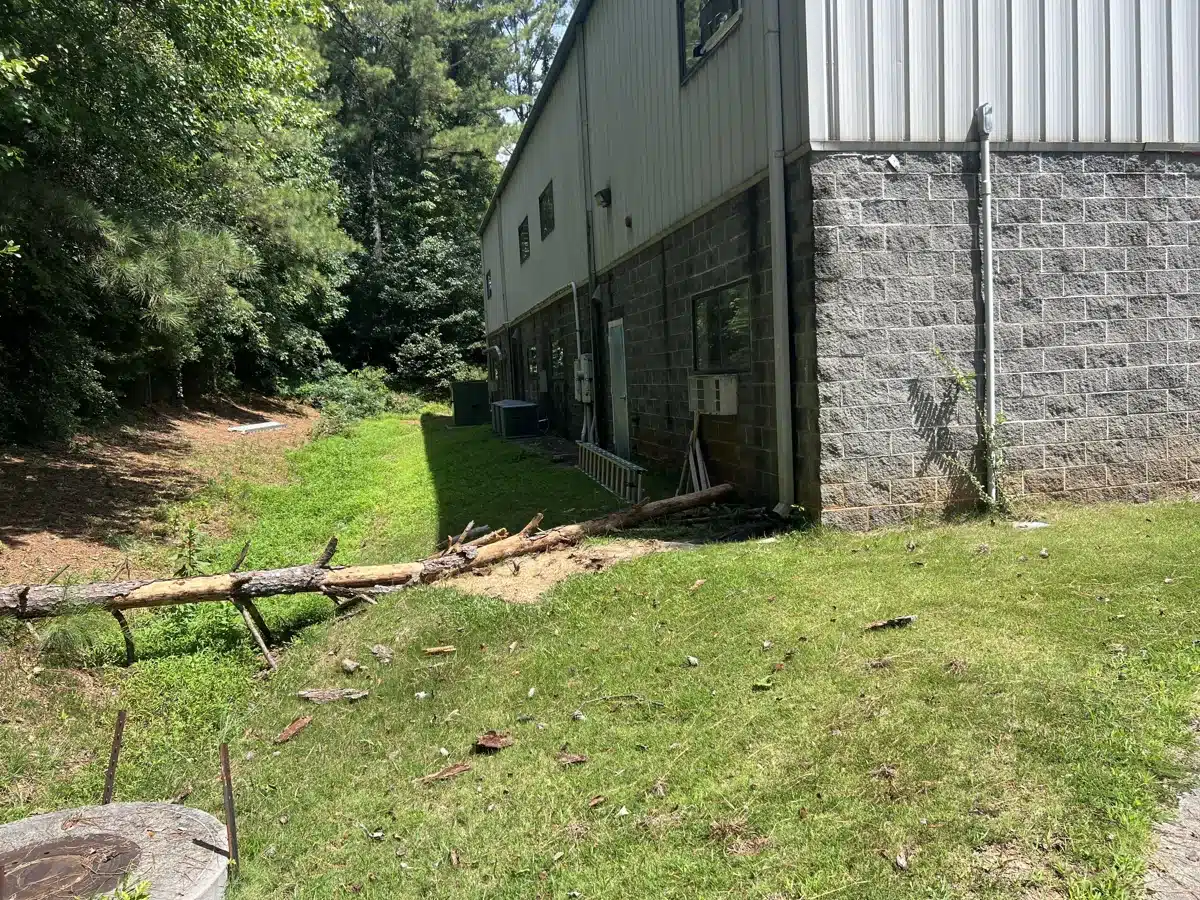 Tornado Damage RepairTornado damage is the one case where the first question is whether the building is safe to enter at all.
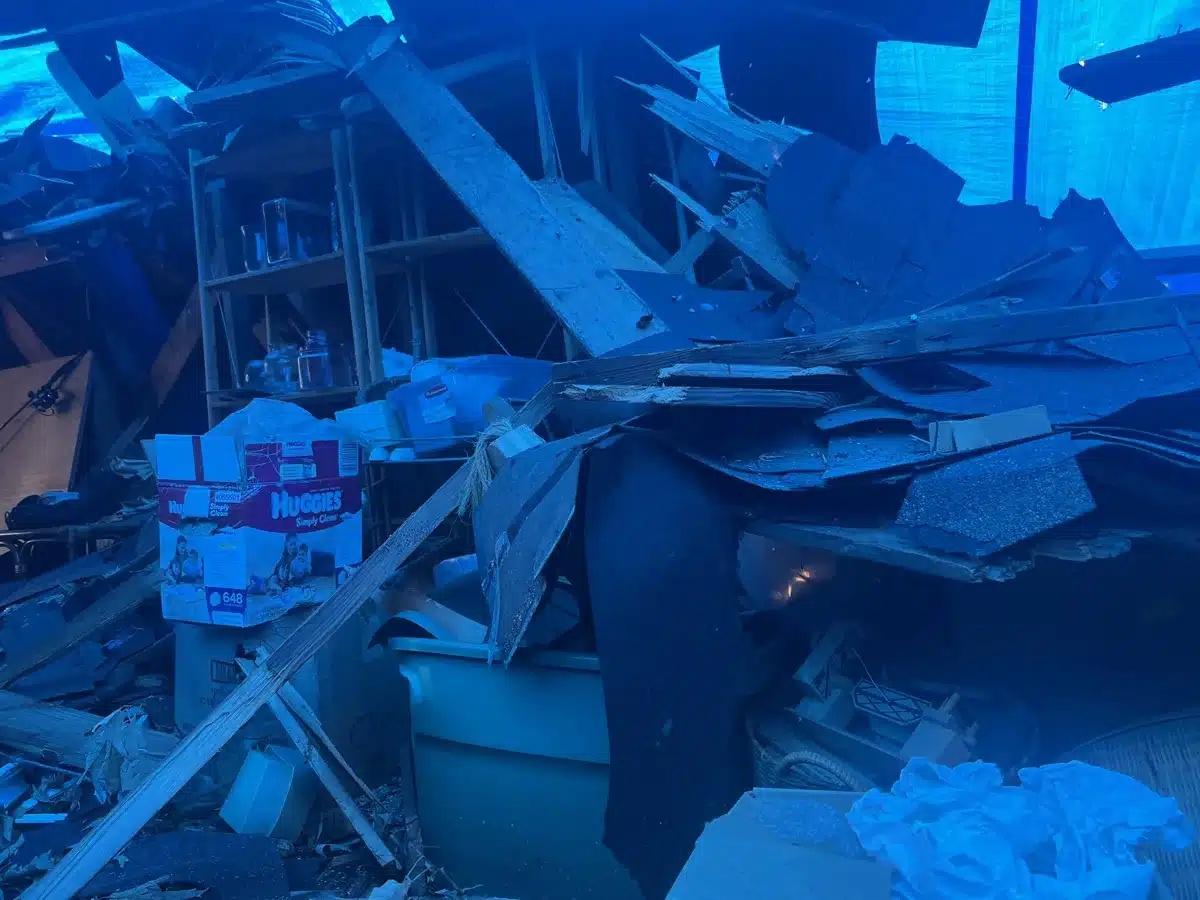 Post-Storm Repair & ReconstructionMost of what goes wrong in storm work happens in the handoff between the emergency crew and the rebuild crew.
 Storm Damage overviewHow we handle storm damage from the first call to the rebuild.