Sewage Backup in Your Basement? Cherokee County GA Guide.
A sewage backup in your basement is a health emergency, not just a cleanup job. Category 3 water carries bacteria, viruses, and waste that standard wet-vacs cannot remove safely. The faster you stop contact and call a trained crew, the lower your restoration bill and your health risk.
Call (470) 201-2929. A person answers, 24 hours a day, every day of the year.
Sewage water is classified Category 3, the most hazardous level, and requires full containment and protective gear before any work begins.
We document before we touch anything, including timestamped photos and moisture readings at the start.
Porous materials like carpet, drywall, and insulation almost always need to come out after Category 3 exposure.
Structural drying is measured daily until readings confirm the space meets a dry standard, not just until it feels dry.
One team, from the first call to the final repair, handles your basement in Cherokee County, GA from extraction through rebuild.
Start here
What You Are Dealing With After a Sewage Backup.
If your basement in Cherokee County, GA has sewage water in it right now, the first thing to understand is what that water contains. Restoration professionals classify water damage on a three-tier scale. Category 1 is clean water from a supply line. Category 2, often called gray water, comes from appliances or sinks and carries contaminants. Category 3 is black water. Sewage backup falls into Category 3 every time. That means fecal matter, bacteria such as E. coli and salmonella, viruses, and other pathogens are present in the standing water and on every surface it has touched.
You should not wade through it, run fans over it, or try to shop-vac it yourself. The aerosols that spinning fans create can spread contaminated droplets to areas of the home that were not affected. Keep children and pets out. Turn off HVAC if the basement shares a return with the rest of the house. Then call us. A person answers at (470) 201-2929 around the clock, every day of the year.
How the job runs
Three stages, one team.
Tap a stage to read exactly what happens and why.
Why Sewage Backups Happen in Cherokee County Basements.
Cherokee County sits on a mix of red clay soils and older sewer infrastructure in communities like Canton, Woodstock, and Ball Ground. Heavy rain events saturate the ground and can overwhelm municipal sewer lines, pushing waste back up through the lowest drain in a home, which is usually a floor drain or toilet in the basement. This is called a sewer surcharge or municipal backup.
Other causes are specific to the home itself. Tree roots from the mature hardwoods common in this part of north-metro Atlanta work into clay or cast-iron drain lines over time and create partial blockages. Grease buildup, flushed wipes, and aging pipes all contribute. A failed or missing backwater valve leaves the drain line wide open during a surcharge event.
Knowing the cause matters for the insurance claim. A municipal backup typically requires a separate sewer and drain rider on your homeowner policy. A clog or failed component inside your property line is often covered differently. We work alongside your adjuster and document every finding so the claim file holds up, but we never promise coverage outcomes. That determination belongs to your carrier.
How We Respond: The First Hours Matter.
When our crew arrives, we document before we touch anything. That means timestamped photos of every wall, floor, drain, and affected material before extraction begins. This record protects you in the claims process and gives us a clear baseline for moisture mapping later.
Extraction comes first. We use truck-mounted and portable extraction units to remove standing Category 3 water from the basement. After bulk water is out, containment goes up. Plastic sheeting and negative air pressure machines isolate the affected zone so that contaminated air does not migrate into living areas above. Our technicians wear full personal protective equipment throughout.
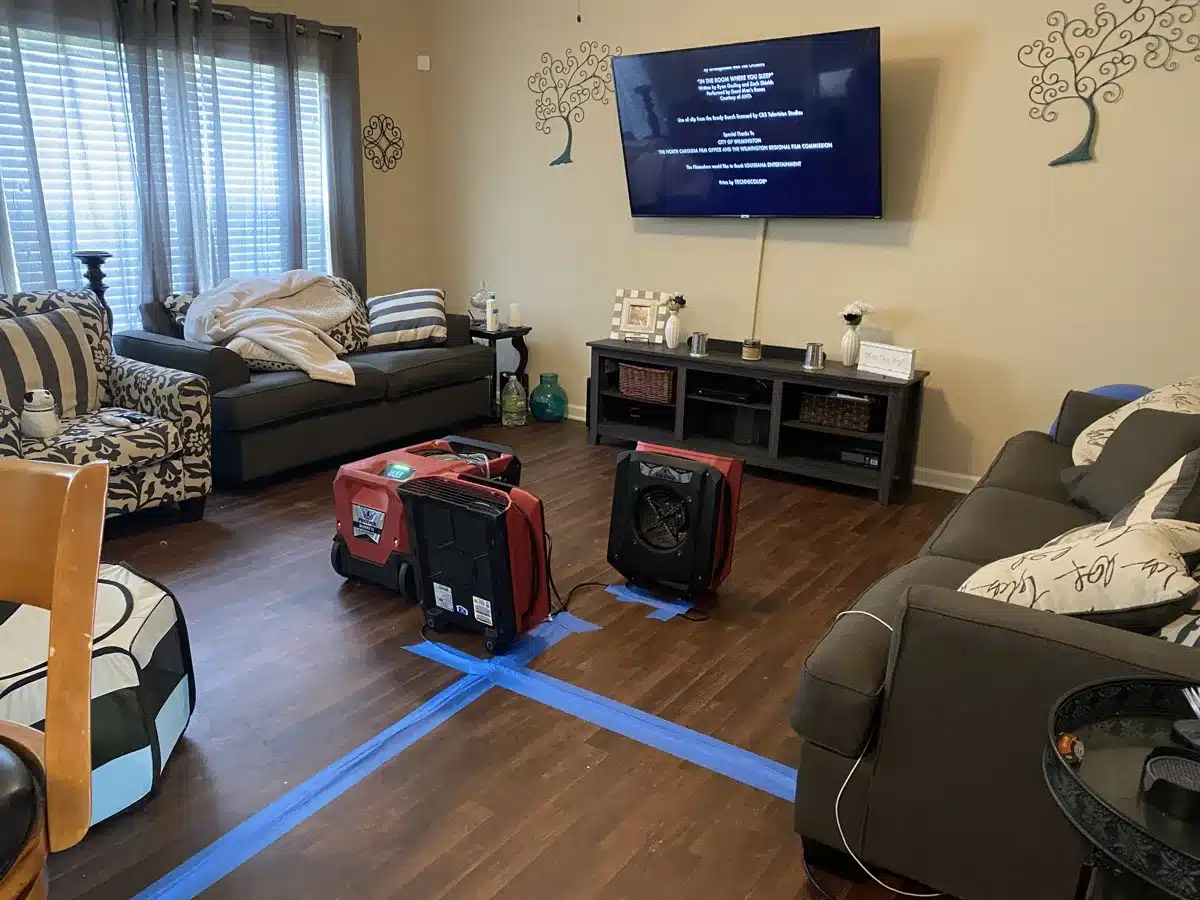
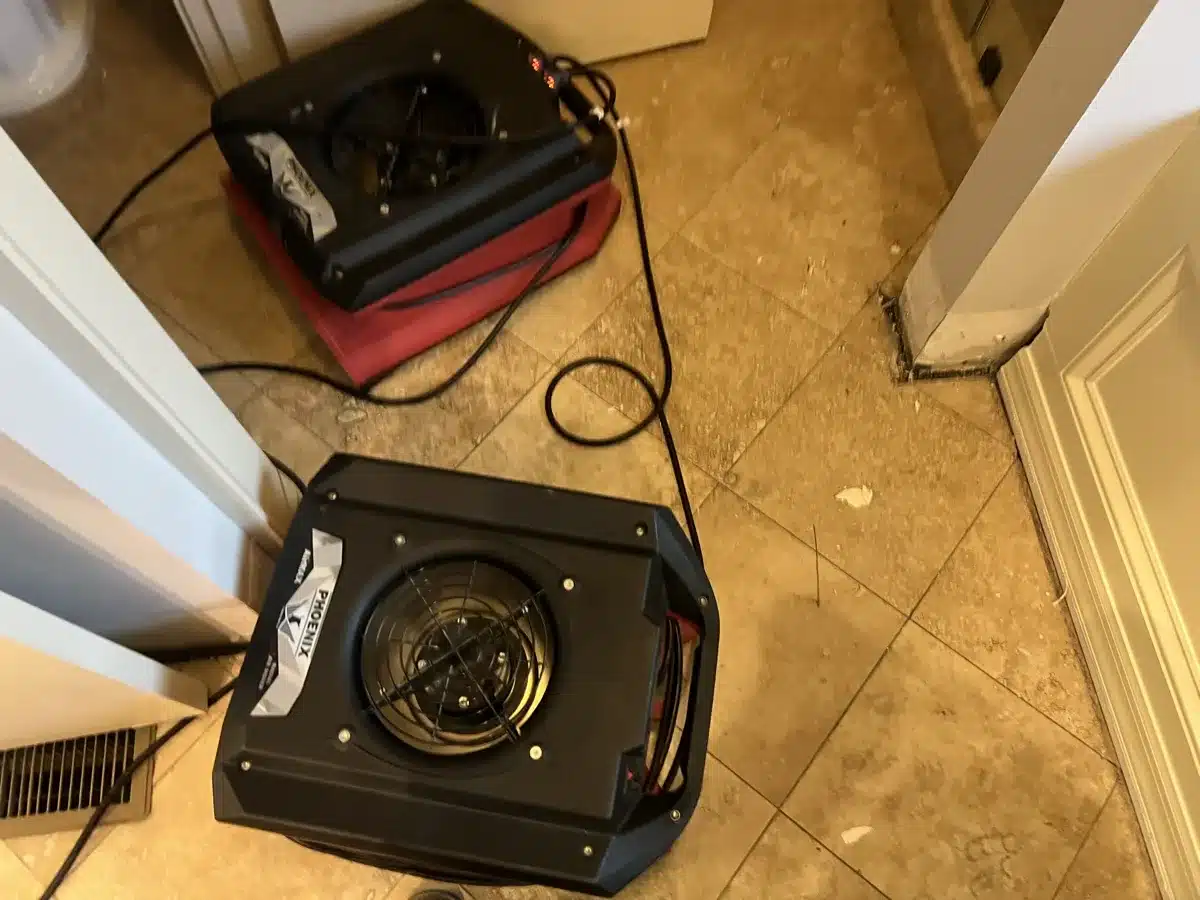
Affected porous materials are removed carefully and bagged for disposal. Carpet, pad, drywall below the flood line, and insulation are almost always non-salvageable after Category 3 exposure. We explain what has to come out and why before we cut anything. Then antimicrobial treatment is applied to structural surfaces, and commercial drying equipment, air movers and dehumidifiers, is set in place. Readings are taken every day until the structure reaches a measured dry standard confirmed by moisture meters and thermal imaging.
What Restoration Looks Like From Extraction to Pre-Loss Condition.
The goal of every project is to return your home to pre-loss condition, meaning the state it was in before the damage occurred. For a sewage backup in a finished basement, that process typically moves through five stages: emergency extraction and containment, controlled demolition of affected materials, antimicrobial treatment and structural drying, clearance testing, and rebuild.
Structural drying in a basement environment takes time. Concrete slabs hold moisture for days even after surface water is removed. We monitor slab readings alongside wall cavity readings and subfloor readings each day. Equipment is adjusted based on the numbers, not on how the space looks or smells. We dry to a measured standard, and we do not close up walls or install new flooring until readings confirm the structure is at an acceptable moisture level.
Once clearance is reached, rebuild begins. For finished basements, that often includes framing repairs, drywall hang and finish, insulation replacement, flooring installation, and paint. We handle all of it. When the work is done, your basement is restored right, not just dried out and handed back to you mid-project.
Your insurance claim
The Documentation We Provide for Your Claim.
Your adjuster will want a clear picture of what happened, what was affected, and what was done. Thermal imaging shows wet areas behind walls and under slabs that cameras cannot see. Timestamped photos cover each stage from arrival through clearance.
That quote reflects actual conditions, not a number built to match a software template. If conditions change as demolition reveals hidden damage, we document the change and communicate it to you and your adjuster before work continues. No surprises on the bill side, and no work done without your knowledge.
One team, from the first call to the final repair, stays on your project. You will not be handed off to a subcontractor for the rebuild phase. The same crew that extracted the sewage water handles drywall reinstallation, flooring, and paint so that communication stays clear and accountability stays in one place.
What we commit toEvery job
We provide daily drying logs that record moisture readings at marked locations so there is a numeric record of the drying curve.
We provide a written quote within 24 hours of the initial assessment.
Questions
Common questions, answered straight.
Still not sure? Ask the advisor in the corner, it can look at a photo too, or call and a person will answer.
Is sewage backup in a basement covered by homeowner insurance in Georgia?
It depends on your policy. Many standard homeowner policies in Georgia exclude sewer and drain backup unless you have added a specific rider. Some policies cover damage from a sudden plumbing failure on your property line but exclude municipal surcharge events. We document the cause and conditions thoroughly so your adjuster has what they need to evaluate the claim. Talk to your carrier early and ask specifically about your sewer backup endorsement.
How long does basement sewage cleanup take in Cherokee County?
A typical Category 3 water loss in a finished basement takes three to five days for extraction, demolition, and structural drying to reach clearance. Rebuild time depends on the scope of material replacement, but most projects move from initial call to final repair in two to four weeks. We give you a timeline in writing and update you if conditions require adjustment.
Can I stay in the house during sewage backup cleanup?
In most cases, yes, if the contamination is contained to the basement and the HVAC system is not spreading affected air. We set up containment barriers and run negative air machines to keep the work zone isolated. Our crew will tell you honestly if the conditions in your specific home make temporary relocation a better option. We do not make that recommendation unless the exposure risk warrants it.
What materials always have to be removed after a sewage backup?
Carpet, carpet pad, drywall that absorbed Category 3 water, fiberglass or cellulose insulation, and certain types of flooring underlayment are almost always removed. These porous materials cannot be reliably decontaminated. Solid concrete, ceramic tile, and metal framing can often be treated and retained after proper antimicrobial application, confirmed by testing.
Do I need to call a plumber before calling a restoration company?
If sewage is still actively backing up, the source needs to stop first. A plumber clears the blockage or repairs the line. We handle everything after the water stops: extraction, cleanup, drying, and rebuild. In many situations, we can coordinate with your plumber and start containment and documentation while they work. Call us at (470) 201-2929 and we will help you sequence the response correctly.
What is thermal imaging and why does it matter in basement drying?
Thermal imaging uses an infrared camera to detect temperature differences in walls, ceilings, and floors. Wet materials hold temperature differently than dry materials, so the camera shows moisture that is hidden behind drywall or under a slab. This prevents us from missing saturated areas that would grow mold after the visible surfaces dry. Readings taken every day, combined with thermal imaging, give us a complete picture of the drying progress.
Sewage backup in a basement is one of the more serious damage events a Cherokee County homeowner can face. The contamination is real, the health risk is real, and the window for limiting damage is short. Every hour that Category 3 water sits in contact with porous materials extends the demolition scope and raises the restoration cost. We respond fast, we document everything, and we stay with your project through the final repair. A person answers at (470) 201-2929 any hour of the day or night. Call now, tell us what you are seeing, and we will get a crew moving toward your home in Cherokee County, GA.
A person answers, 24 hours a day, every day of the year
We contact your insurer directly and send you a written quote
 Emergency Water ServicesIf water is moving through your property right now, the next hour matters more than any decision you make this week.Learn more
 Water Removal & ExtractionExtraction is the cheapest, fastest stage of a water loss.Learn more
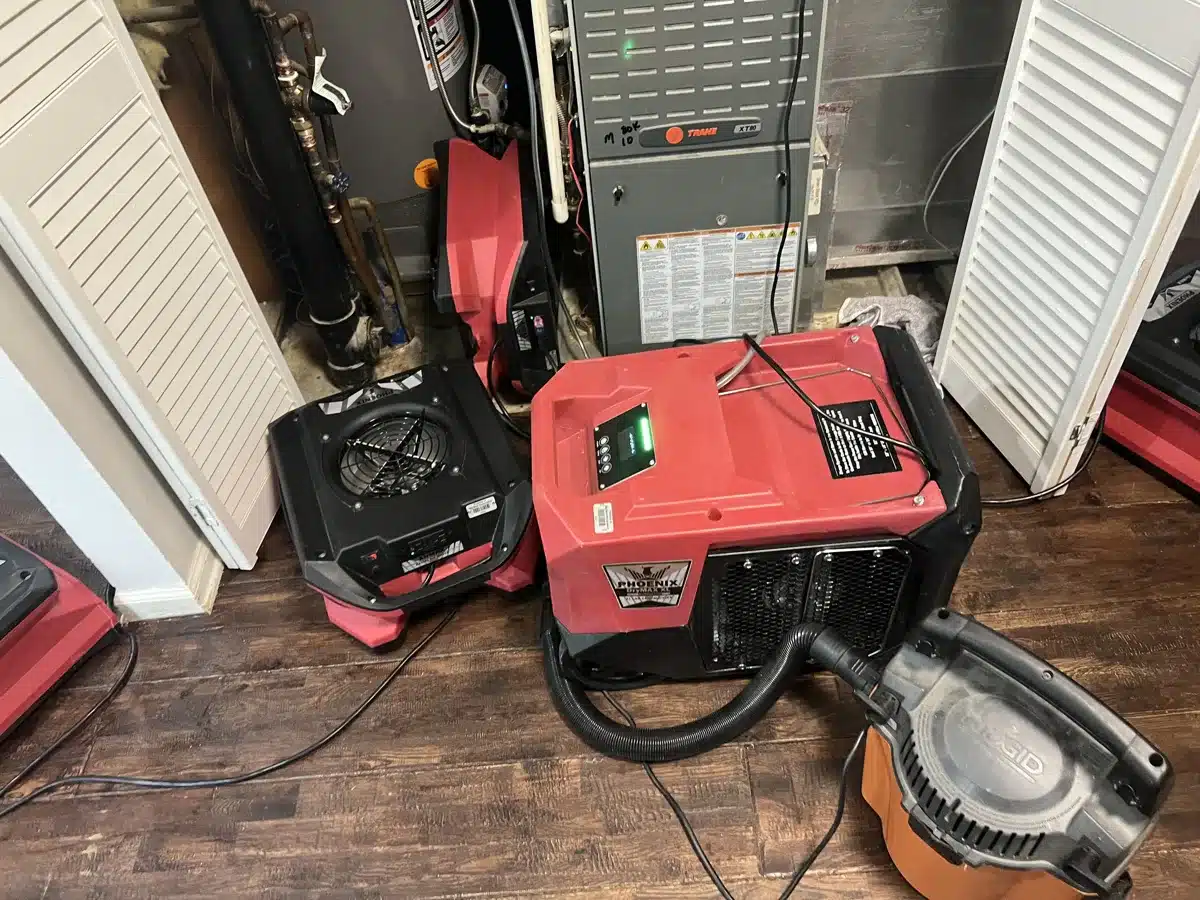 DehumidificationWithout dehumidification, evaporated water just condenses somewhere cooler, usually inside a wall.Learn more
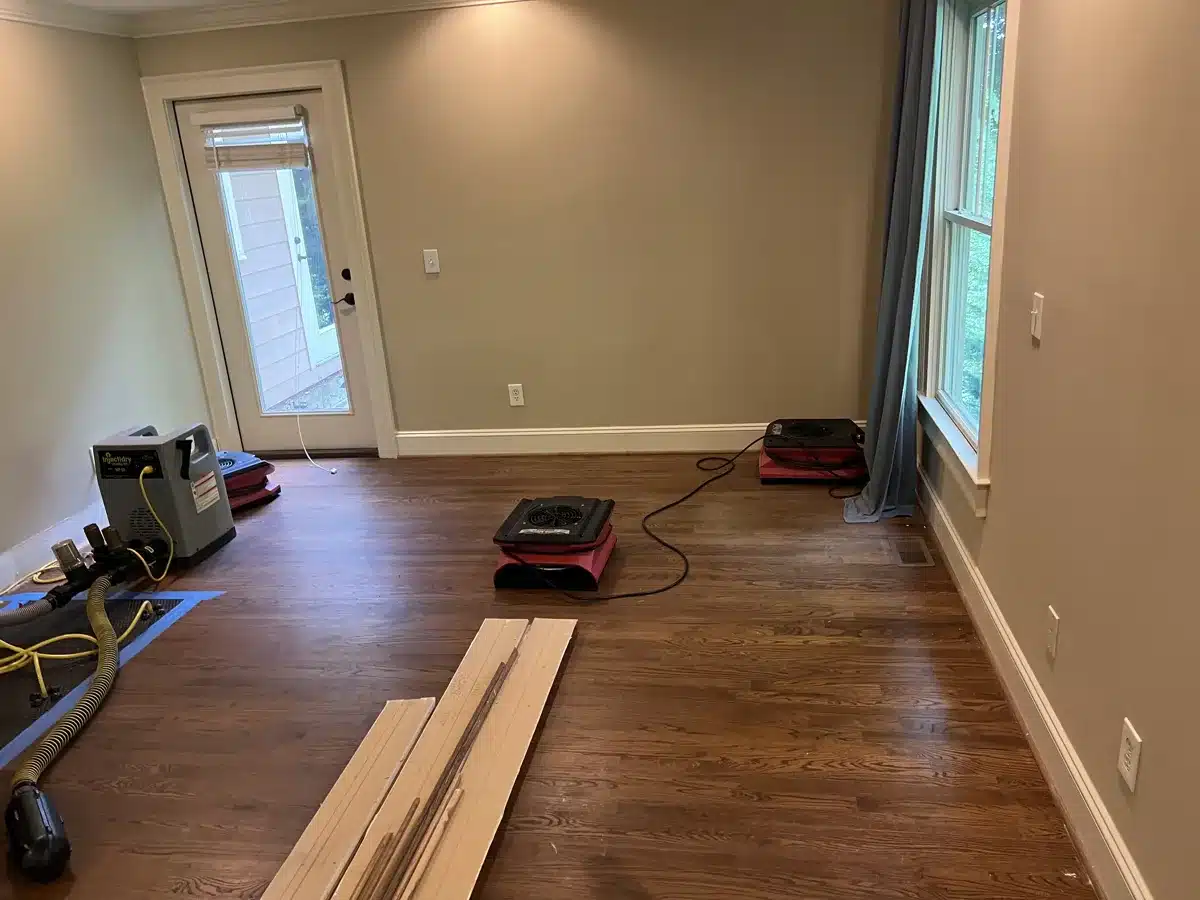 Thermal Imaging & Moisture InspectionInfrared shows where moisture has traveled without tearing anything out.Learn more
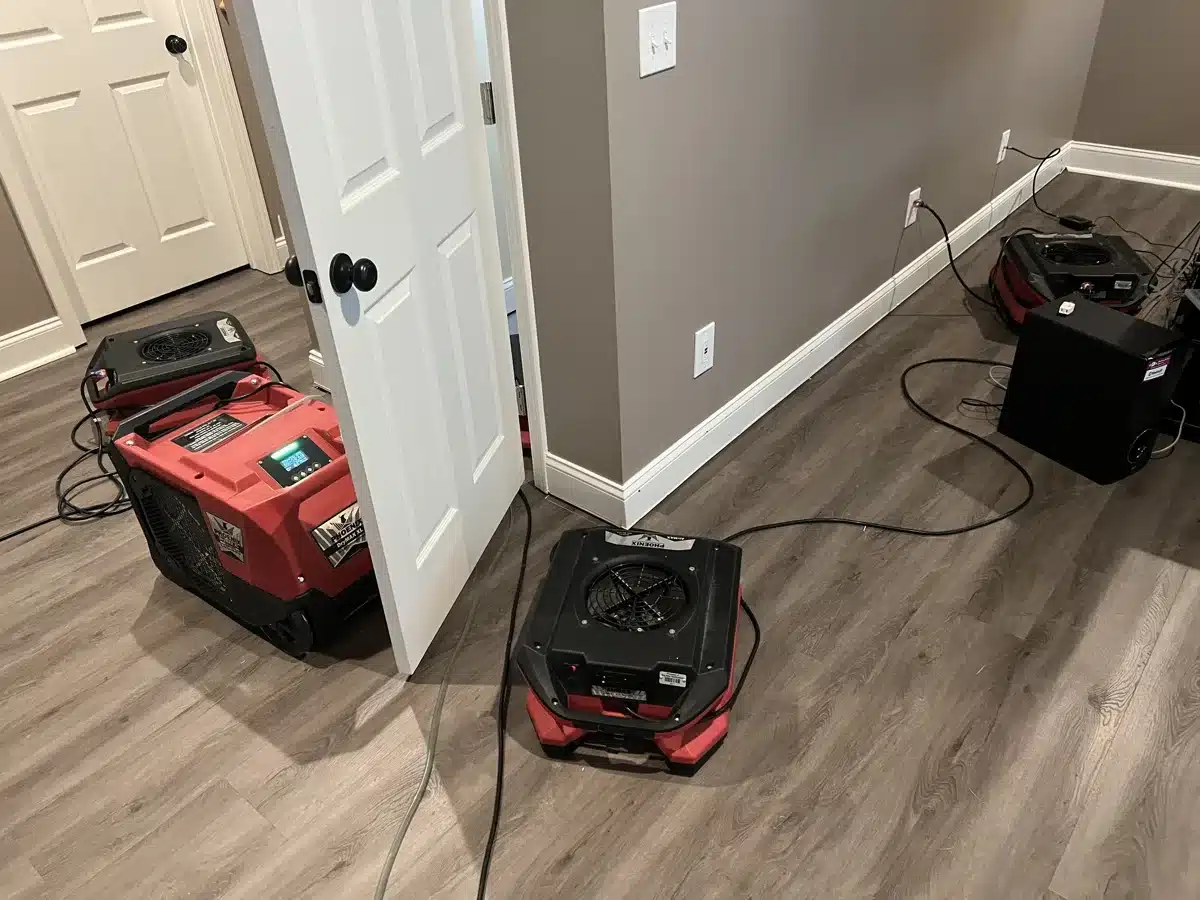 Disinfection & Antimicrobial TreatmentWater that came through an appliance, a drain or a flooded yard leaves more behind than moisture.Learn more
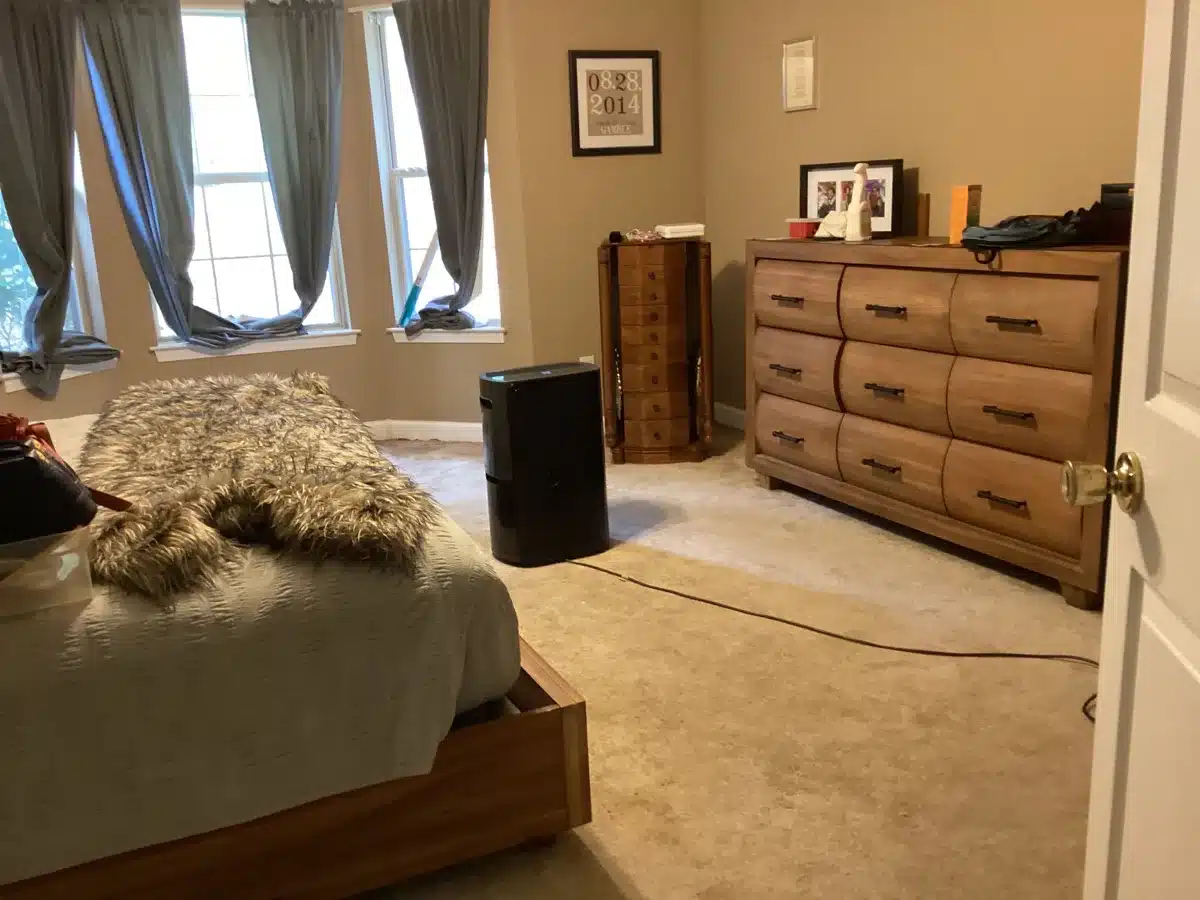 Water Damage overviewHow we handle water damage from the first call to the rebuild.Learn more