Containment is most of the work.
Removal without containment spreads what you were trying to remove. Sealed barriers, negative air pressure and HEPA filtration keep a local problem local.
Why "mold removal" is a slightly misleading phrase.
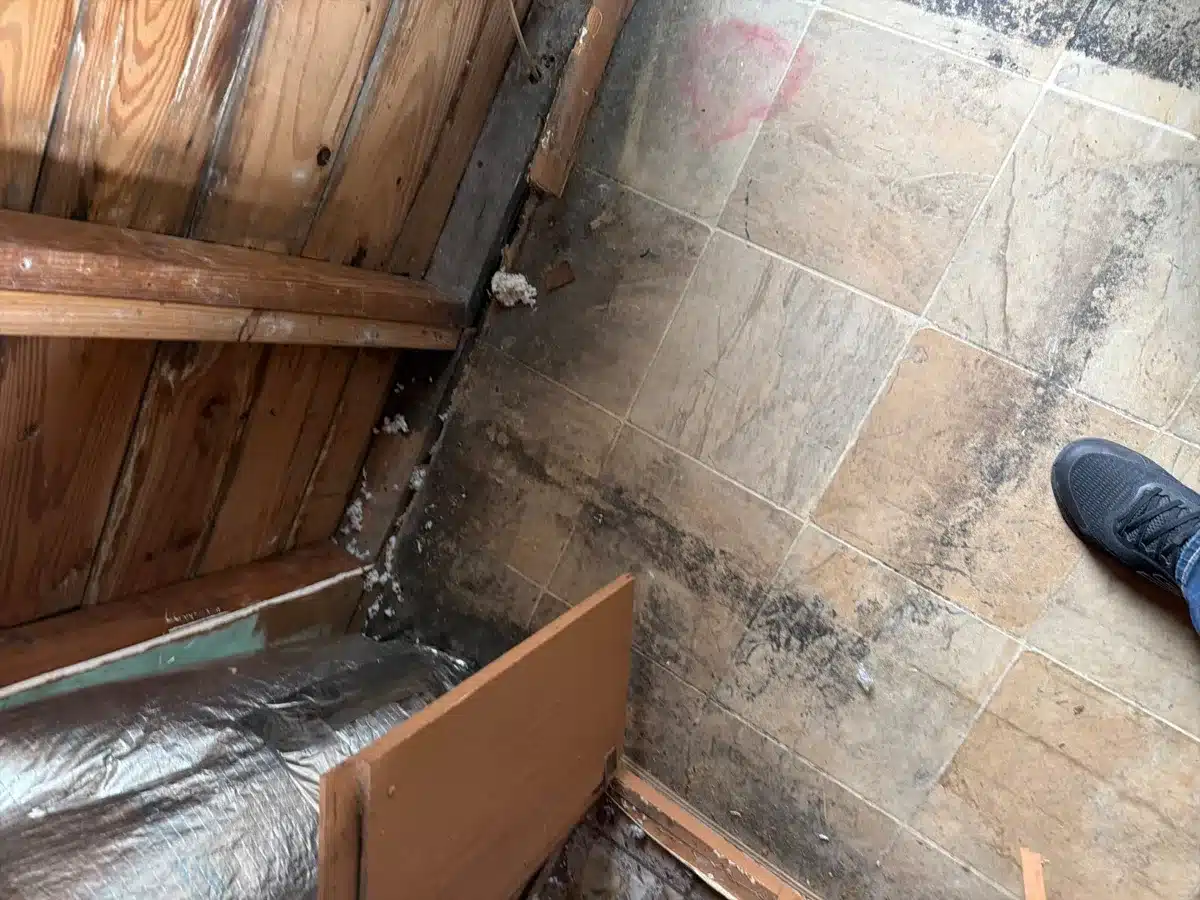
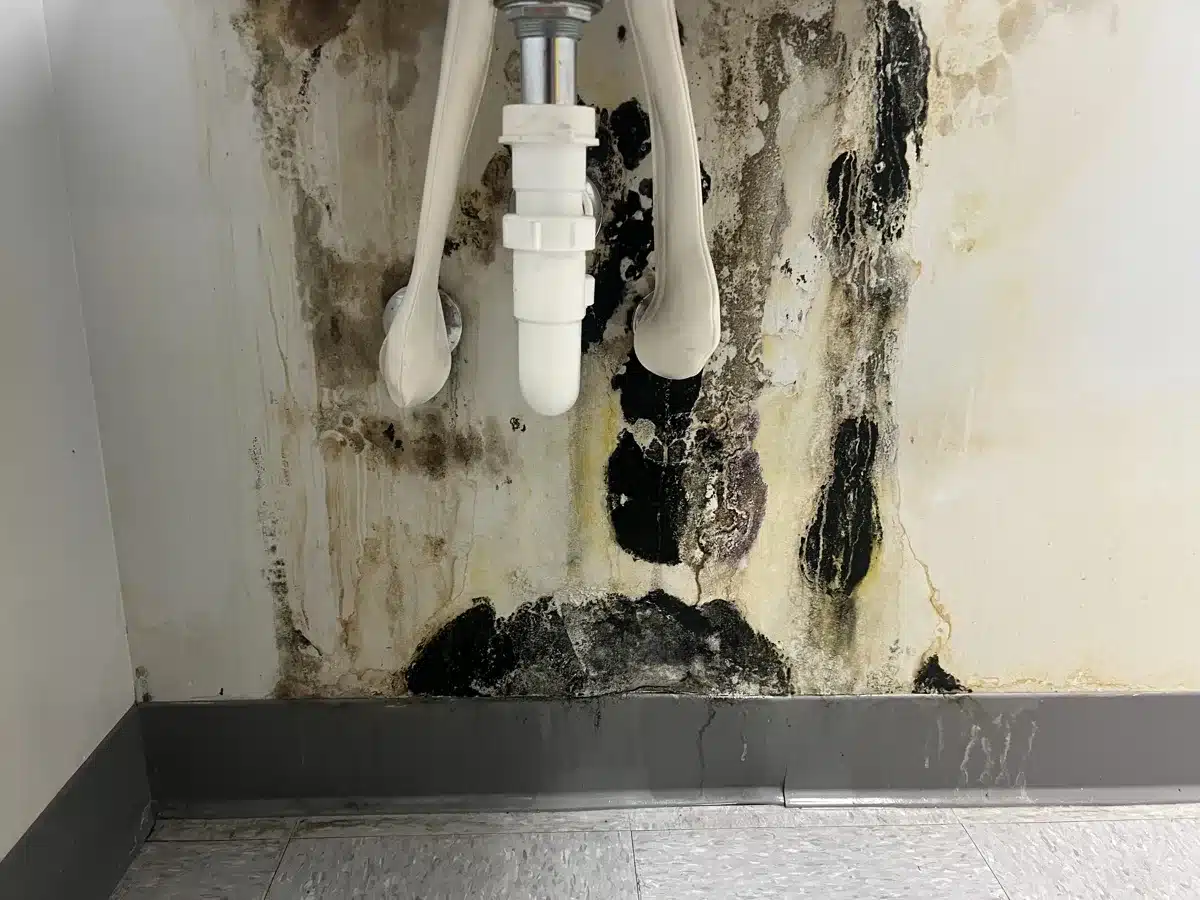
Mold spores exist in every building and always will. Nothing sterilizes a house, and any company promising to eliminate mold permanently is selling something that doesn't exist. Remediation removes the growth, removes the materials it colonized and corrects the moisture that let it in, returning the house to a normal spore level for its environment.
That's why fixing the moisture source isn't an add-on. Remove the growth, leave the leak, and you've bought a season.
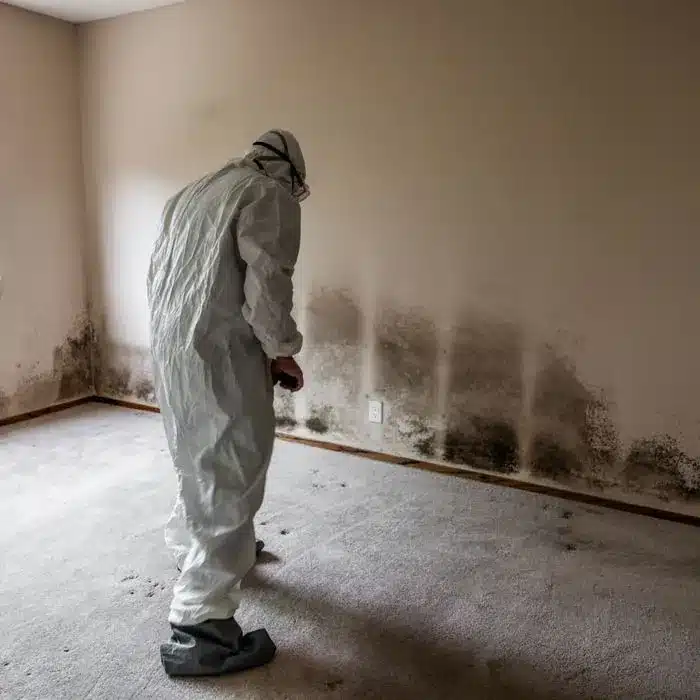
The physical work is straightforward; the discipline is everything. The area is sealed with plastic barriers and a zippered entry. Negative air machines with HEPA filters keep it at lower pressure than the rest of the house, so air flows in, not out. Affected porous materials come out: drywall, insulation, carpet and anything else that absorbed it. Hard surfaces are HEPA vacuumed and wiped, the whole area is cleaned again, and antimicrobial is applied where it's warranted. We recommend clearance testing by an independent party at the end, because a clearance from the company that did the work means little to a future buyer's inspector.
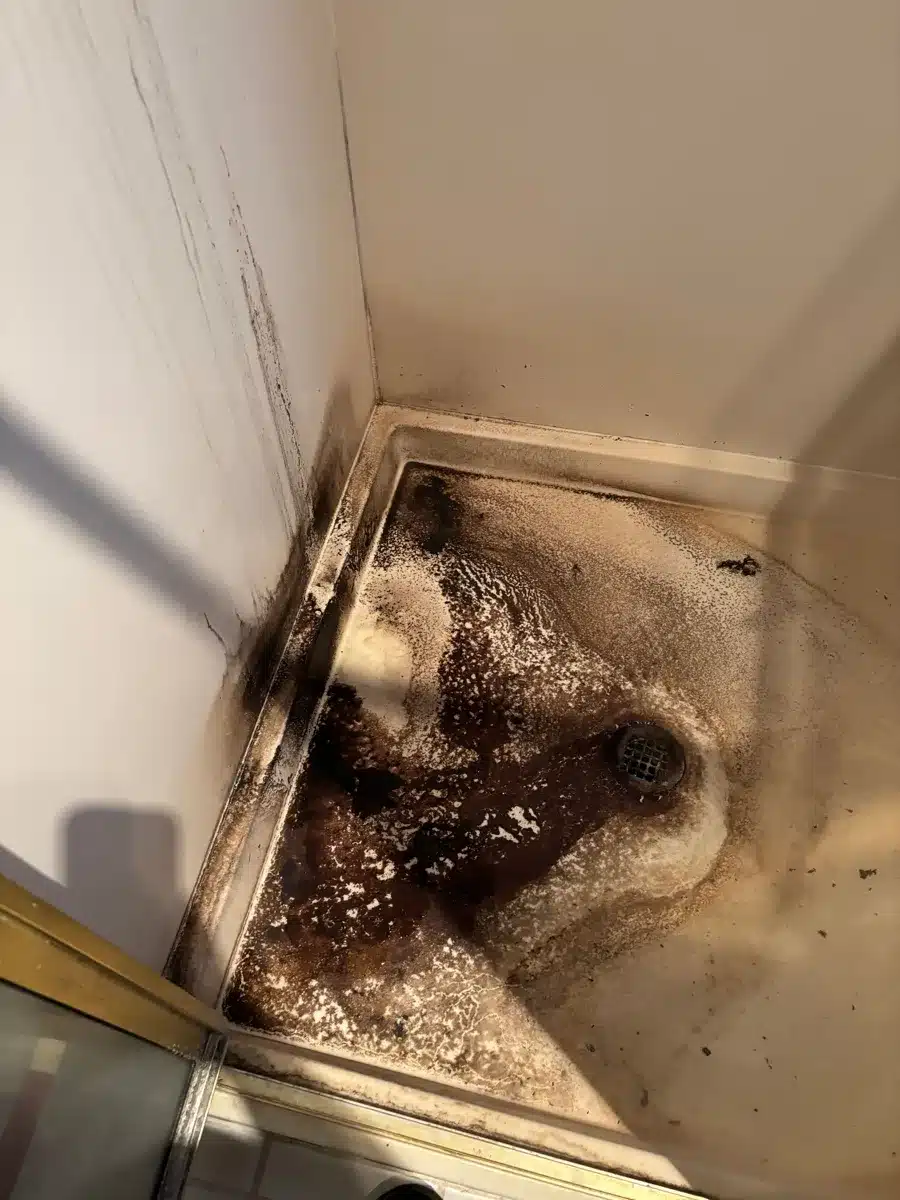
Why the plastic goes up before anything comes down.
The riskiest moment in a mold job is the first cut. Disturbed growth releases spores in huge numbers, and without containment and negative pressure they travel through the house and into the return air.
Containment isn't caution. It's the difference between remediating one room and remediating a house.