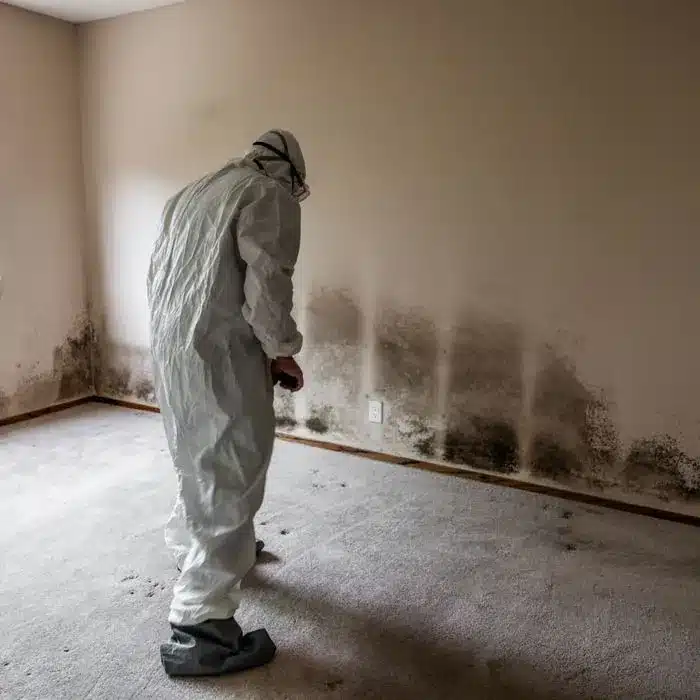
Mold inspection and remediation for East Cobb homes, where slow basement moisture is the most common cause.

The most common East Cobb mold job doesn't start with a flood. It starts with a damp corner: a downspout emptying at the foundation, a French drain that stopped working years ago, soil that settled toward the house. Moisture wicks through the block, and a finished basement wall grows mold behind it for months.
Removing that mold without fixing the water just resets the clock. Our inspection finds the moisture source first, and the plan covers both the mold and the reason it's there.
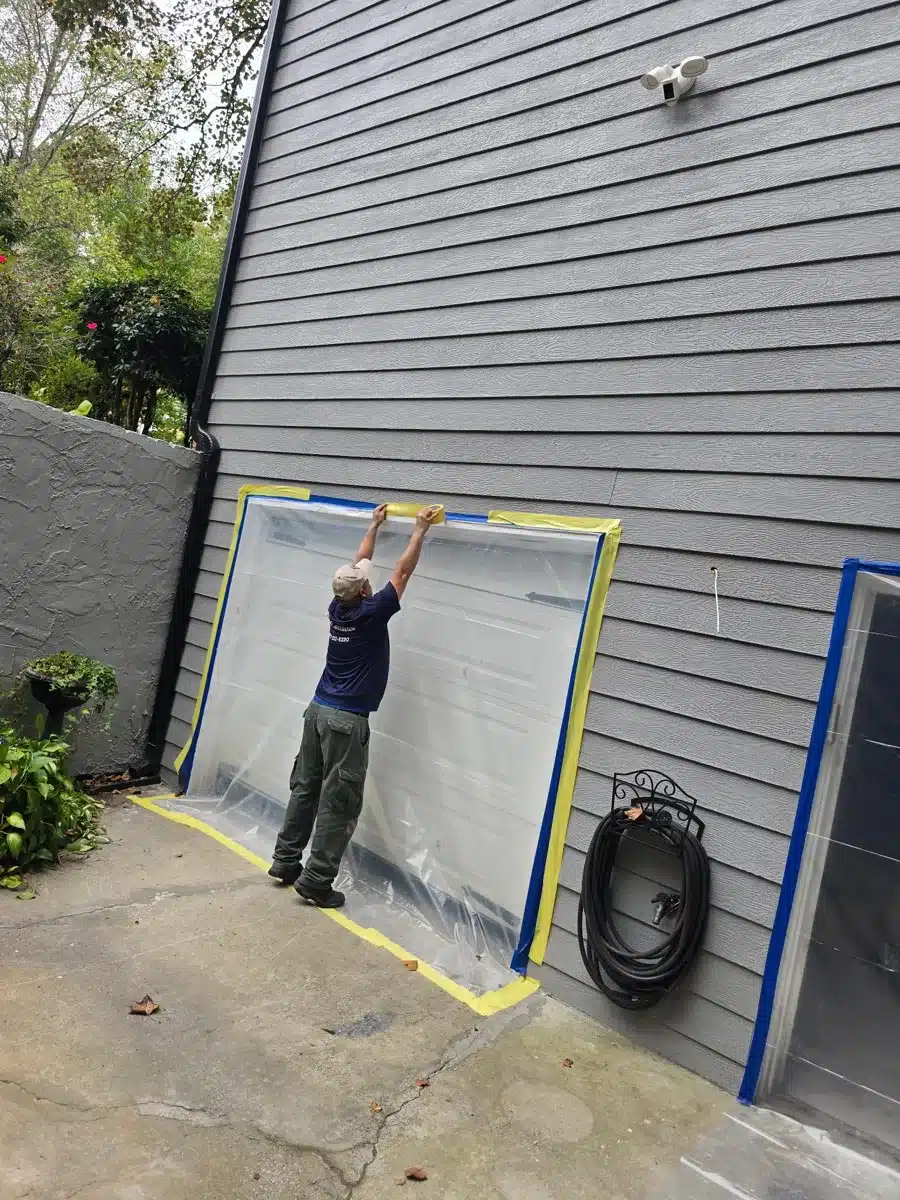
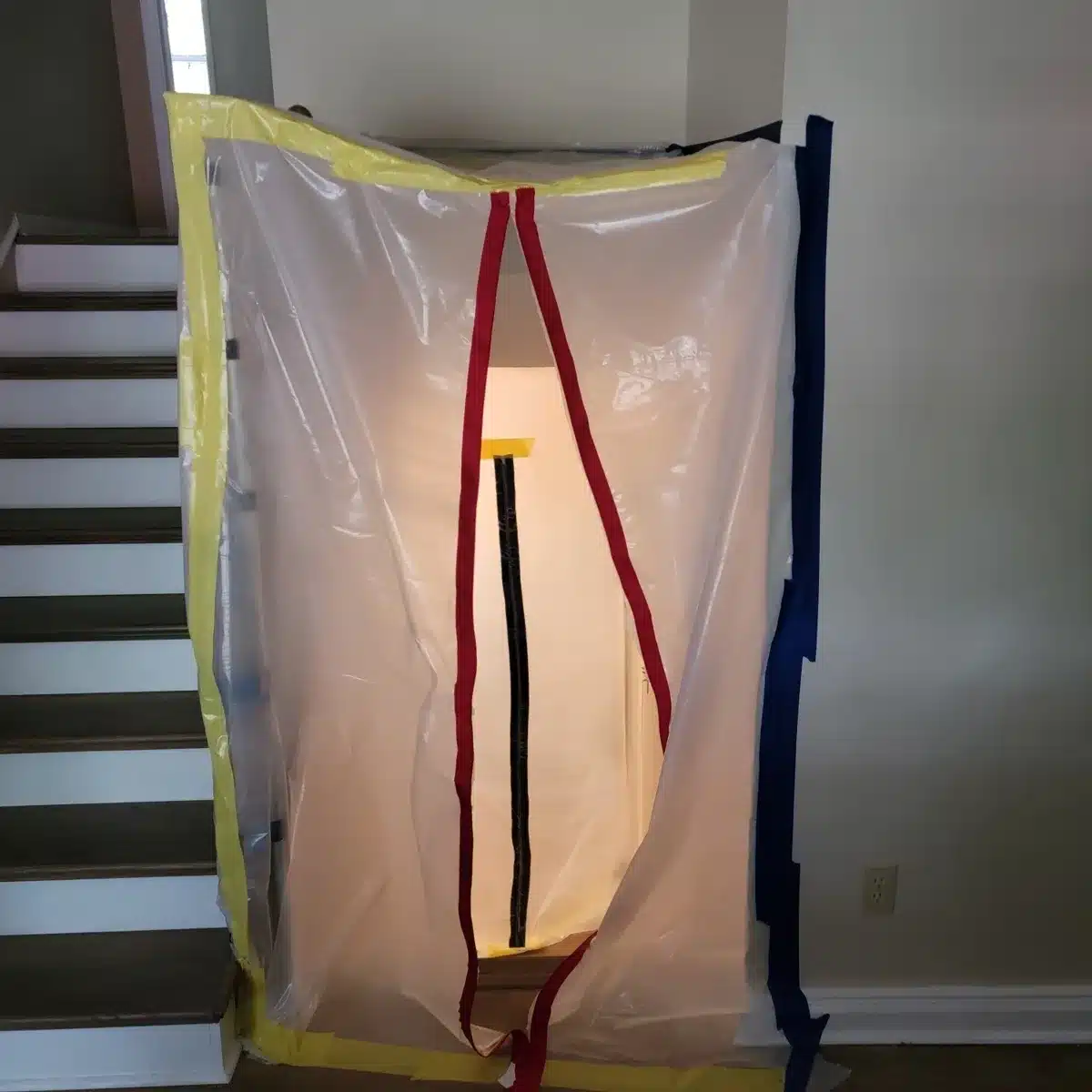
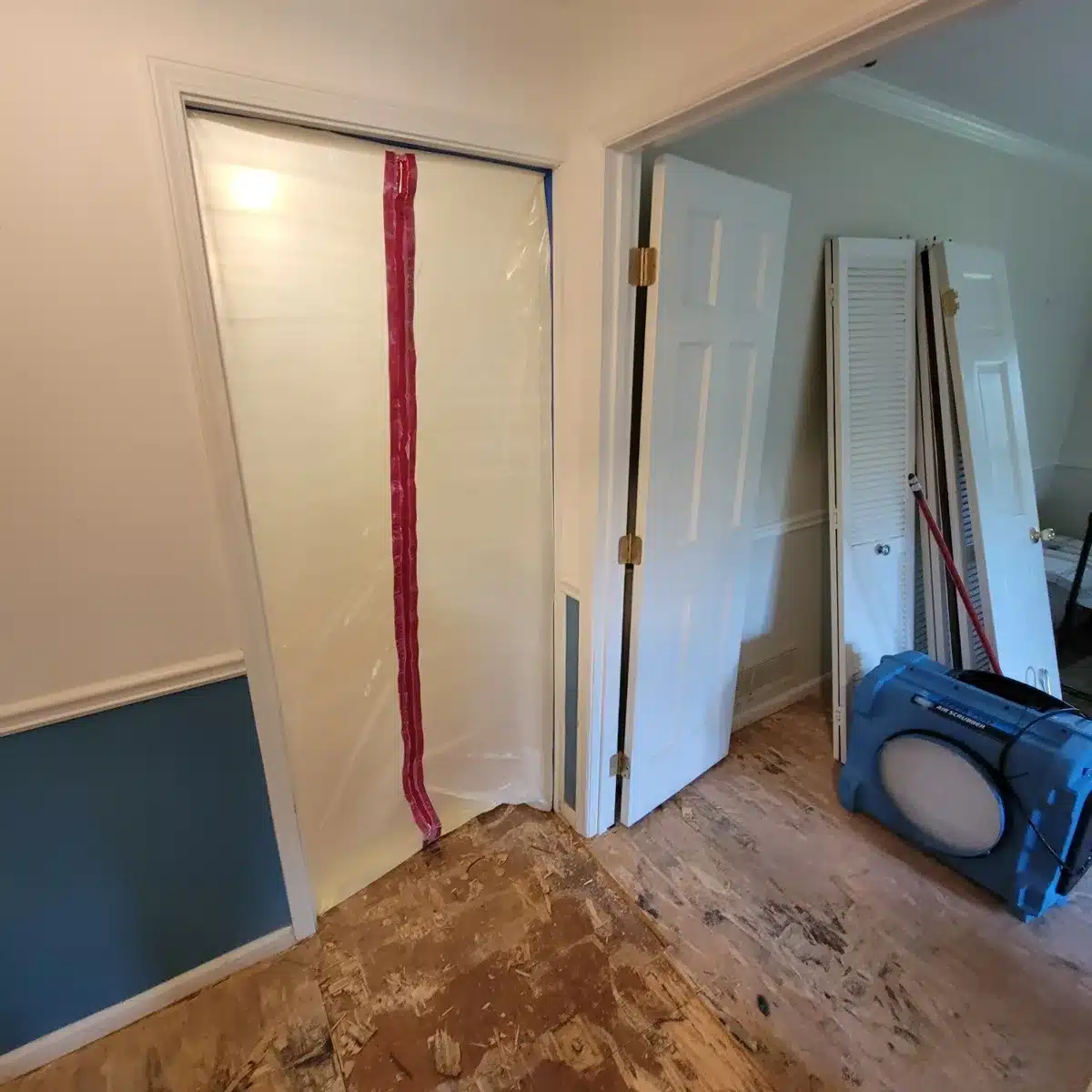
Basement mold also tends to be bigger than it looks, because it grows on the back of drywall and in the wall cavity. We open walls inside containment so spores don't spread to the rest of the house.
Water first, then mold.
Mold from slow seepage or humidity is usually excluded from coverage. We'll tell you that before you file, not after.
Moisture mapping of the basement walls and floor.
Drainage, grading, seepage or a leak.
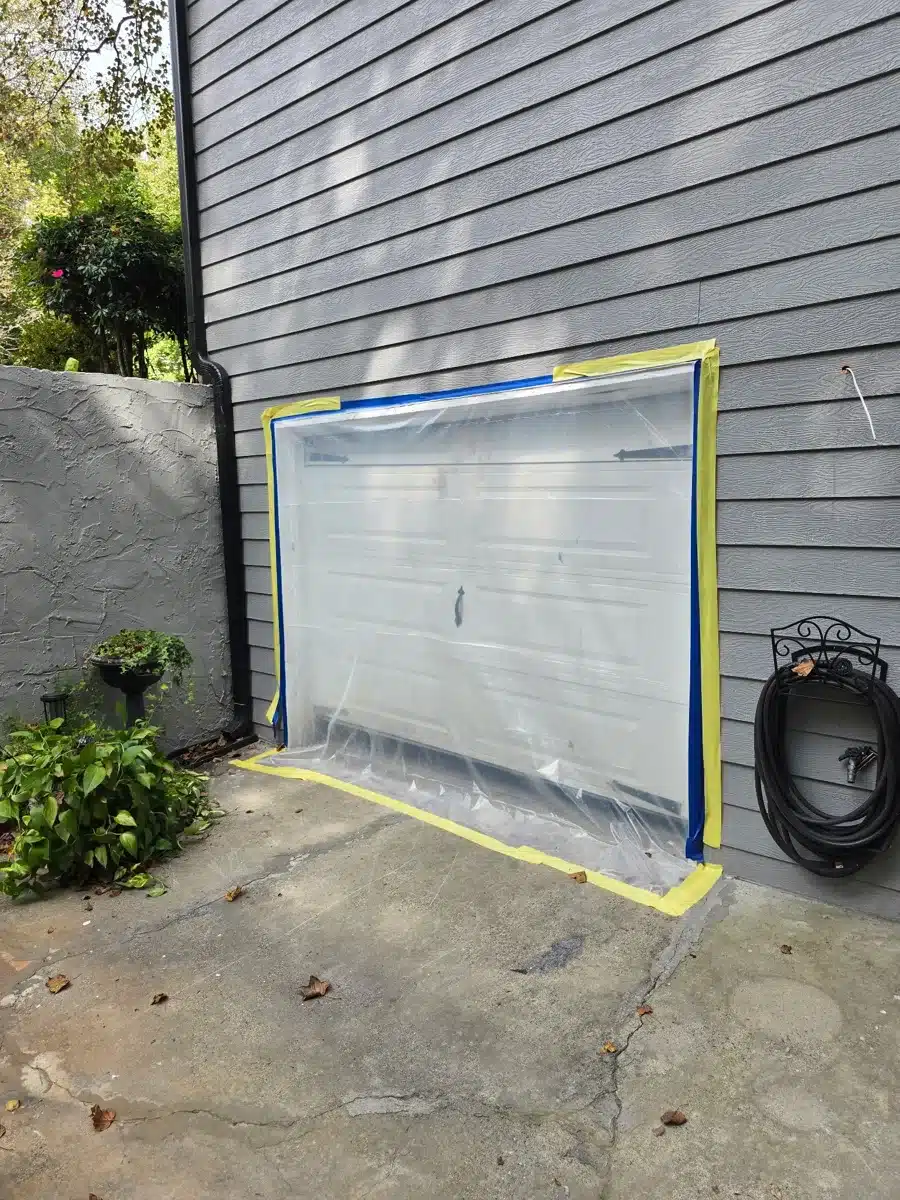
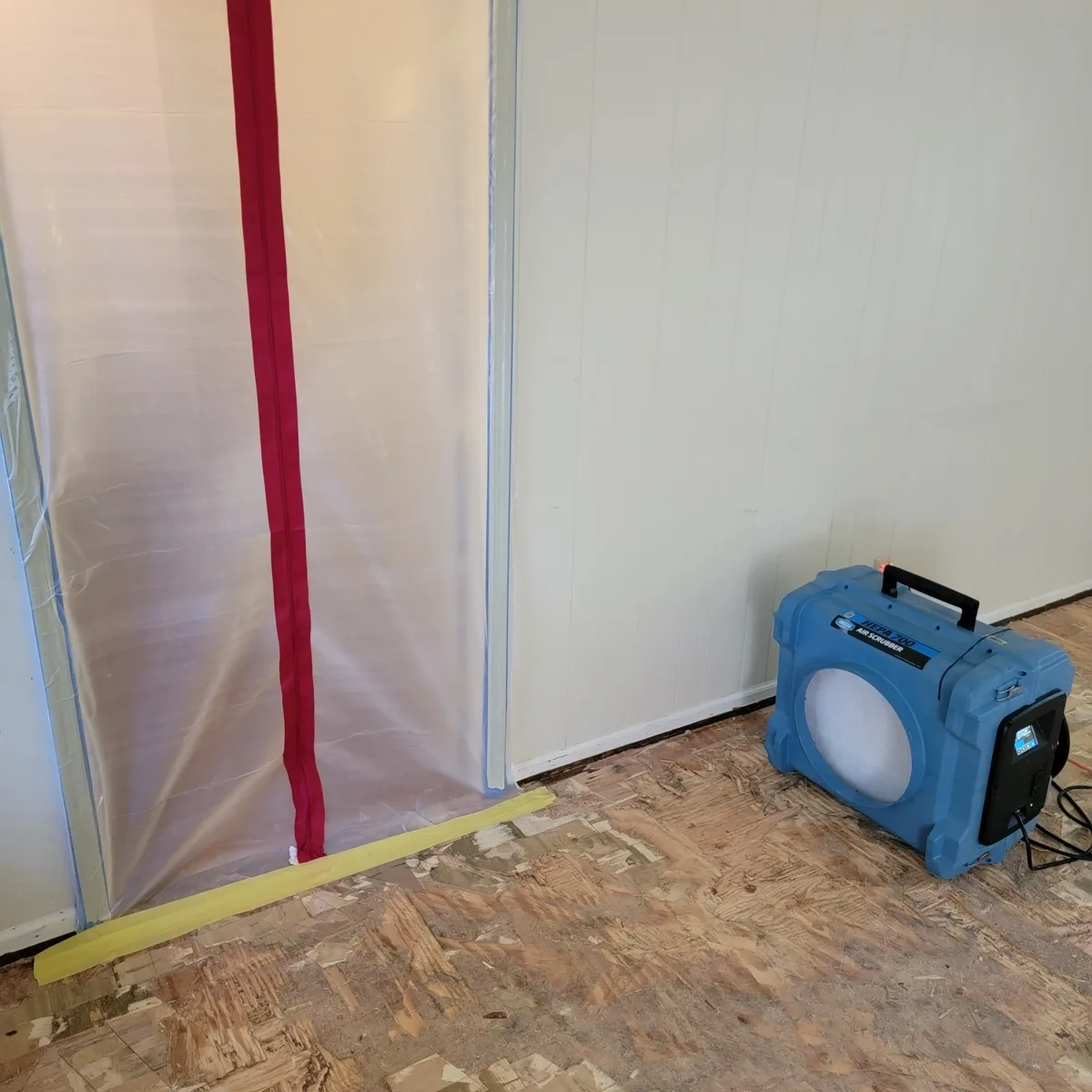
Barriers, negative pressure and HEPA filtration.
The source corrected, or the repair specified for the right trade.
Independent testing recommended before rebuild.
Still not sure? Ask the advisor in the corner, it can look at a photo too, or call and a person will answer.
Often mold behind finished walls or under flooring, fed by slow moisture. An inspection finds it without tearing everything out.
Usually not if it came from slow seepage. Mold from a sudden covered water loss often is.
Not if the moisture source is fixed. That's why we find it first.
Water, fire, mold or storm — if it's happening now, don't wait on a form. Call and a person will answer.
Second opinions, insurance questions, or damage that can wait until morning — this reaches us either way.