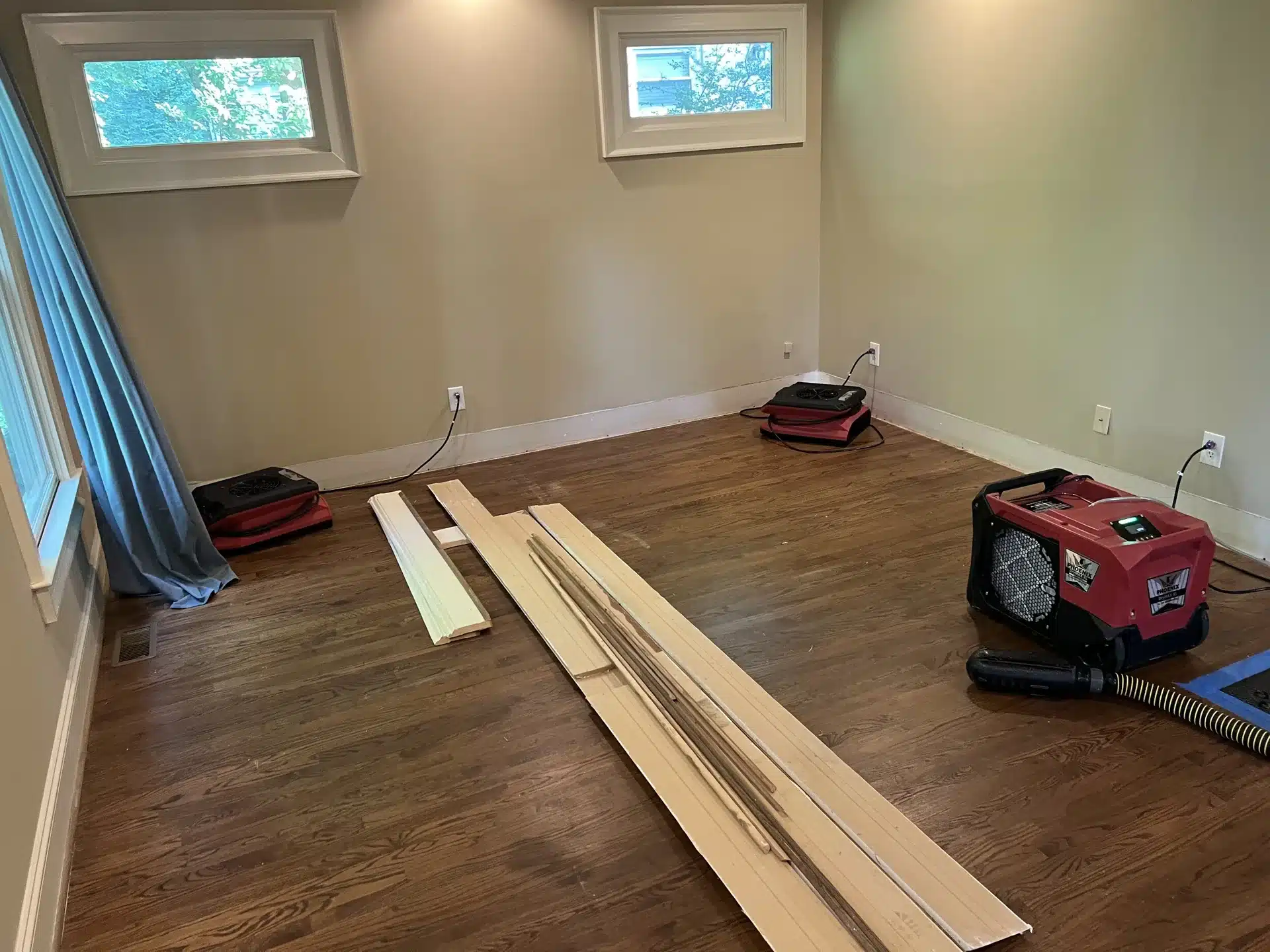
Water removal and drying for East Cobb homes, with the cool, slow-drying conditions of basements in mind.

Whatever goes wrong upstairs ends up in the basement, and whatever comes in from outside starts there. In East Cobb's rolling subdivisions, both are common.
A main-floor supply failure finds every gap in the subfloor and arrives below all at once. Water from outside is slower: downspouts dumping at the foundation, tired French drains, grading that has settled toward the house. That kind rarely looks like an emergency until the finished wall comes off.
Basements are also harder to dry. They stay cool and damp, which slows standard dehumidifiers, and concrete and block let go of moisture slowly. We size the equipment for those conditions and dry to readings, not to the calendar.
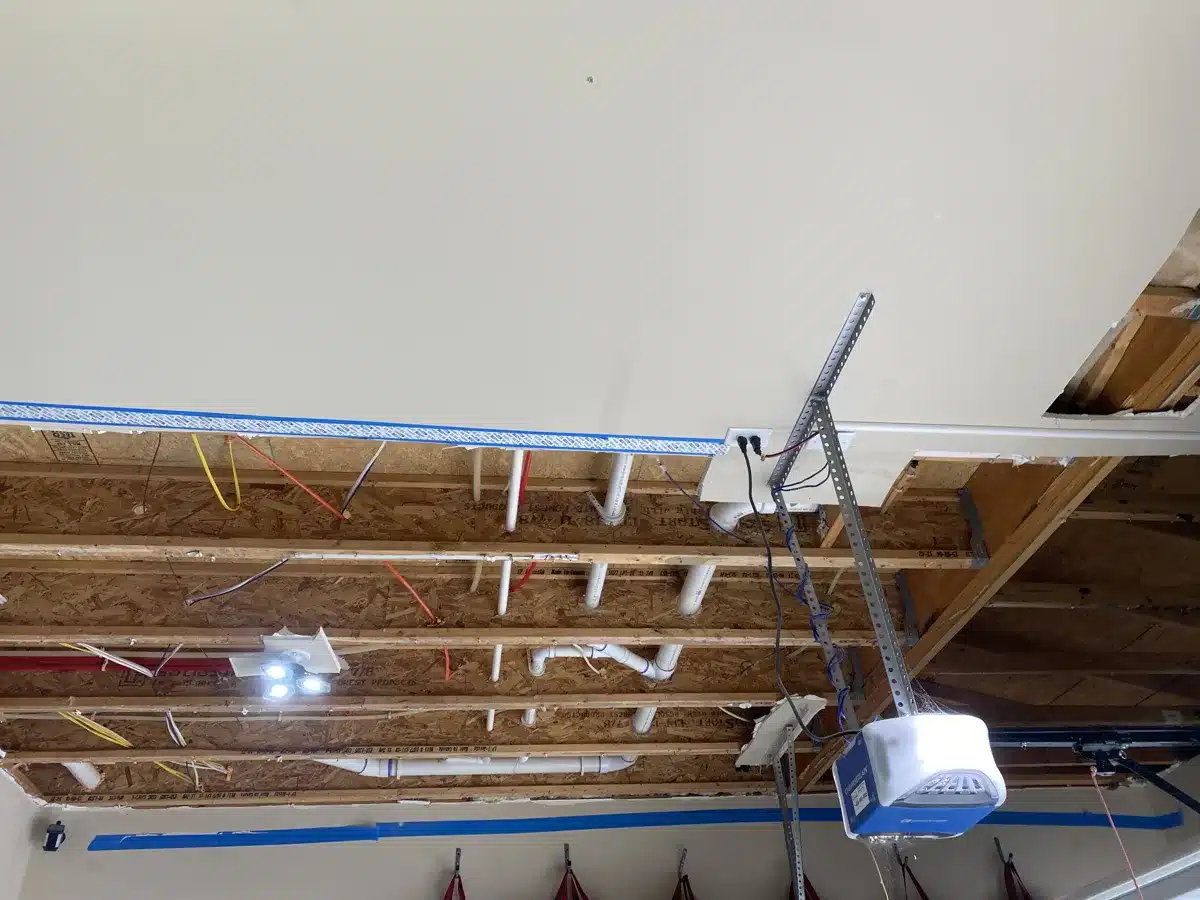
Measured all the way down to the slab.
Long-term seepage is commonly excluded, while sudden water from a pipe or appliance is covered. We document how the water got in, so that decision is made on evidence.
Inside failure or outside water, because it changes the fix and the claim.
Standing water out first.
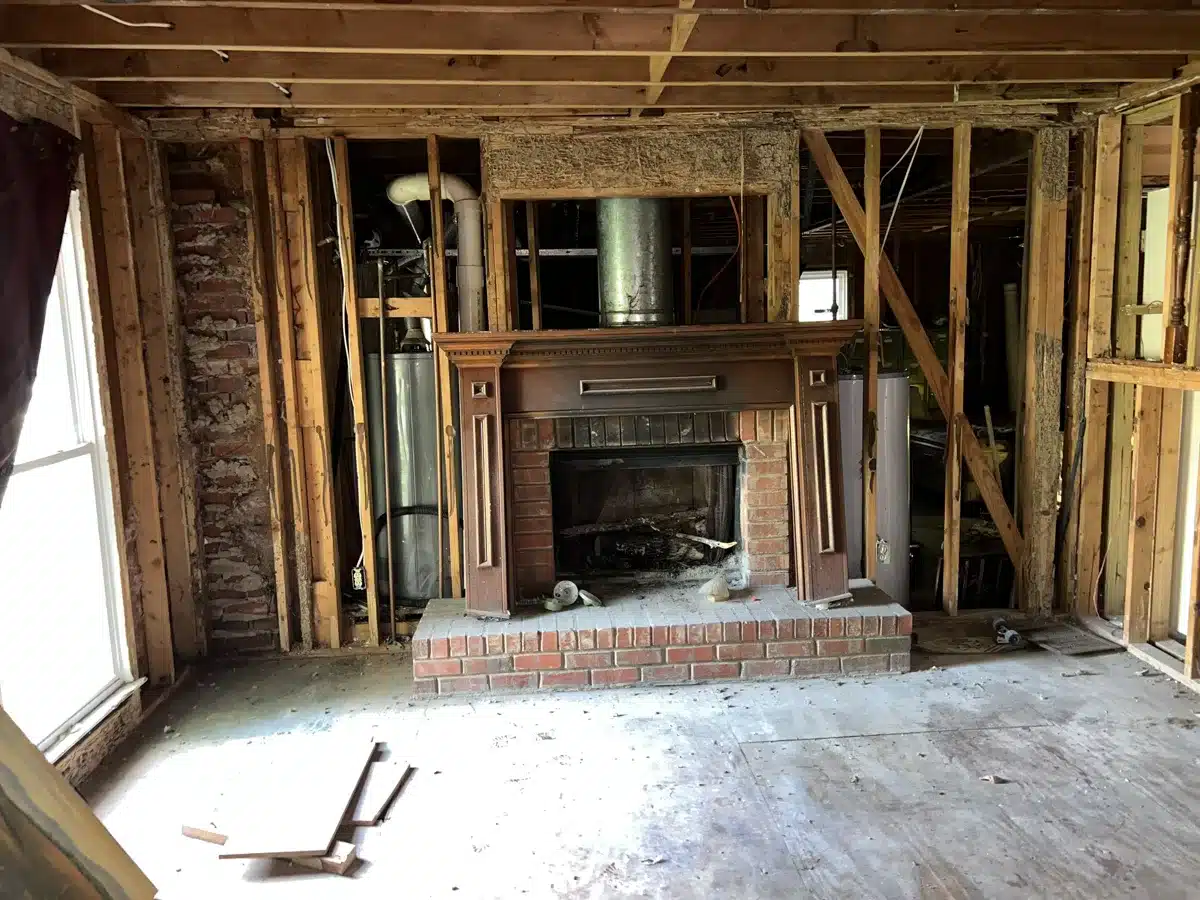
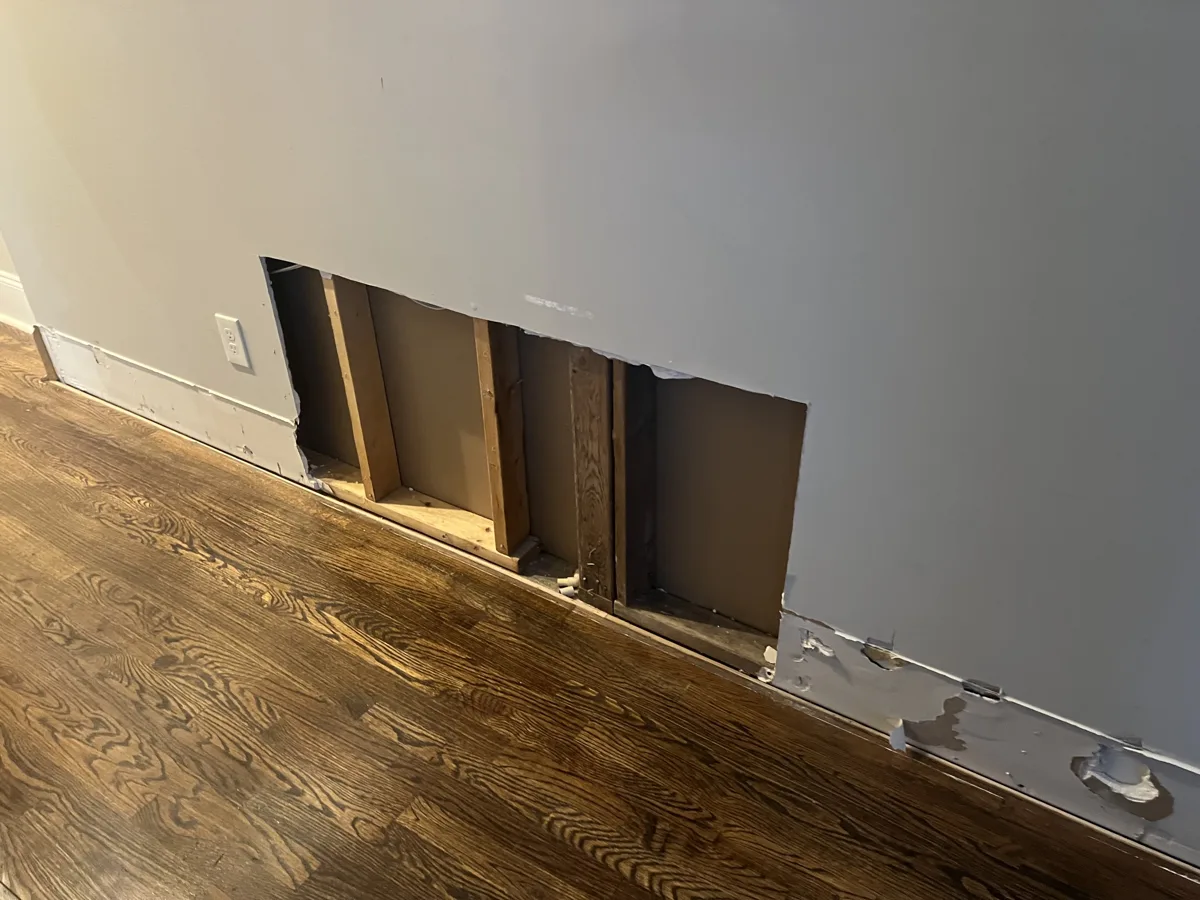
Finished walls and flooring opened only where readings say so.
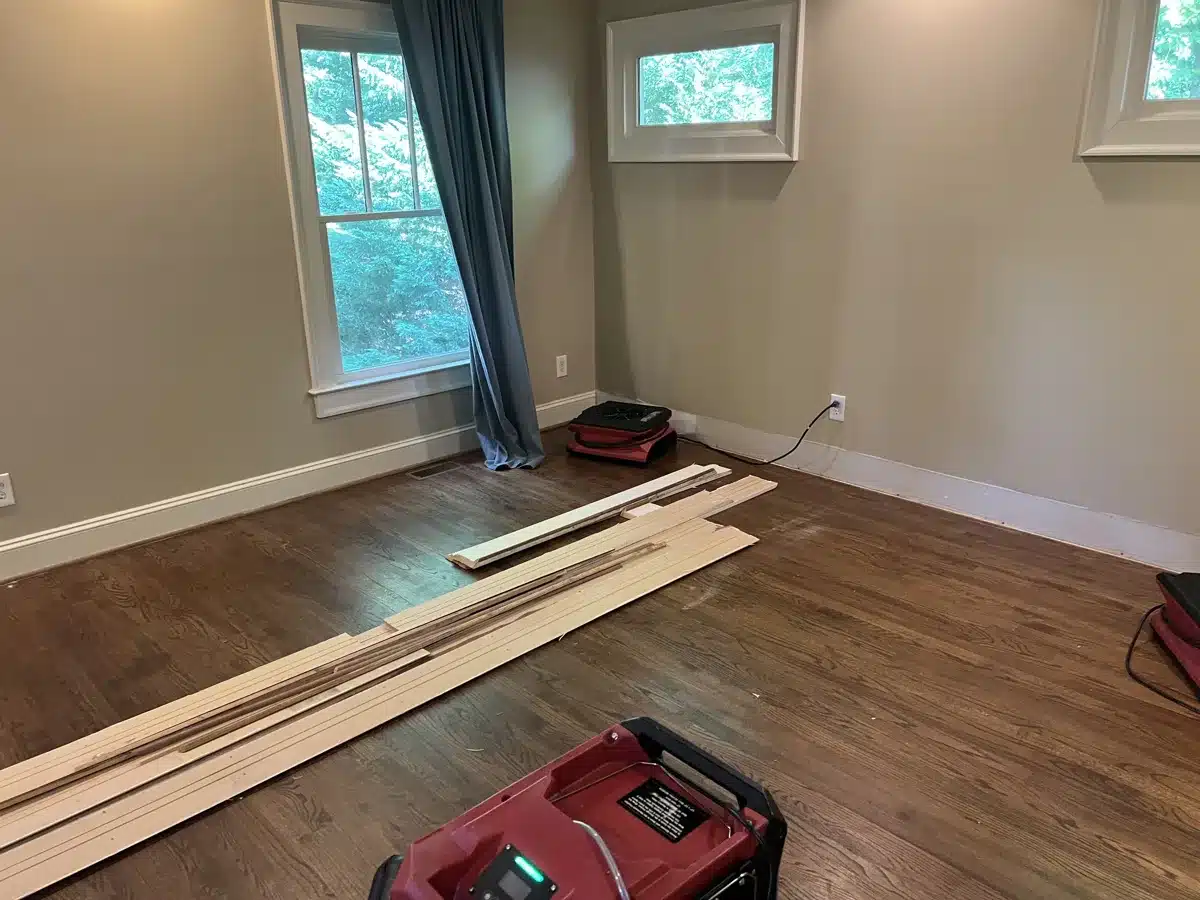
Equipment chosen for below-grade temperature and humidity.
Readings in the walls and slab before rebuilding.
Still not sure? Ask the advisor in the corner, it can look at a photo too, or call and a person will answer.
Concrete releases moisture slowly and basements stay cool and humid. We stop when readings say it's dry.
Sudden water usually is; slow seepage usually isn't. The cause decides it.
We document the cause and tell you what needs fixing so it doesn't happen again.
Water, fire, mold or storm — if it's happening now, don't wait on a form. Call and a person will answer.
Second opinions, insurance questions, or damage that can wait until morning — this reaches us either way.