Mold Remediation in Alpharetta: What to Expect Step by Step
If you have found mold in your Alpharetta home or building, the right move is to stop the moisture source first, then call a remediation crew that documents everything and dries to a measured standard. Pulling drywall without a plan spreads spores. A proper job follows a repeatable process, not guesswork.
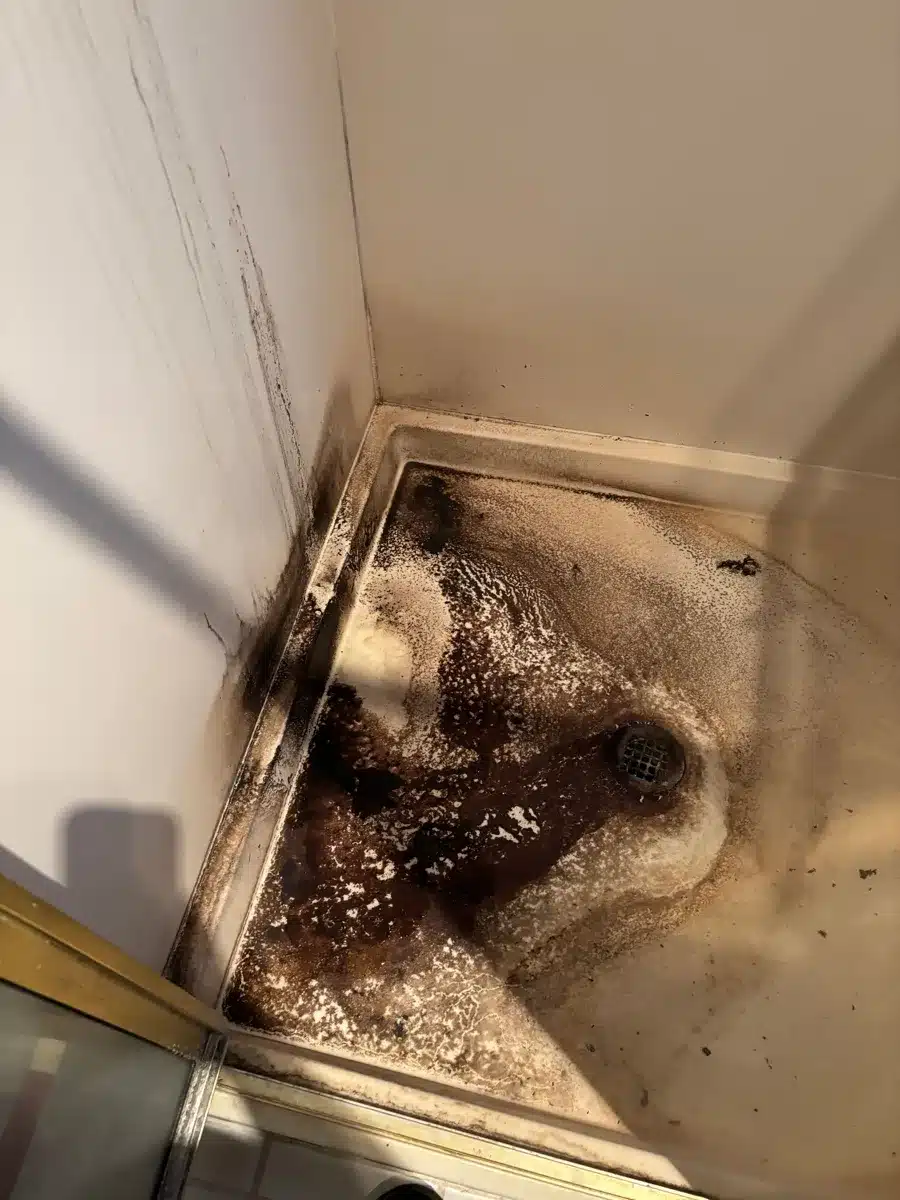
Scrubbing a visible patch or opening a wall without containment releases spores into the air and the HVAC system, turning a contained problem into a whole-house one.
If you've found mold, photograph it, leave it, and keep the area closed until it's been looked at properly.
Stop the water source before any remediation begins or the mold comes back.
We document before we touch anything, including photos, moisture readings, and air samples when warranted.
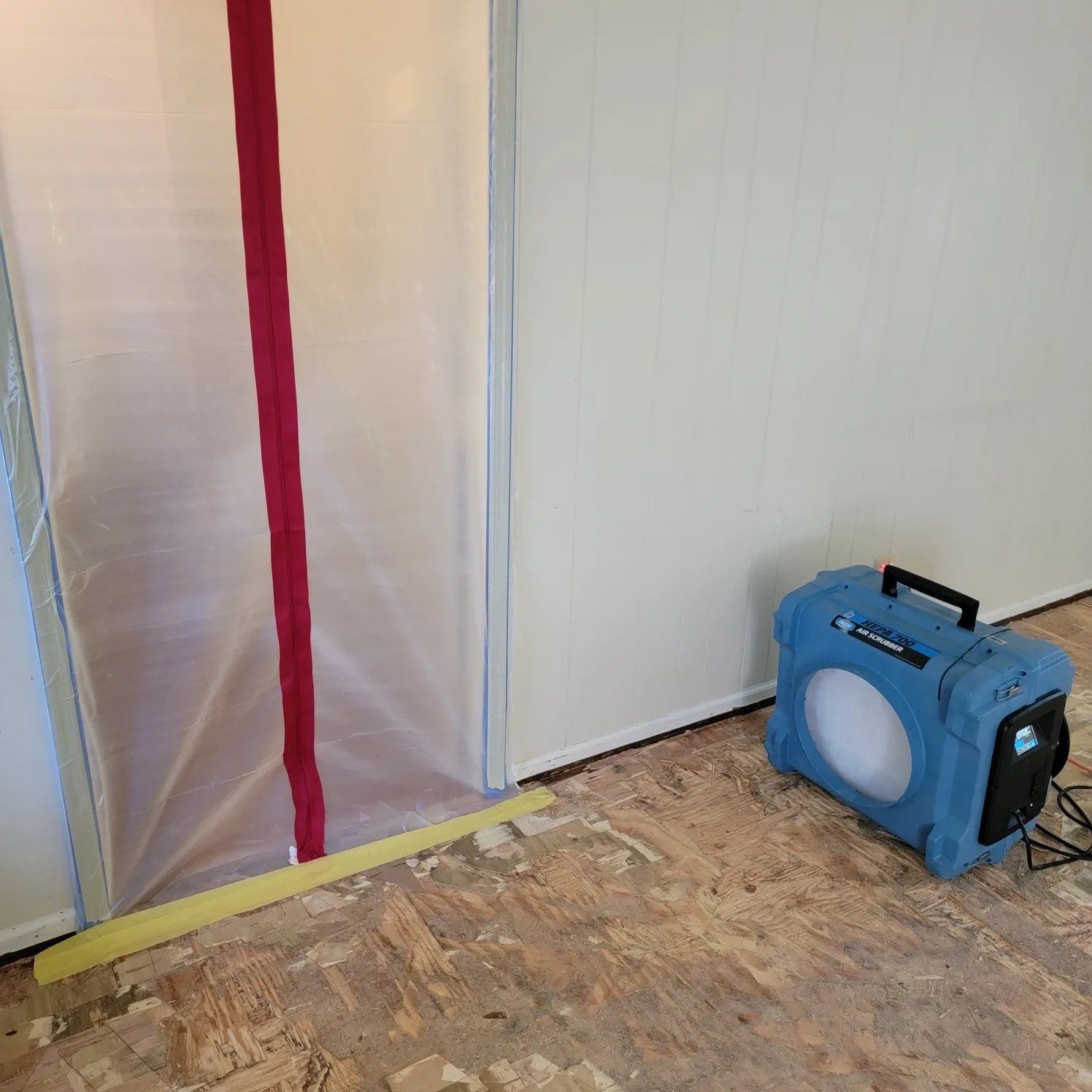
Containment barriers keep spores from spreading to unaffected rooms during removal.
Structural drying follows removal so the building reaches a measured moisture level before rebuild begins.
One team, from the first call to the final repair, handles your job start to finish.
Start here
Why Mold Shows Up in Alpharetta Homes.
Alpharetta sits in a humid climate. Summers bring high dew points, and the crawl spaces and attics in this area stay warm for most of the year. That combination gives mold exactly what it needs: moisture and warmth. A slow roof leak, a sweating pipe in a wall cavity, or a crawl space without proper vapor control can feed a mold colony for months before you see it or smell it.
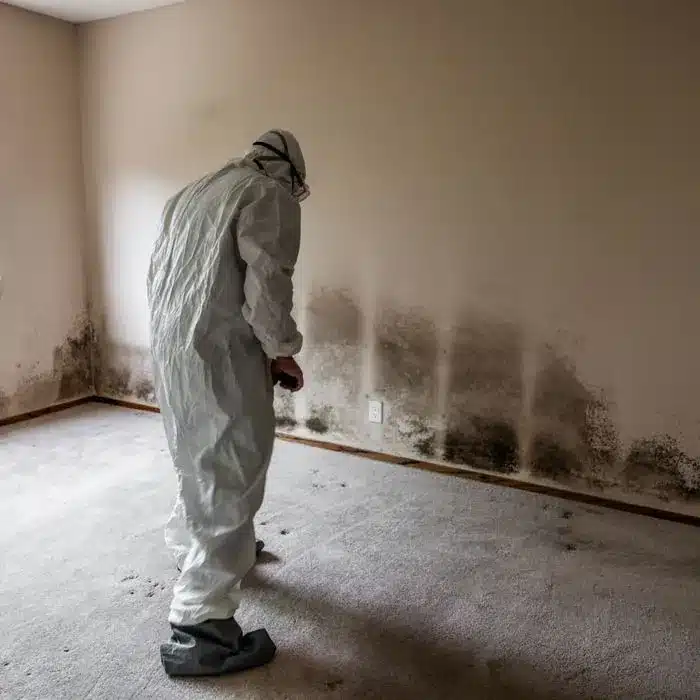
Most calls we receive come after a homeowner notices a musty odor in a room, sees dark staining along a baseboard, or finds discoloration after pulling up carpet following a water event. Sometimes a home inspector flags it during a sale. However you found it, the size of what you see on the surface is rarely the full picture. Mold grows into porous materials like drywall paper, wood framing, and insulation. Reading the surface tells you where to start looking, not where to stop.
How the job runs
Three stages, one team.
Tap a stage to read exactly what happens and why.
The First Thing We Do: Find the Moisture Source.
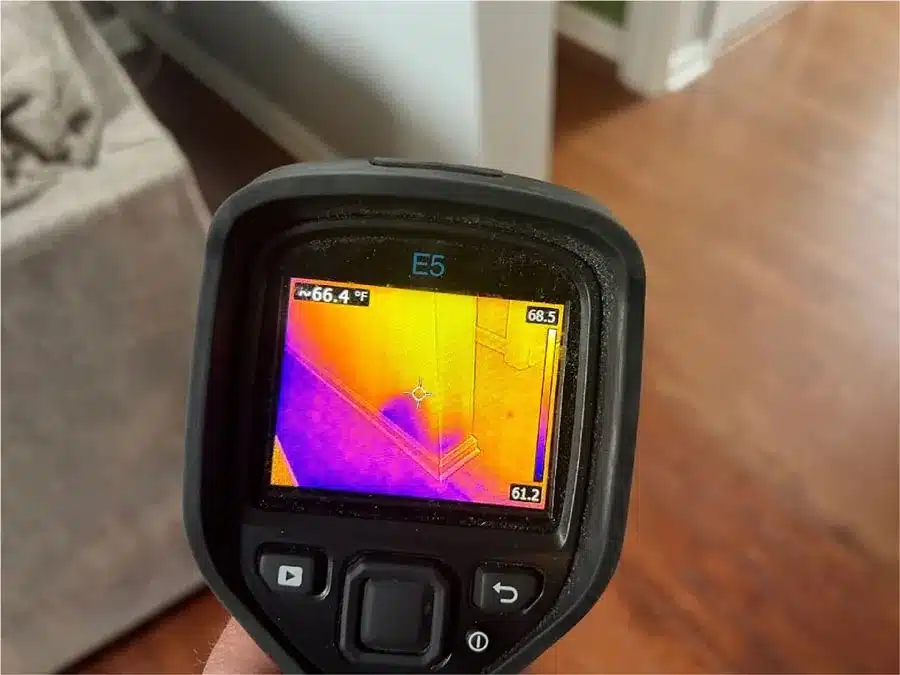
Mold remediation in Alpharetta fails when crews remove the visible growth but leave the moisture problem intact. The mold returns within weeks. Before we touch anything, we use moisture mapping and thermal imaging to trace the water. Moisture mapping means taking readings at regular intervals across walls, floors, and ceilings with a calibrated meter. Thermal imaging uses a camera that reads surface temperature differences, which reveals wet areas hidden behind drywall or under flooring without cutting anything open.
We document before we touch anything. Every reading gets logged with a location, a value, and a timestamp. If there is an active leak, a foundation drainage issue, or a failed vapor barrier in the crawl space, we identify it and tell you plainly what needs to happen before remediation can hold. We do not start removal work on a wet building. That is not cutting corners in our favor. It is the only approach that actually works.
How Mold Remediation Actually Works.
Once the moisture source is addressed, remediation follows a defined sequence. First, we build containment. Containment means plastic sheeting and negative air pressure barriers that isolate the affected area. We run air scrubbers inside the containment zone to capture airborne spores before they drift to clean parts of the building. This step matters in occupied homes, and it matters even more in commercial properties where a business has to keep running.
Inside containment, affected materials are removed. Drywall with mold growth is cut back to clean framing. Insulation that has been wet long enough to support growth is bagged and removed. Wood framing is treated with an EPA-registered antimicrobial and allowed to dry. After removal, we run structural drying equipment, dehumidifiers and air movers, until moisture readings in the framing reach the standard for your material type and regional baseline. Dry to a measured standard means we pull equipment when the numbers say so, not when it looks dry.
What Happens After Mold Is Removed.
After remediation passes clearance, the building needs to be rebuilt. This means replacing the drywall that was removed, repainting, reinstalling trim, and in some cases refinishing floors or replacing cabinetry. Because we handle both remediation and repairs, you do not hand off your job to a second contractor who has not seen the work. One team, from the first call to the final repair, means the crew that knows your building handles the rebuild. That matters for quality and for scheduling.
We target pre-loss condition, meaning the space looks and functions the way it did before the mold event. We do not leave you with bare studs and a remediation certificate. We put the room back together. If the scope of rebuild is larger, we walk through it with you before work begins and give you a written quote that outlines every line item. No surprises at the end.
Your insurance claim
Documentation That Supports Your Claim.
If you are filing a homeowners insurance claim for mold related to a covered water loss, your adjuster will need documentation. This creates a claim file that holds up because every action is recorded in sequence.
What we do promise is that our documentation gives you the best possible foundation for that conversation. A claim file built on daily logs and measured readings is harder to dispute than one built on verbal summaries.
What we commit toEvery job
We provide daily drying logs with timestamped photos, pre-remediation and post-remediation moisture readings, and a written quote within 24 hours of our assessment.
We work with adjusters regularly.
We know what they look for and we prepare the file to answer their questions before they ask them.
We do not promise that your policy covers mold remediation, because coverage depends on your specific policy language and the cause of loss.
Questions
Common questions, answered straight.
Still not sure? Ask the advisor in the corner, it can look at a photo too, or call and a person will answer.
How long does mold remediation take in a typical Alpharetta home?
A contained area like a single bathroom or a section of basement wall typically takes two to four days from containment setup through drying. Larger jobs, crawl spaces, attics, or multi-room situations, can run seven to fourteen days depending on the extent of the growth and how long the drying phase takes to reach measured standards. We give you a timeline at the start and update you if conditions change.
Do I need to leave my home during mold remediation?
It depends on the size of the affected area and where it is located. Containment is designed to isolate the work zone, so many homeowners stay in place during smaller jobs. If the remediation covers a significant portion of the living space or involves the HVAC system, we will tell you plainly that temporary relocation is the safer choice. We do not make that call lightly, and we will explain our reasoning.
Can mold come back after remediation?
Yes, if the moisture source was not fully resolved. Remediation removes the existing growth and treats the affected materials. It does not make your building immune to future mold if a new leak develops or humidity control fails. We address the source before we begin removal. After the job, we explain what conditions to monitor so you can catch a problem early if one develops.
Is mold in a crawl space a serious problem?
Crawl space mold is common in Alpharetta and it does affect the air quality in the living space above it. Stack effect means air moves upward through a structure, so what is in the crawl space eventually reaches the rooms where you live. We treat crawl space mold the same way we treat any other area: document first, contain, remove affected material, dry to a measured standard, and address the vapor control or drainage issue that allowed growth to start.
What is the difference between mold testing and mold remediation?
Mold testing, usually air sampling or surface sampling, identifies the type and concentration of spores present. It is done by a third-party industrial hygienist and is separate from remediation. We are the remediation crew. We handle removal, drying, and rebuild. In some situations, post-remediation clearance testing by an independent party is appropriate, and we will tell you when we think that is the right call for your job.
How soon can you start?
A person answers when you call, any time of day. We can typically schedule an assessment within 24 hours. If you have an active water source that has not been stopped, we prioritize that first. Once we assess the site, you receive a written quote within 24 hours. We do not keep you waiting for paperwork before work can begin.
Do I need testing or just an inspection?
Inspection first, always. Testing before you know where the moisture is coming from rarely changes what happens next.
How much does an inspection cost?
Assessment for an active water or mold problem isn't charged. For a standalone inspection with written findings, we'll tell you the cost up front.
Can you inspect before I buy a house?
Yes, and it's worth it on any home with a history of water problems or an unconditioned crawlspace.
What if you find nothing?
You get written findings saying so, which is often exactly what you needed.
If you have found mold in your Alpharetta home or building, the situation is manageable. The key is starting with the right process: find the moisture source, document what is there, contain the work zone, remove affected materials, and dry to a measured standard before rebuilding. That sequence, followed by a single crew that stays with your job through rebuild, is how mold remediation in Alpharetta gets done correctly. Call Blackridge Restoration at (470) 201-2929. A person answers, day or night. We will schedule your assessment, walk the site with you, and have a written quote in your hands within 24 hours.
A person answers, 24 hours a day, every day of the year
We contact your insurer directly and send you a written quote
 Mold RemovalRemoval without containment spreads what you were trying to remove.Learn more
 Mold InspectionAn inspection that finds the mold but not the moisture behind it produces a remediation that fails.Learn more
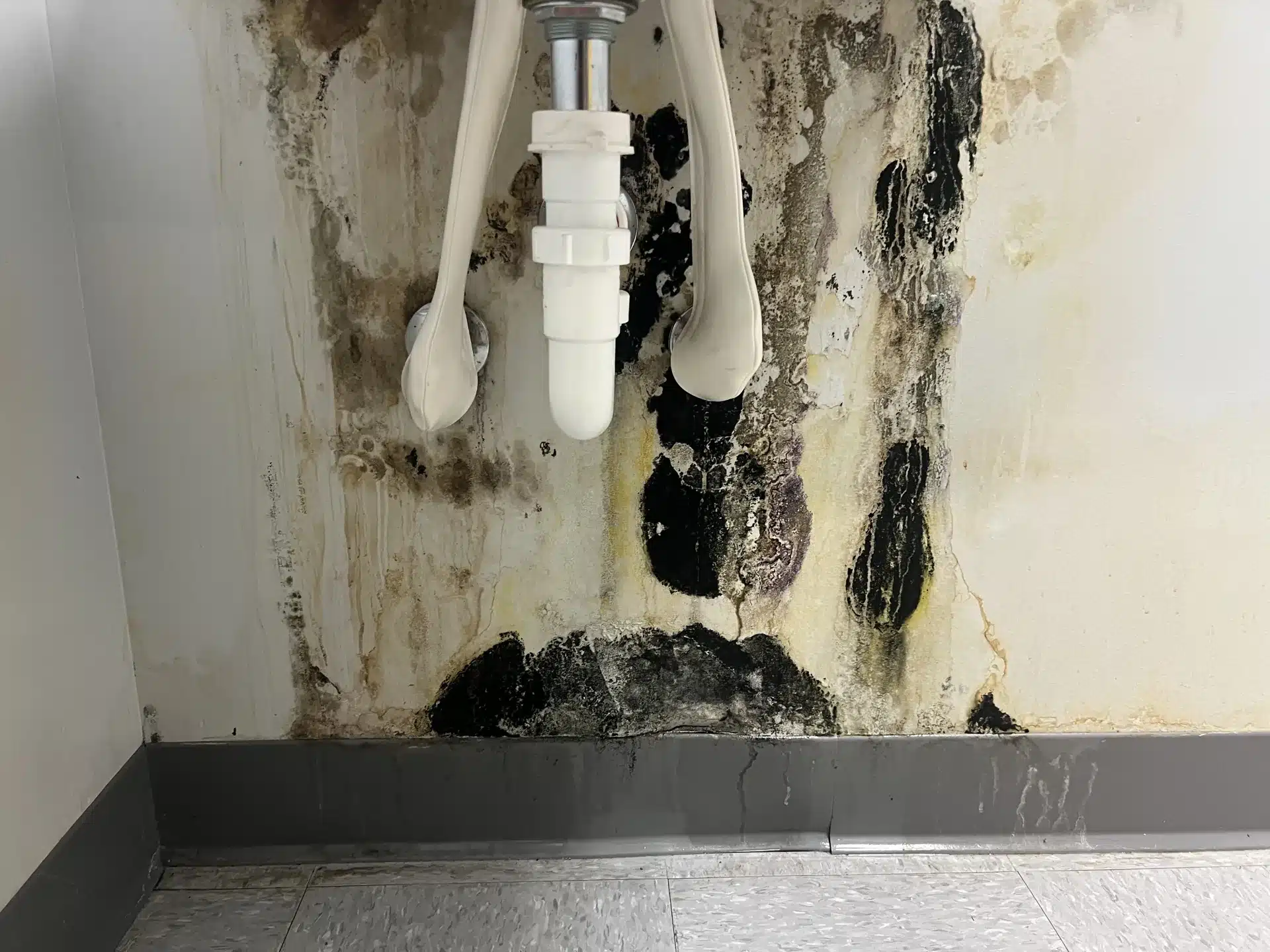 Mold Remediation overviewInspection, containment and removal across Alpharetta and the north metro, plus finding the moisture source, because remediation without that only lasts until next season.Learn more