Key Takeaways
If you found wet drywall after a leak, the decision to dry it out or replace it depends on how long it has been wet, what type of water soaked it, and what the moisture readings actually show. Making the wrong call either way costs you money. Here is what the process looks like and how we help you get it right.
- How long the drywall has been wet matters more than how wet it looks on the surface.
- Category 2 or Category 3 water contamination almost always means replacement, not drying.
- Moisture mapping with a meter gives you real numbers, not guesswork.
- Drywall can hide moisture behind it in insulation, framing, and wall cavities.
- We document before we touch anything, so your claim file stays clean.

Why the Answer Is Not Always Obvious
You pushed on the wall and it felt soft. Or you noticed the paint bubbling near the baseboard after a pipe leaked behind the wall. Now you are standing there wondering if you can dry it out or if you are looking at a full tear-out. It is a fair question, and wet drywall after a leak does not come with an easy universal answer.
Drywall is gypsum sandwiched between two layers of paper facing. Gypsum absorbs water fast. The paper facing is where mold gets its first foothold, usually within 24 to 48 hours of sustained moisture. So the clock matters. A wall that got wet two hours ago from a clean supply line burst is a very different problem than one that has been slowly wicking moisture from a slow leak behind a shower for three weeks. We ask those questions first before any tools come out.
What the Water Source Tells Us
Restoration professionals classify water damage in three categories. Category 1 is clean water: a supply line, a fresh water feed, an overflowed sink with no contamination. Category 2 is gray water: water from dishwashers, washing machines, or toilet overflow without solid waste. Category 3 is black water: sewage, rising flood water, or anything that has been sitting long enough to grow bacteria.
Category matters because drywall is porous. It absorbs whatever is in the water. If gray or black water soaked your wall, the gypsum and paper have absorbed contaminants that you cannot extract with drying equipment. In those cases, replacement is not optional. We will tell you that plainly at the assessment, even if it means more demo work. Leaving contaminated material in place to save a few hundred dollars now creates a much bigger mold and health problem later.
Category 1 water gives you the best shot at drying in place, but only if you move quickly and the readings support it.
How We Measure What You Cannot See
A wall can look dry and still be holding moisture inside the cavity. That is where moisture mapping comes in. We use a calibrated moisture meter to take readings at multiple points across the affected wall, floor, and ceiling. We also use thermal imaging, which shows temperature differences in the wall surface that indicate where moisture is still present and moving.
We document before we touch anything. Timestamped photos and a moisture map taken before extraction or drying begins are the foundation of a claim file that holds up with your adjuster. Those readings also give us a baseline so we know when the structure has actually reached dry standard, not just when it feels dry to the touch.
If the readings show moisture is confined to the surface layer and the framing behind it is still at normal moisture content, drying in place is often viable. If the readings show the cavity insulation is saturated or the framing is above 19 percent moisture content, the wall needs to come open. There is no responsible way around that.
What Drying in Place Actually Looks Like
When drying in place is the right call, it is not just pointing a fan at the wall. Structural drying uses calibrated air movers placed at specific angles to create airflow across the wet surface, paired with commercial dehumidifiers that pull the moisture out of the air before it can resettle in the structure. We calculate the number of units based on the cubic footage of the affected space, not just what we have on the truck.
Readings are taken every day. We update a drying log each visit and leave a copy in the home. If the numbers are trending the right direction, we continue. If a section of wall is not responding after two or three days, we open it. Drywall is not worth saving if the cost is a mold problem that was not there before. We tell you that at the first sign of it, not after the fact.
The goal is to dry to a measured standard. In our region that means wood moisture content below 16 percent and ambient relative humidity below 50 percent, confirmed with the same calibrated meters used at day one.
When Replacement Is the Cleaner Answer
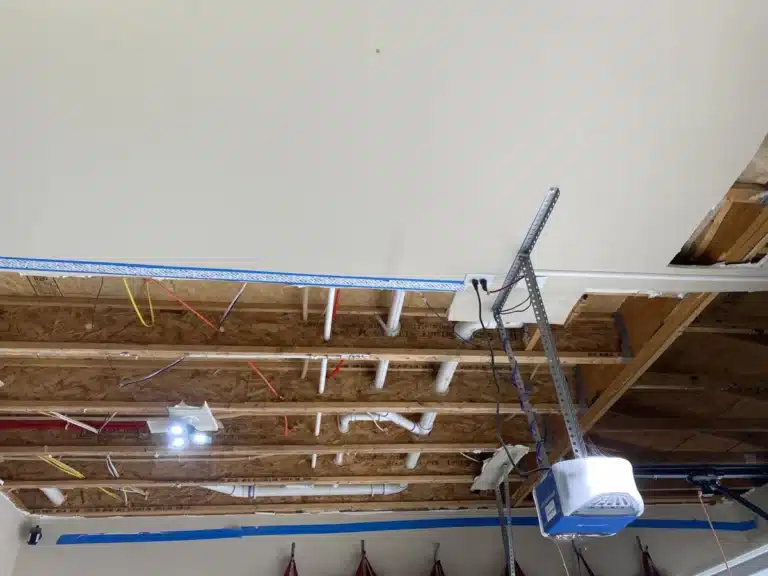
Sometimes replacement is faster, safer, and actually less expensive than a long drying cycle. If the drywall is crumbling, the paper facing has separated, or visible mold is already present, the material has lost structural integrity. No amount of airflow brings it back. You are better off doing a clean cut-out, inspecting what is behind the wall, letting the framing dry to standard, and hanging new board.
If insulation is saturated, it almost always needs to come out. Fiberglass batts hold water against the framing for weeks. Closed-cell spray foam behaves differently, but it still needs to be inspected. Removing the insulation allows the framing to dry faster and gives you a chance to confirm the cavity is clean before you close it back up.
We write a written quote within 24 hours of the assessment so you know exactly what is included, what is excluded, and why. If the scope changes once we open the wall, we call you before we proceed. One team, from the first call to the final repair, handles drying, demo, and reconstruction. You do not get handed off.
Frequently Asked Questions
—
How long can drywall stay wet before it needs to be replaced?
There is no exact cutoff, but 24 to 48 hours is the window where mold risk rises sharply. Clean water soaking for less than 24 hours with quick drying response can often be saved. Anything longer, or any wall that has been slowly wet from a hidden leak over days or weeks, carries a high chance of mold and usually warrants replacement. Moisture readings at assessment will tell you what you are actually dealing with.
Can I just use a household fan to dry out the wall myself?
A box fan moves air but does not remove moisture from the space. Without a dehumidifier pulling moisture out of the air, you can push the humidity in the room up and actually slow drying or spread moisture to adjacent materials. Commercial drying equipment moves significantly more air at the right angles and dehumidifies simultaneously. If the affected area is small and the source was clean water, you can try it, but monitor with a meter. If you do not have one, the readings you need are not available to you.
What does wet drywall after a leak mean for my insurance claim?
Most homeowner policies cover sudden and accidental water damage. A burst pipe is generally covered. A slow leak that was not addressed is often not covered, or coverage is disputed. We document before we touch anything, which protects your claim file regardless of outcome. We work with your adjuster directly and provide the same daily drying logs and moisture maps they need to process the claim. We never promise what your policy covers. That conversation is between you and your carrier.
How do I know if there is mold growing inside the wall?
You may not know from the outside. Mold can grow on the back face of drywall and on framing without showing any visible sign on the painted surface. A musty smell, especially when the HVAC runs, is a common indicator. Thermal imaging can show temperature anomalies consistent with moisture presence. If we open the wall and find mold, we stop and talk to you before proceeding. Mold remediation follows a separate protocol with containment barriers to prevent spores from spreading to clean areas.
Is there a difference between drywall in a bathroom versus a bedroom wall?
Yes. Bathroom drywall, especially near a shower or tub, is often moisture-resistant board. It handles incidental moisture better, but it is not waterproof. Standard drywall in a bedroom or living space saturates faster and degrades more quickly. Location also affects drying time because bathroom spaces tend to have higher baseline humidity. The same moisture mapping process applies in both spaces, but we factor in the material type and ambient conditions when setting up drying equipment.
What happens if the framing behind the drywall is wet?
Wet framing needs to dry to below 19 percent moisture content before you close the wall. Closing over wet framing traps moisture and creates conditions for mold and wood rot. We leave the wall open and run drying equipment directed into the cavity until the readings confirm the framing is at dry standard. This sometimes takes several days. We document every reading so there is no question about when the structure was ready to close.
Ready to Get a Clear Answer on Your Wet Wall
You do not have to guess whether to replace or dry out wet drywall after a leak. The answer is in the numbers, and we take those readings the day you call. We document before we touch anything, take moisture readings daily, and give you a written quote within 24 hours. If replacement is the right call, we tell you straight. If drying in place is viable, we set it up properly and monitor it until it is dry to a measured standard. One team, from the first call to the final repair. A person answers 24 hours a day at (470) 201-2929. Call us today and we will come out, map the moisture, and tell you exactly what you are dealing with so your home gets restored right.