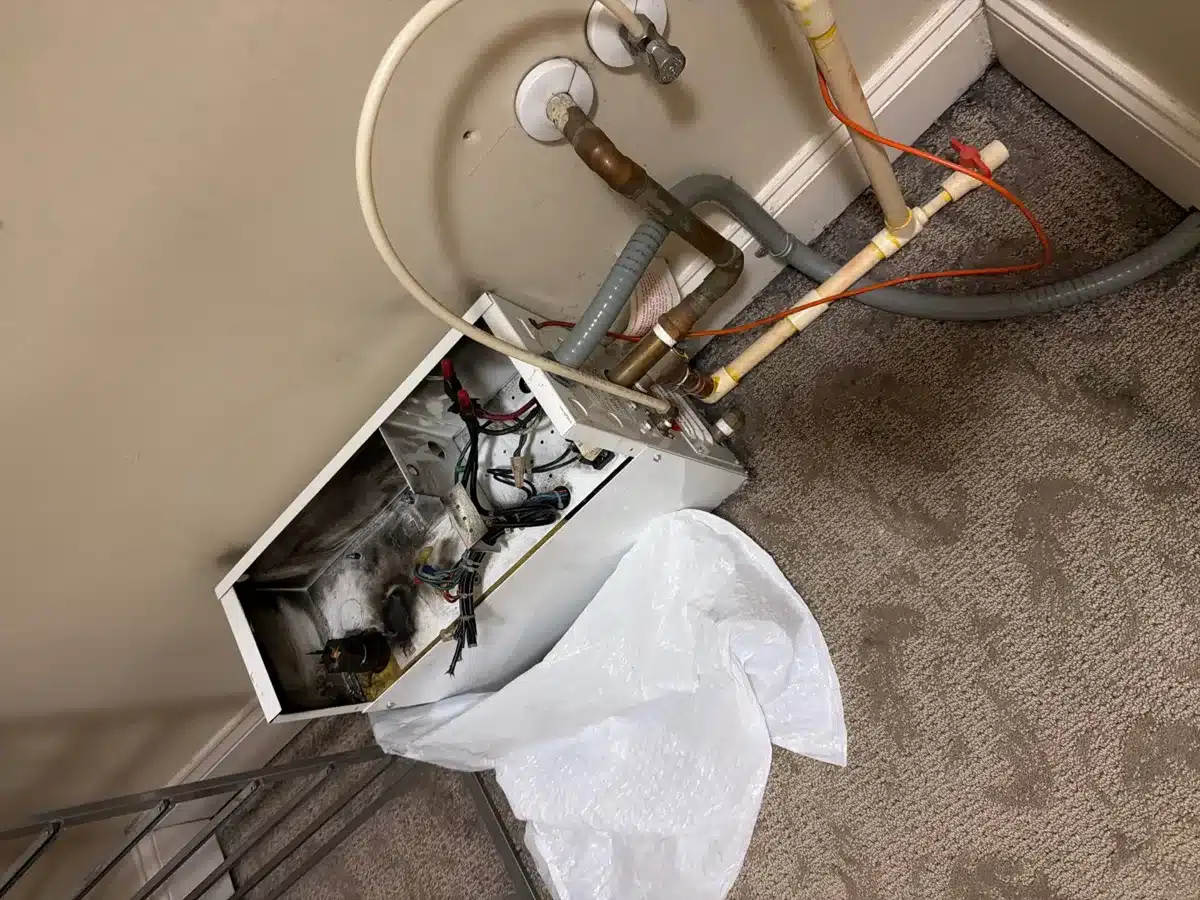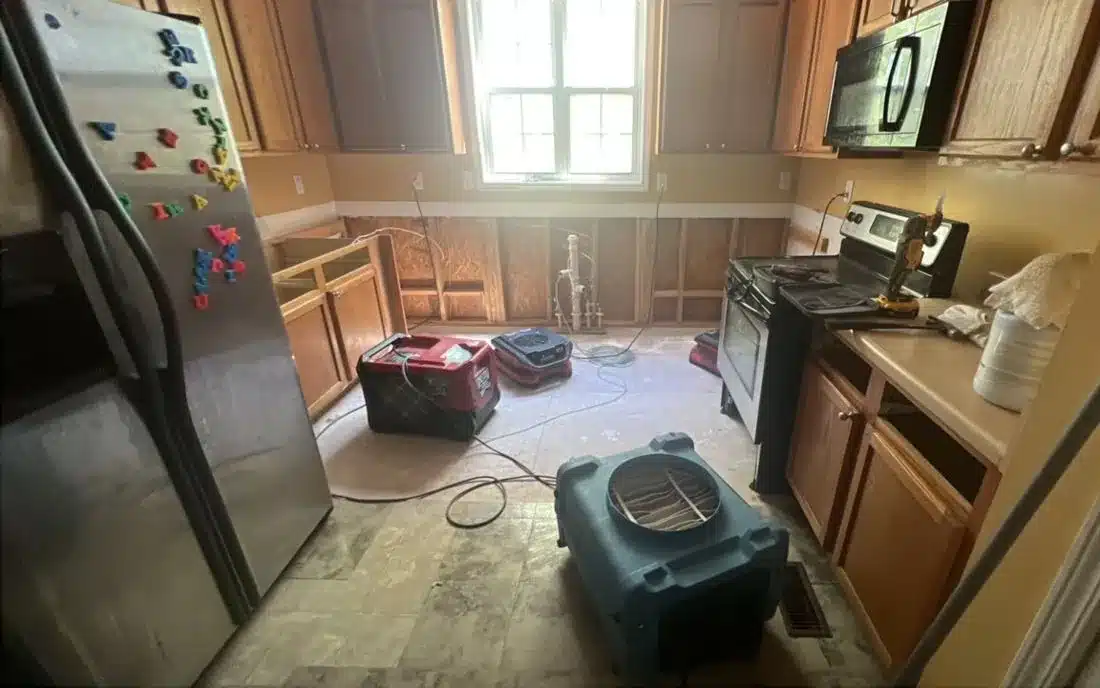
If water is moving through your property right now, the next hour matters more than any decision you make this week. We dispatch, stop the source and start extraction before the damage compounds.
A person answers 24/7. Call first, then work down the list.
Call nowIf the panel is wet, or you'd have to stand in water to reach it, get out and wait. It's the most common way people get hurt in a water loss.
Vacuuming standing water, switching on lights under a wet ceiling, and pulling up flooring before it's documented.
From the call to a written drying plan.
Call us before your insurer. Preventing further damage is usually a policy requirement, and we'll have documentation ready when you open the claim.
A crew is assigned on the call, with the address and what's happening.
Electrical hazards checked, water shut off, area secured.
Thermal images, moisture readings and photos before any equipment goes in.
Standing water removed with equipment sized to the volume.
A written quote and drying plan, with your insurer notified.

An emergency response that shows up without equipment is just an assessment. Our vehicles leave fully stocked, so drying starts on the first visit instead of after a second appointment.
In a Georgia summer, the gap between those two things is the difference between a water claim and a mold claim.
Still not sure? Ask the advisor in the corner, it can look at a photo too, or call and a person will answer.
No. The initial assessment isn't charged, at any hour.
Call us first. Preventing further damage is usually a policy requirement, and we'll have the documentation ready before you open the claim.
Small leaks into walls or floors are often worse than big visible spills, because nothing dries. It's worth a look either way.
Water, fire, mold or storm — if it's happening now, don't wait on a form. Call and a person will answer.
Second opinions, insurance questions, or damage that can wait until morning — this reaches us either way.