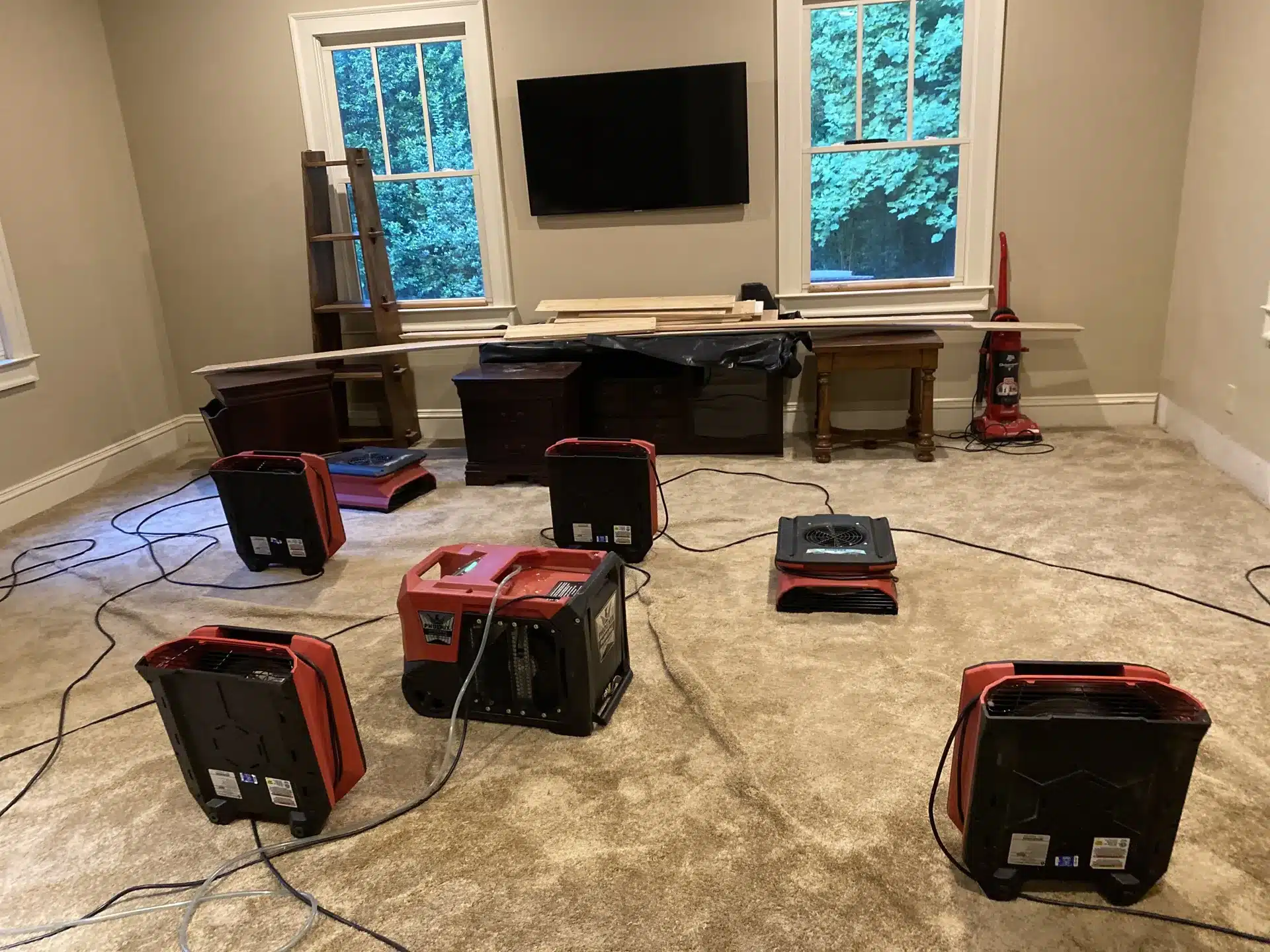
Air movers push moisture into the air. Something has to take it out.
Without dehumidification, evaporated water just condenses somewhere cooler, usually inside a wall. The size and type of equipment decide whether a building actually dries.
Three kinds of dehumidifier, and when each is wrong.
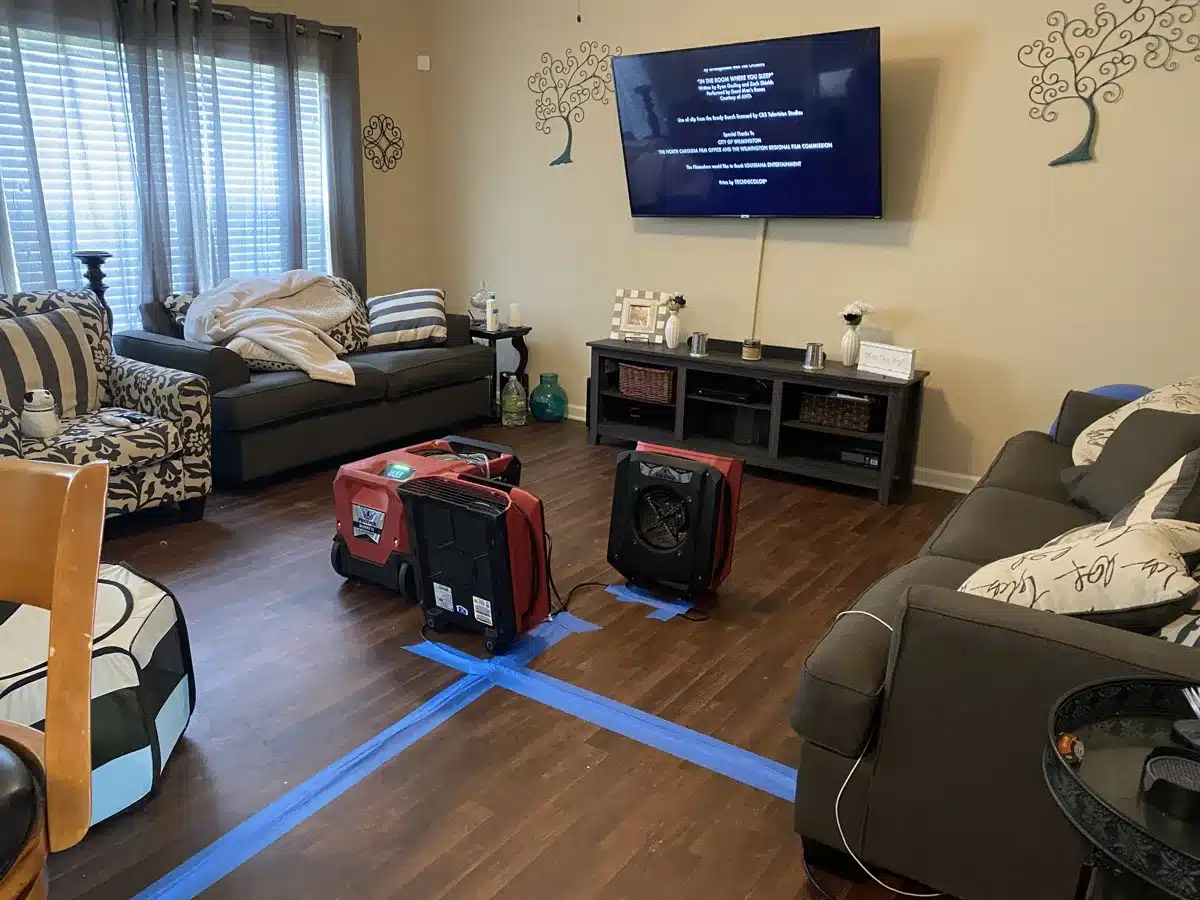
Standard refrigerant dehumidifiers cool air below its dew point so moisture condenses out. They work well in warm, humid conditions, which describes Georgia for much of the year, but they slow down as the air gets drier and cooler. That's exactly the condition at the end of a drying job, when the last moisture is hardest to move.
Low-grain refrigerant (LGR) units pre-cool the incoming air, so they keep pulling moisture at much lower humidity. That makes them the workhorse for most homes here, because they stay productive through the end of the job instead of stalling.
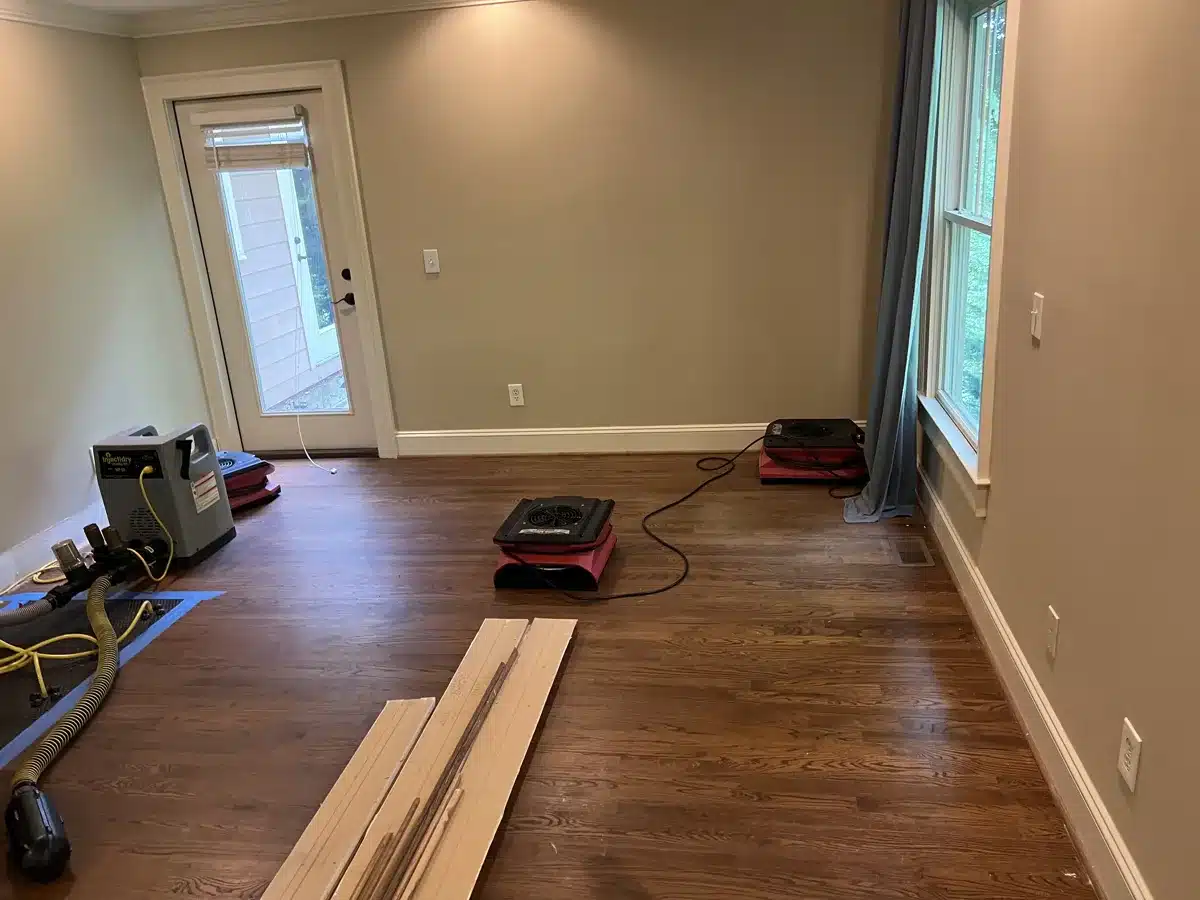
Desiccant dehumidifiers use an absorbent material instead of condensation, so they work in cold conditions and drive humidity much lower. That matters for crawlspaces, unheated spaces, winter losses, large commercial spaces and dense materials like hardwood and plaster. Choosing wrong doesn't just slow a job: a standard unit in a cold crawlspace produces almost nothing while the hardwood it was meant to dry cups in the meantime.
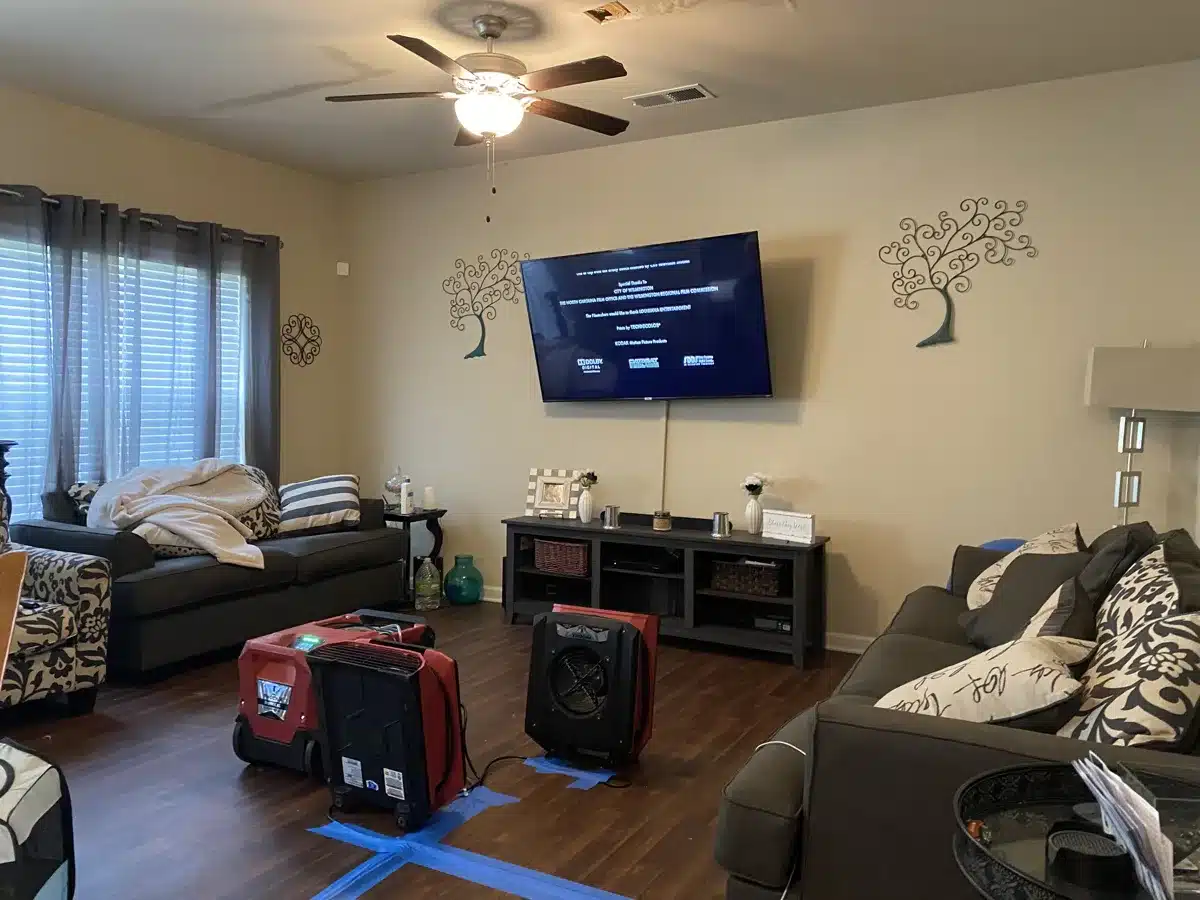
Containment makes the equipment work harder.
Dehumidifying an open house means dehumidifying the whole house. Sealing off the drying area concentrates the equipment on the space that needs it, drops humidity faster and cuts both the equipment count and the run time.
It also stops moisture moving into rooms that weren't affected.
More water damage services.
 Emergency Water ServicesIf water is moving through your property right now, the next hour matters more than any decision you make this week.
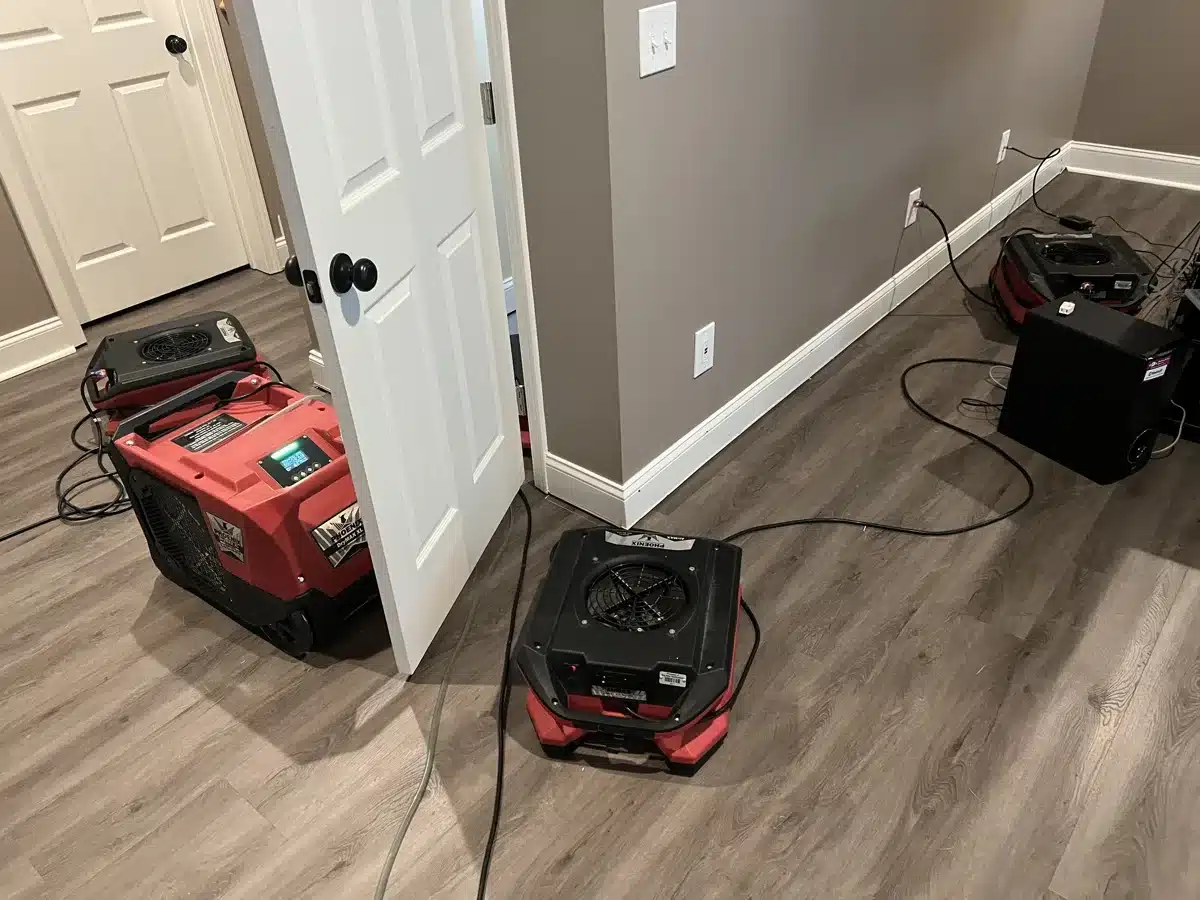 Water Removal & ExtractionExtraction is the cheapest, fastest stage of a water loss.
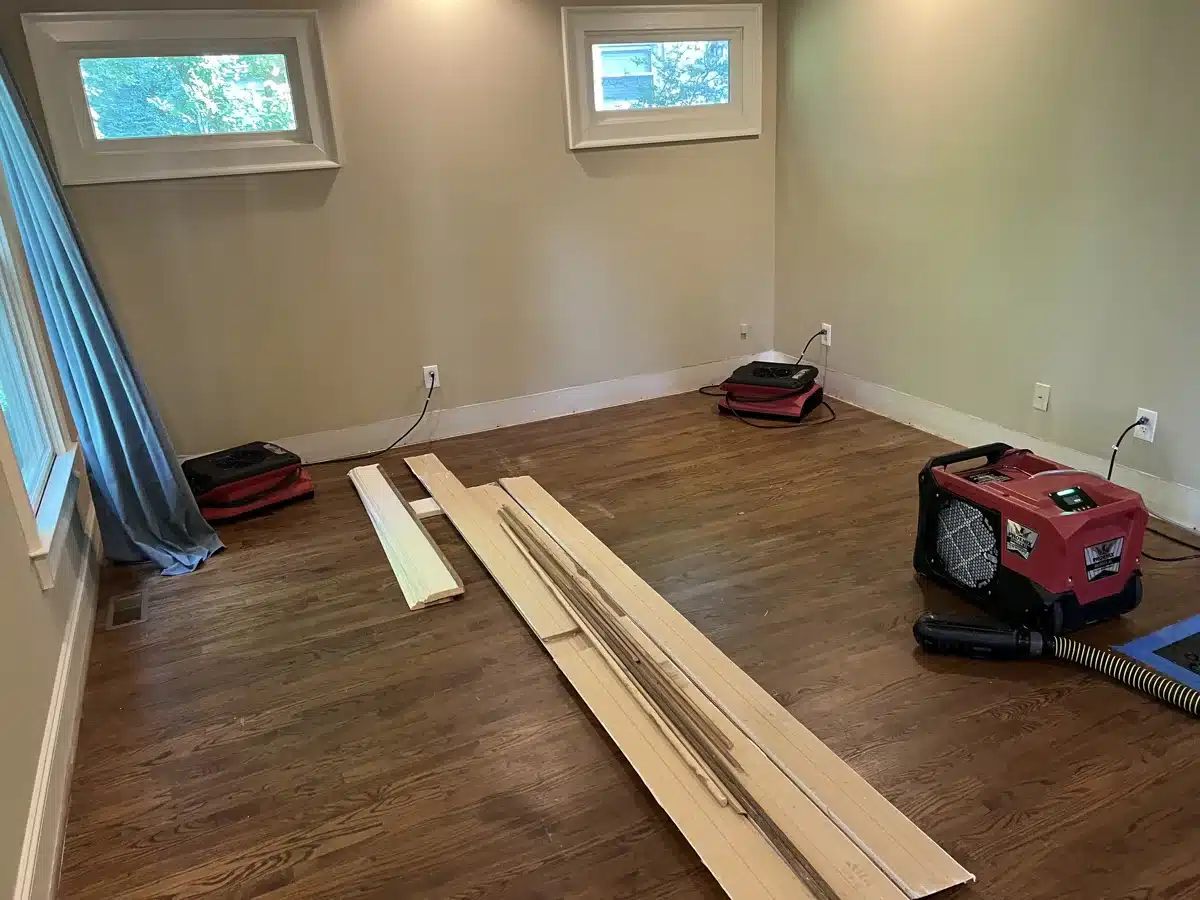
 Structural DryingFraming, subfloor and drywall hold water long after the surface feels dry.
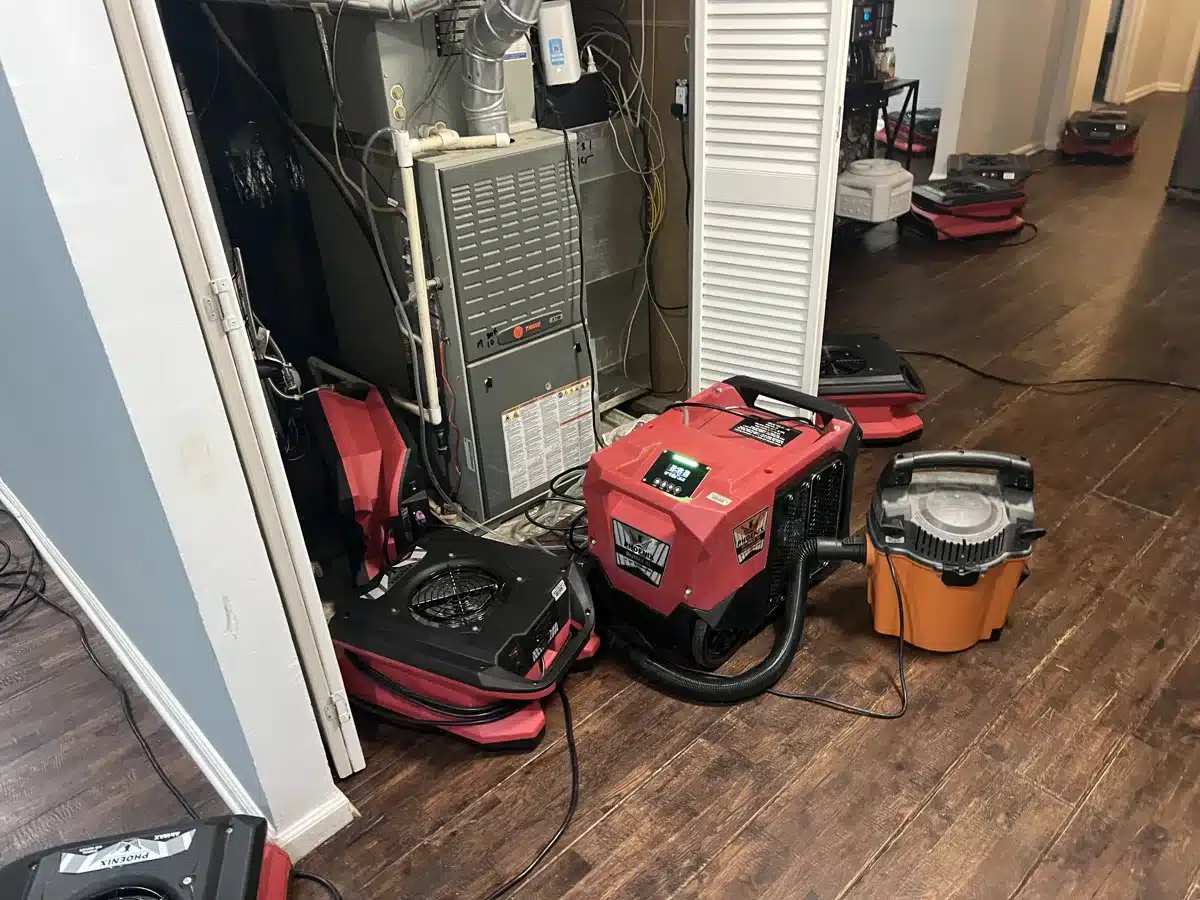 Thermal Imaging & Moisture InspectionInfrared shows where moisture has traveled without tearing anything out.
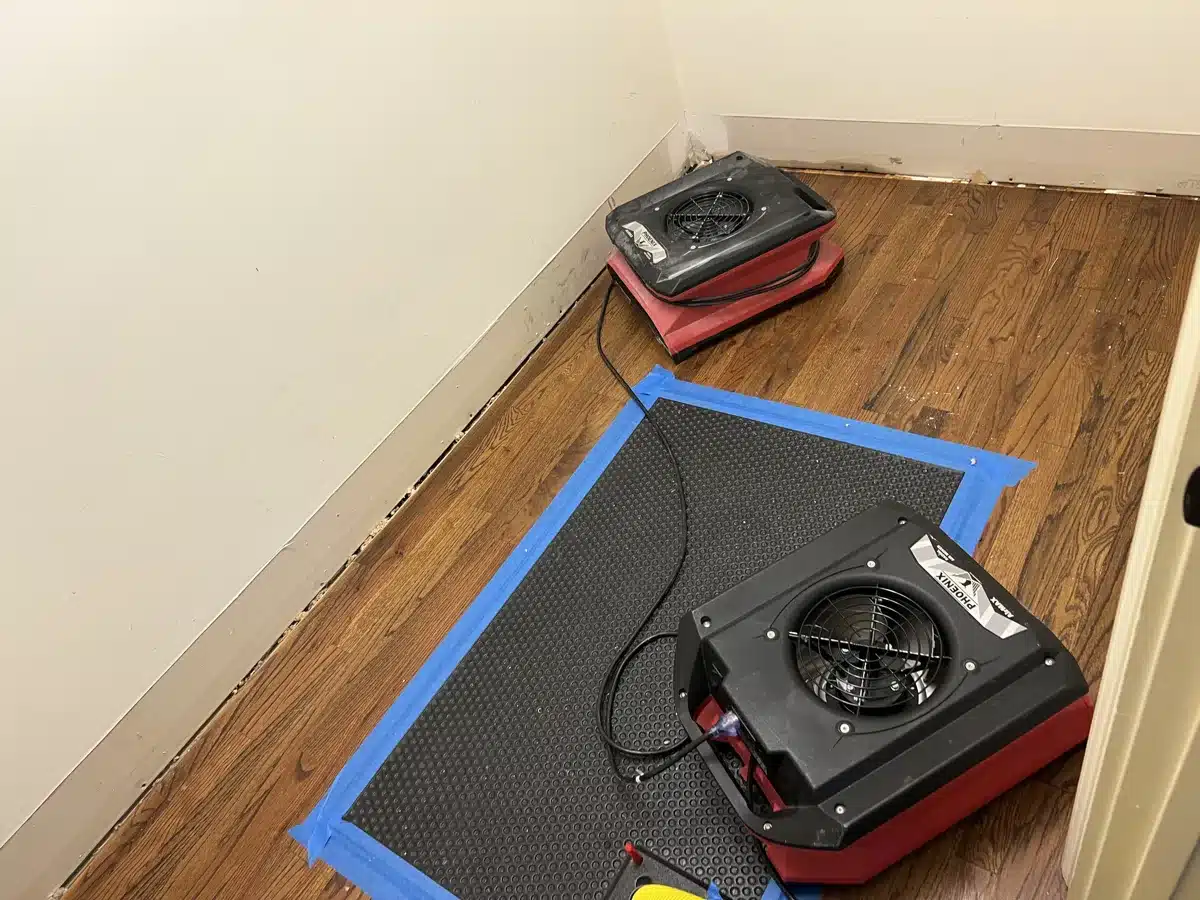 Disinfection & Antimicrobial TreatmentWater that came through an appliance, a drain or a flooded yard leaves more behind than moisture.
 Water Damage overviewHow we handle water damage from the first call to the rebuild.