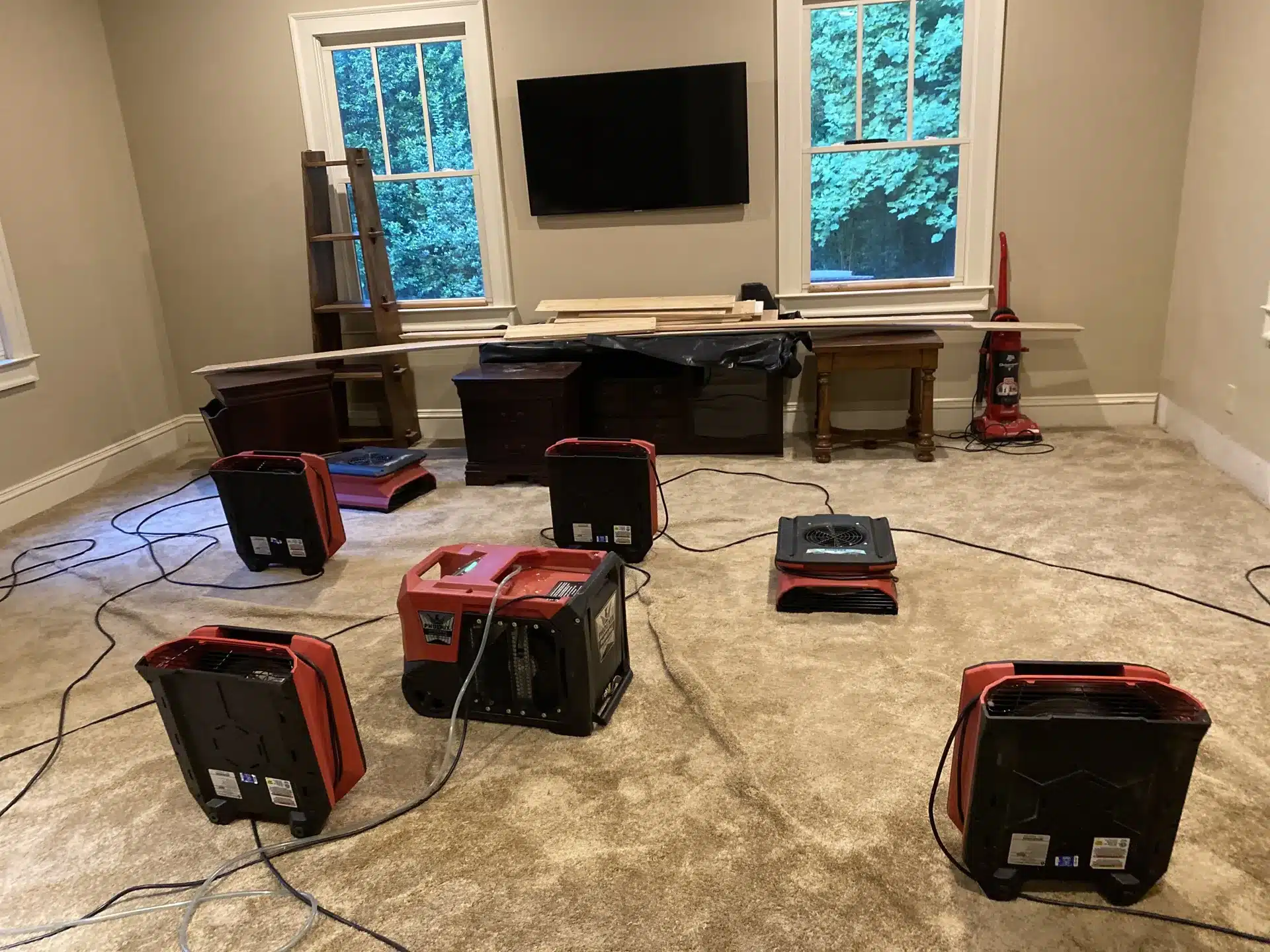
Find it before you open the wall.
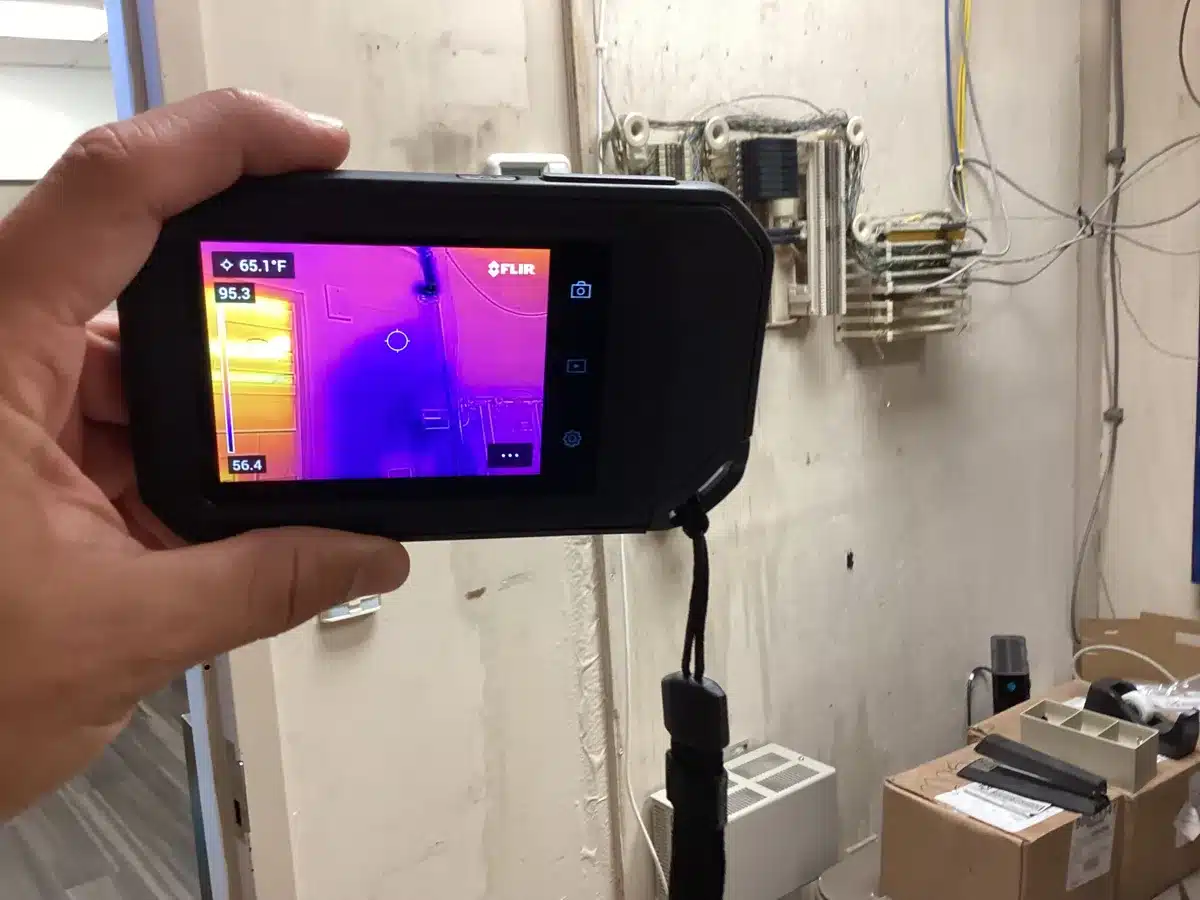
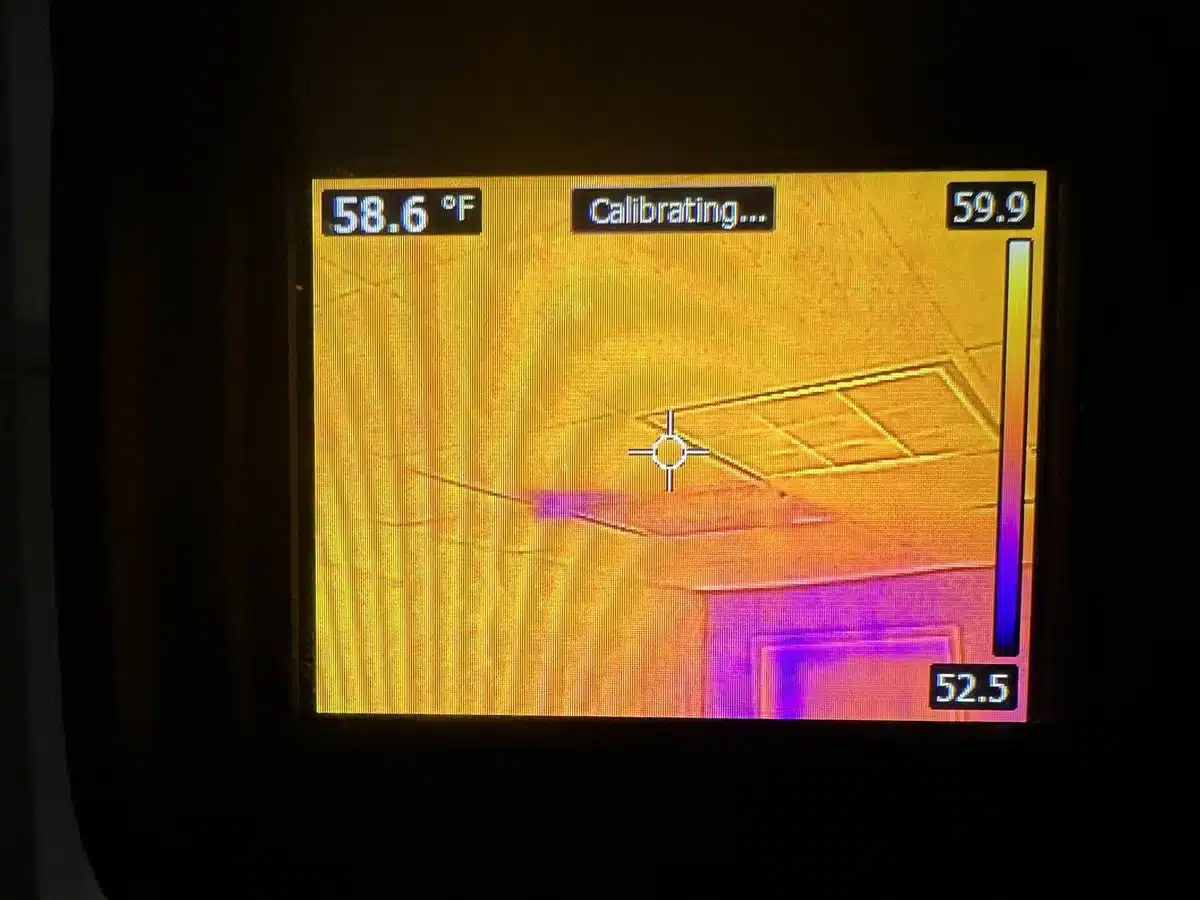
Infrared shows where moisture has traveled without tearing anything out. Less exploratory demolition means less to rebuild, a smaller claim and a shorter job.
What infrared actually sees, and what it doesn't.

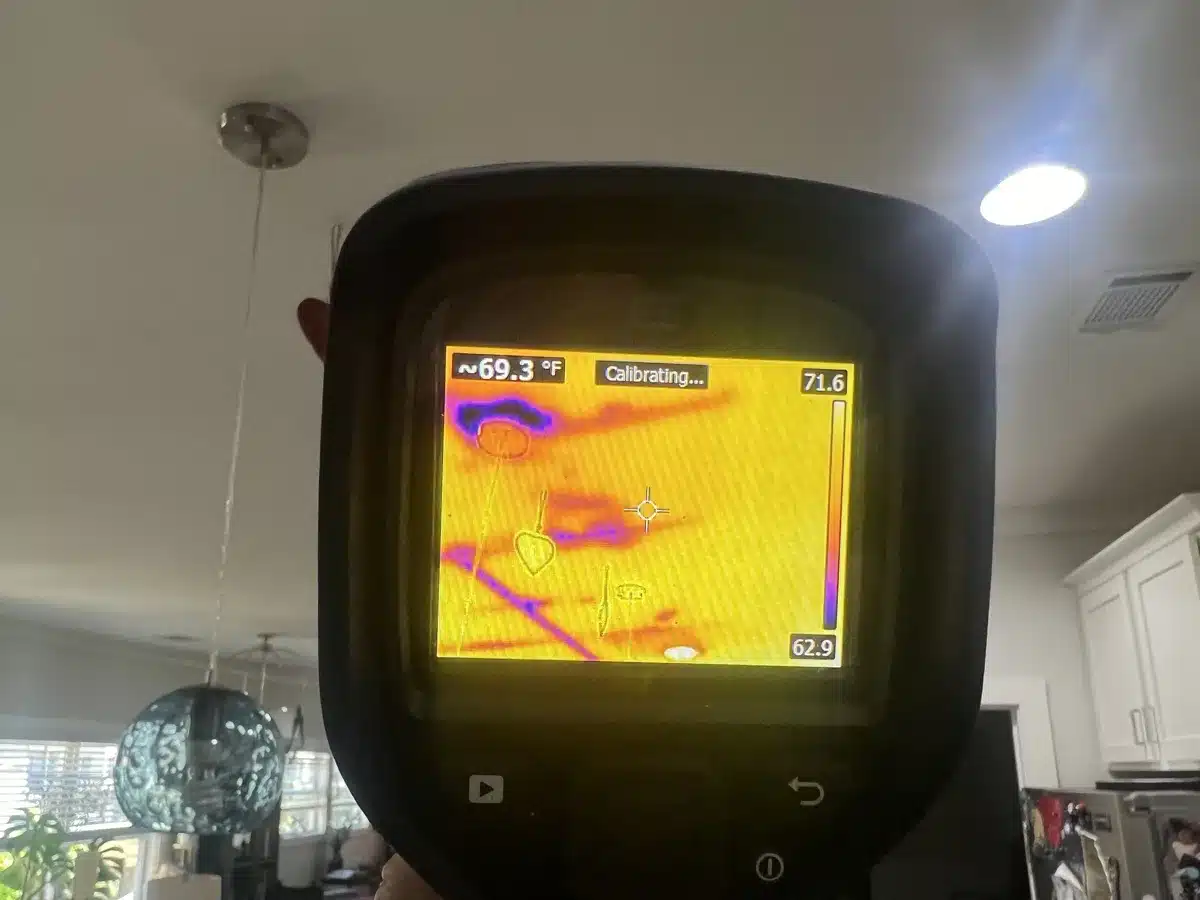
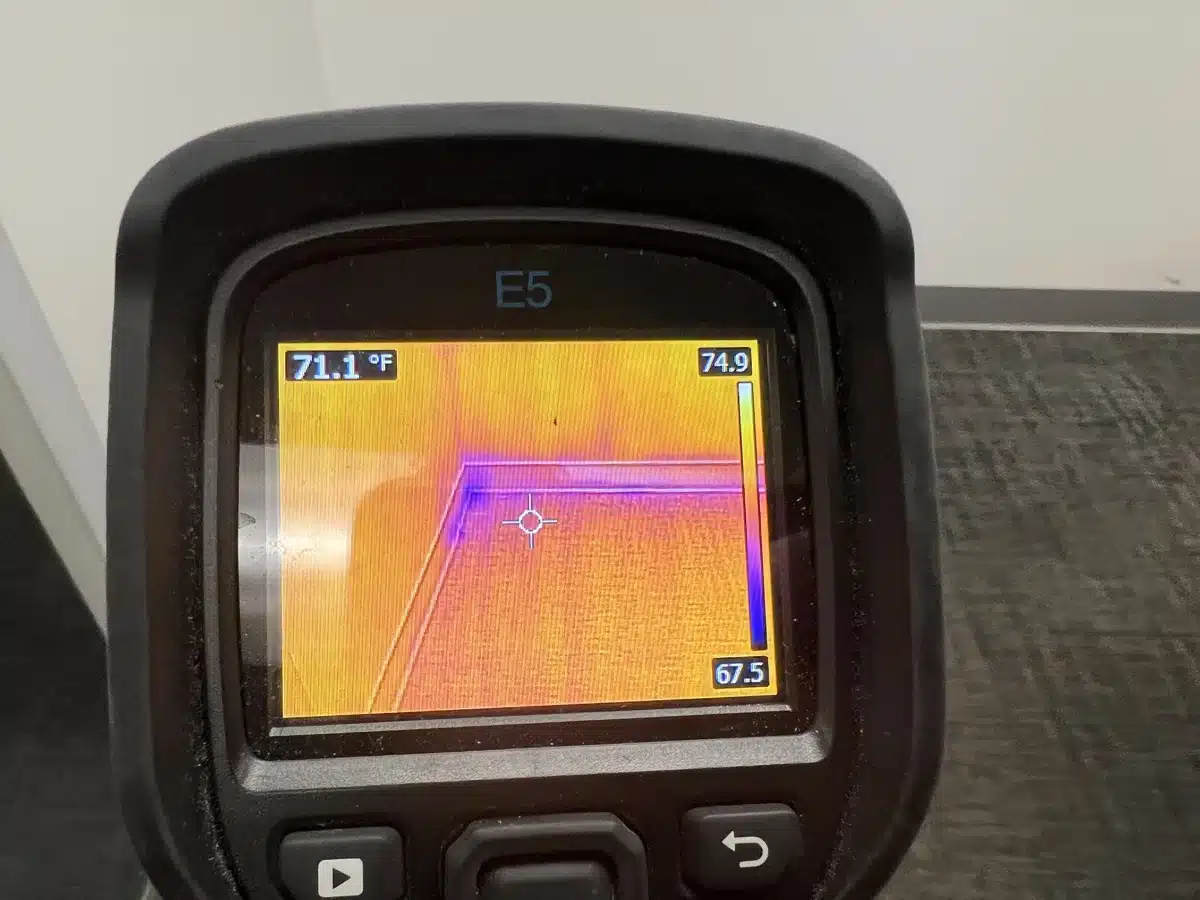
A thermal camera doesn't detect moisture. It detects surface temperature. Wet materials read cooler than dry ones because evaporation removes heat, and that difference shows up on screen.
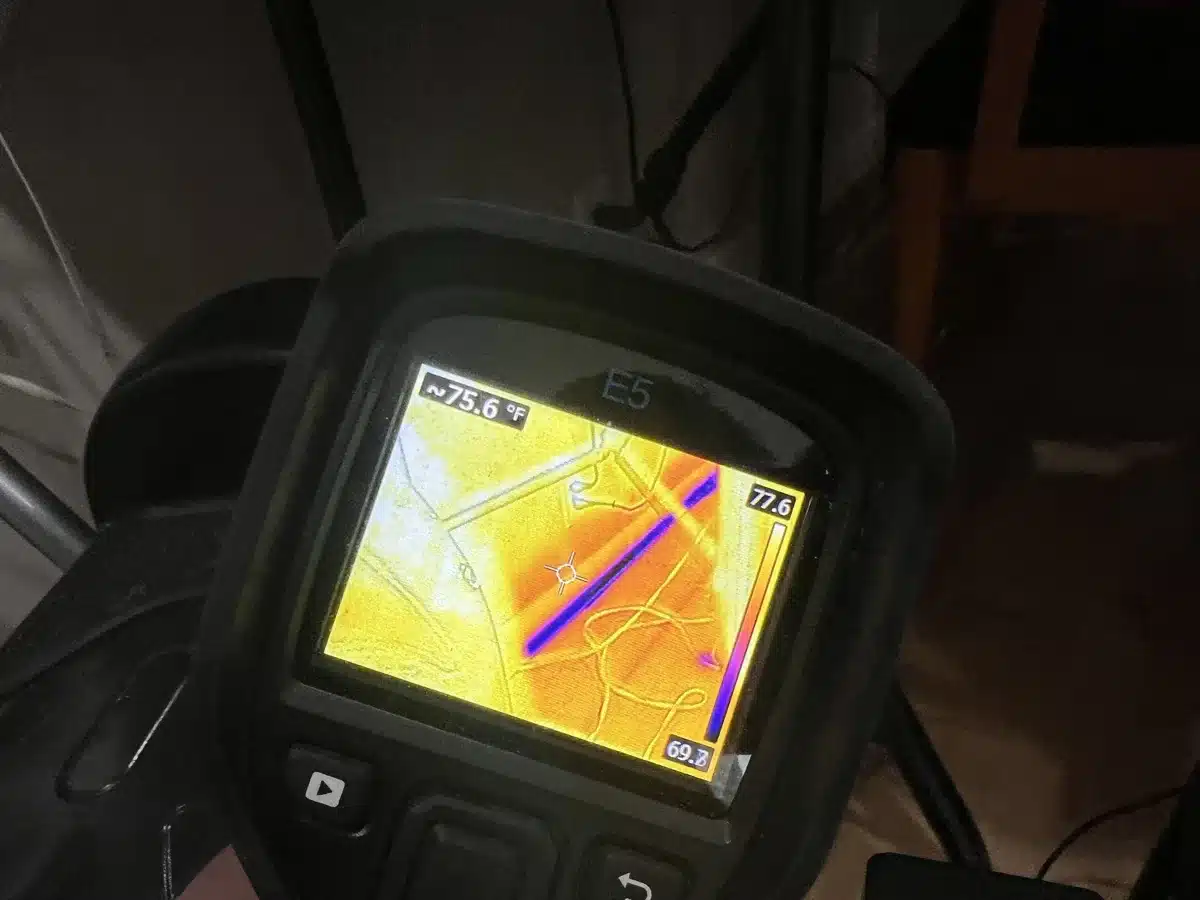
That matters, because plenty of other things also create temperature differences: missing insulation, a duct behind the drywall, a cold-water pipe, a stud, sun on an outside wall. All of them can look like moisture to an untrained eye. Anyone who declares a wall wet from the camera alone is guessing.
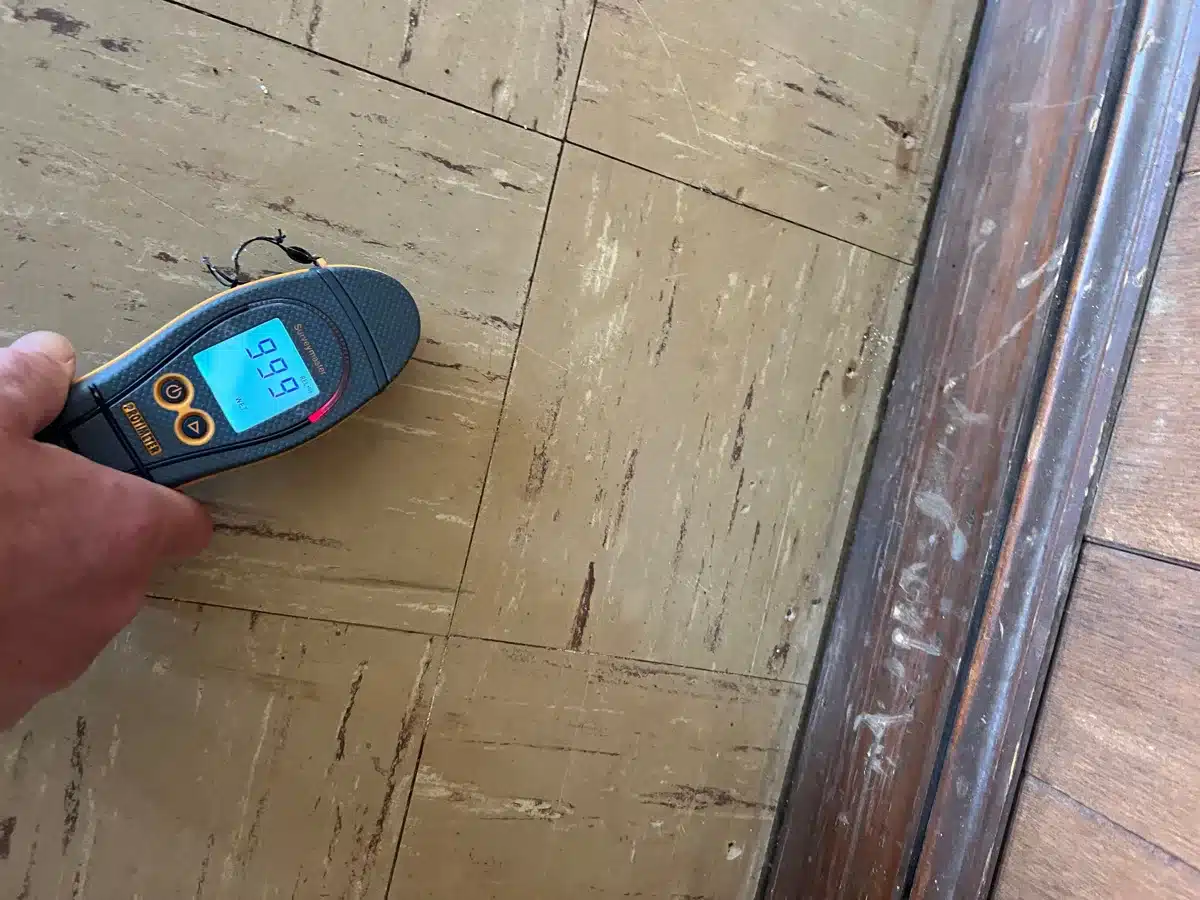
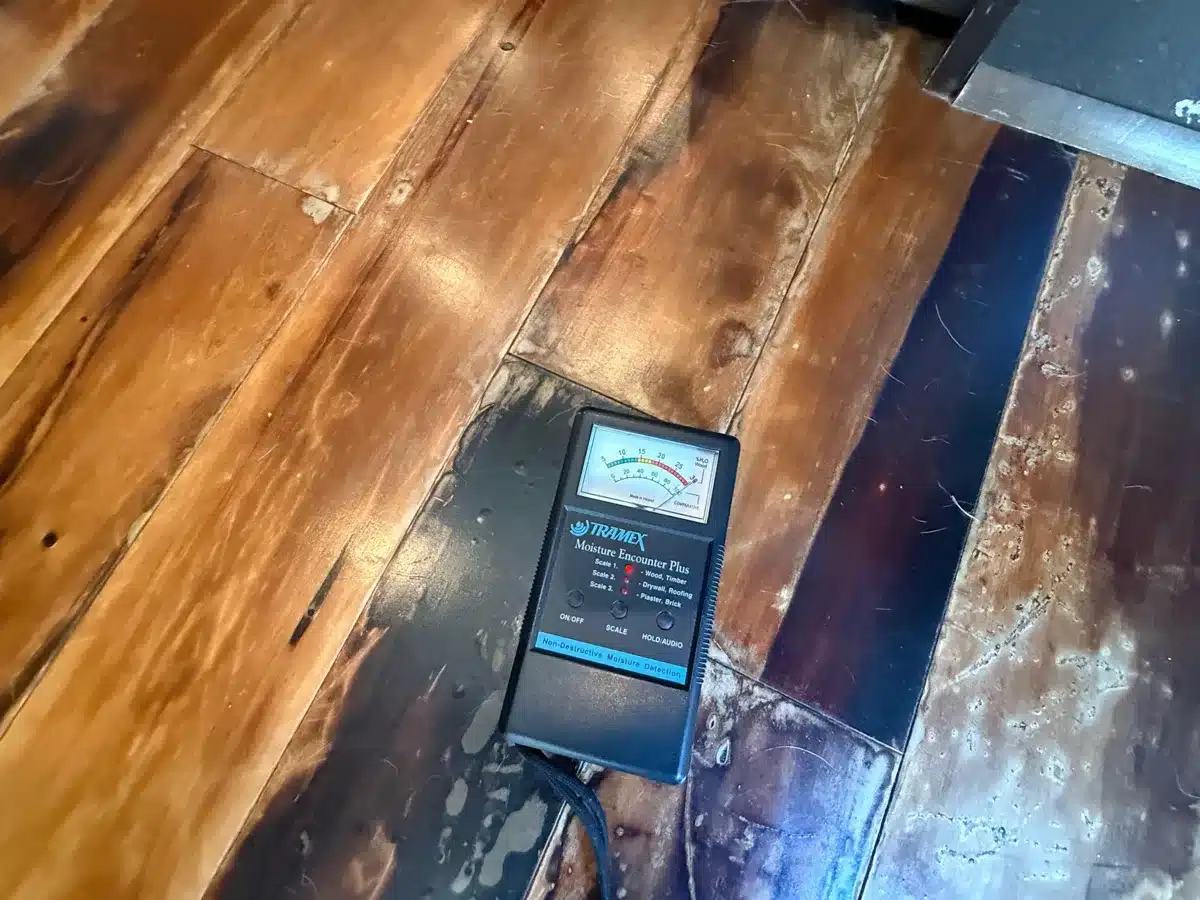
So infrared is a survey tool, not a verdict. It tells us where to put a meter. A pinless meter reads moisture through the surface without marking it, and a pin meter confirms the actual moisture inside the material. The camera narrows the search; the meters make the call. Done properly, it means opening only what has to come out, which on a big loss is the difference between replacing a ceiling and replacing part of it.
The affected area is bigger than the wet patch.
Water that enters at one point travels along framing and under flooring, and often shows up some distance from where it actually went.
Mapping first prevents the two expensive mistakes: cutting out material that would have dried, and burying wet material behind new drywall.
More water damage services.
 Emergency Water ServicesIf water is moving through your property right now, the next hour matters more than any decision you make this week.
 Water Removal & ExtractionExtraction is the cheapest, fastest stage of a water loss.
 Structural DryingFraming, subfloor and drywall hold water long after the surface feels dry.
 DehumidificationWithout dehumidification, evaporated water just condenses somewhere cooler, usually inside a wall.
 Disinfection & Antimicrobial TreatmentWater that came through an appliance, a drain or a flooded yard leaves more behind than moisture.
 Water Damage overviewHow we handle water damage from the first call to the rebuild.