Fire Damage Restoration Company Serving Cumming GA Homeowners.
A house fire leaves more than char and ash. Smoke and soot keep damaging surfaces for days after the flames are out, and water from suppression soaks into walls and floors. The right restoration company documents everything, stabilizes the structure fast, and works through the insurance process with you so the home is restored right.
Soot follows airflow into wall cavities, up through ceiling openings and straight into the return ducts. Rooms with no fire damage often need cleaning.
Skip the HVAC system, and the first time the air handler runs it spreads residue across a freshly cleaned house.
Call a restoration company before you re-enter. A fire changes structural integrity in ways you cannot see from the door.
Soot is acidic. Every hour it sits on metal, fabric, and drywall increases the damage.
Water from fire suppression is Category 1 at first but can degrade quickly. It needs extraction and drying alongside the fire work.
Documentation matters to your adjuster. Timestamped photos and written logs protect your claim.
One team handling board-up, drying, cleaning, and repair keeps the job on track and the paperwork clean.
Start here
What Happens to Your Home After a Fire in Cumming.
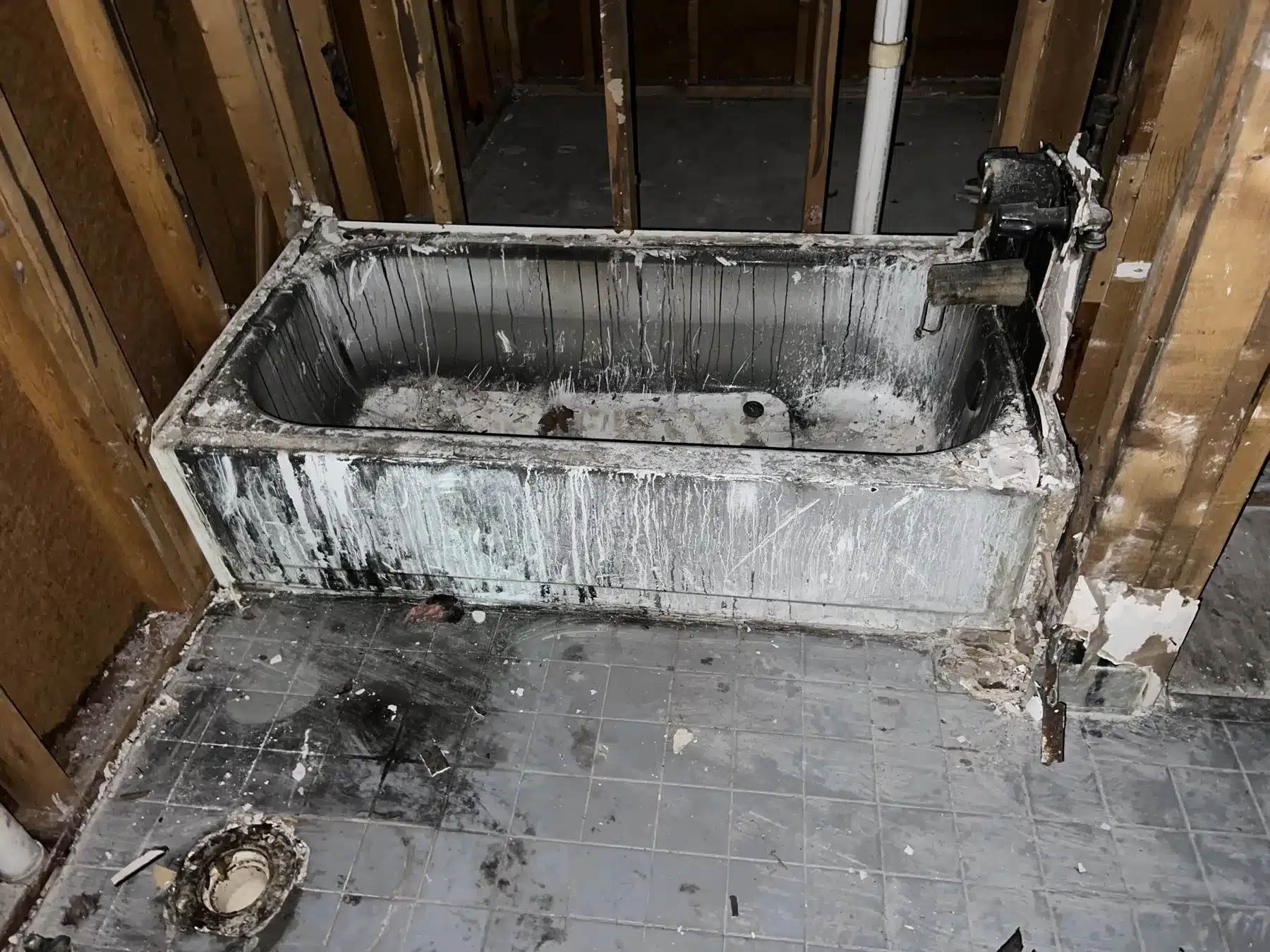
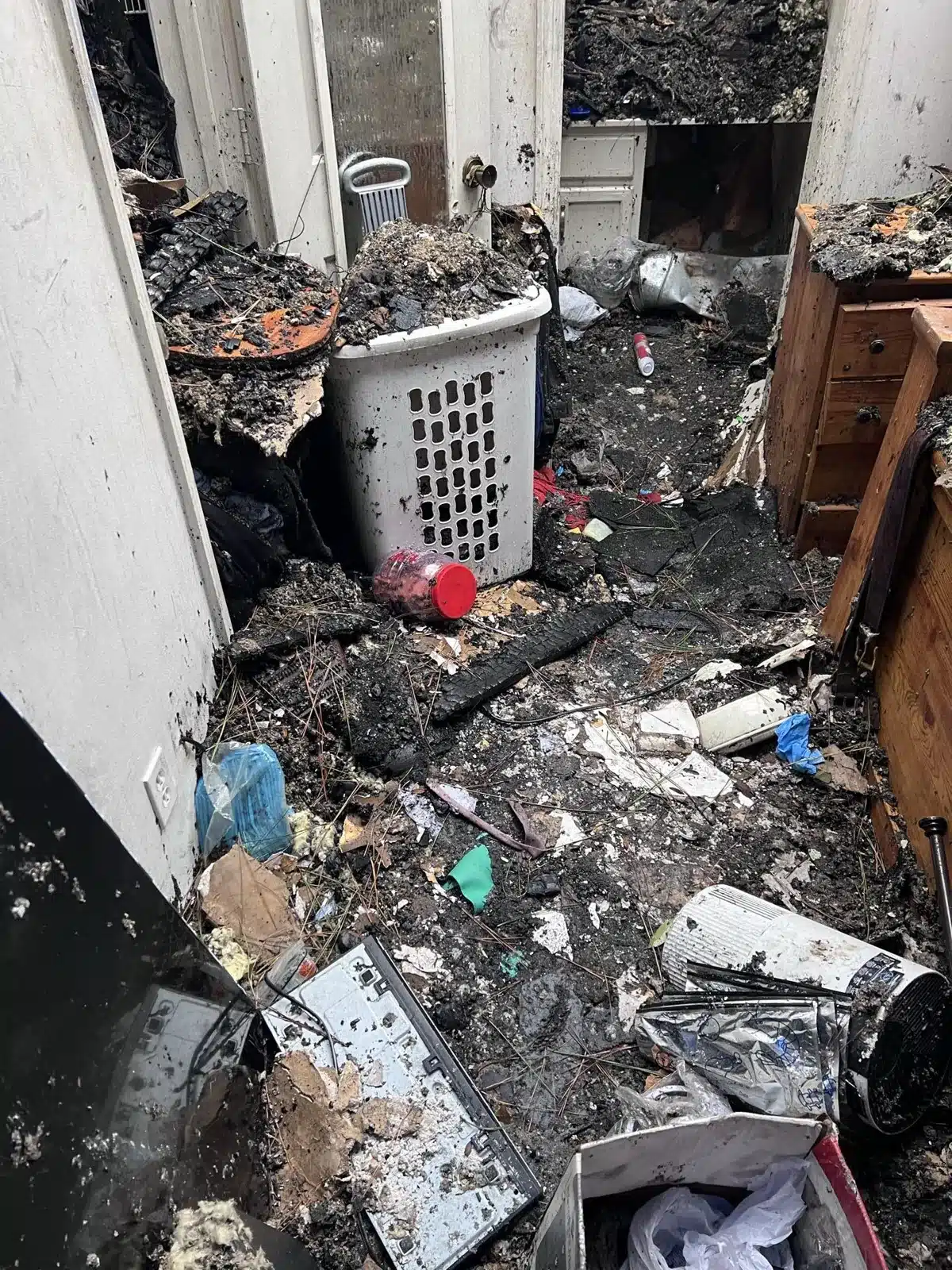
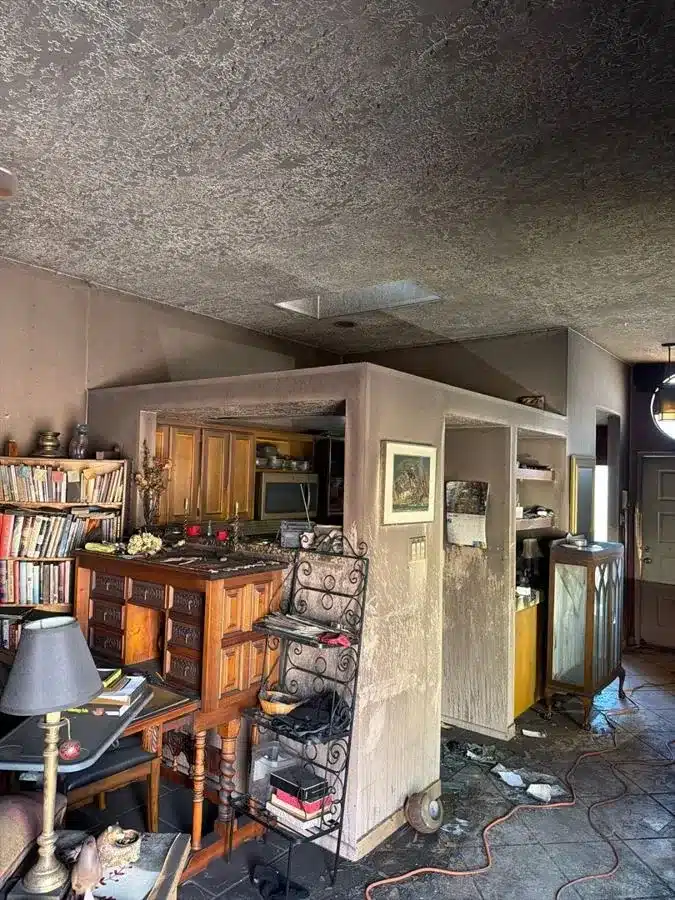
If you have had a fire at your home in Cumming or anywhere in Forsyth County, you are dealing with more than the visible burn area. Smoke travels through every gap in a wall. Soot settles on surfaces two and three rooms away from the origin. The chemicals in that soot are corrosive. Drywall absorbs odor deep into the paper facing.
24 hours
Chrome fixtures can begin to pit within 24 hours.
48 to 72 hours
Wood framing takes on the smell and, if wet from suppression water, begins to support mold growth within 48 to 72 hours.
Suppression water is a separate problem running alongside the fire damage. It is classified as Category 1 water at the moment it leaves the hose, but it picks up contaminants from burned materials fast. That water sits in wall cavities, under subfloor, and in insulation. Without extraction and structural drying, that moisture becomes a second claim on top of the first. We treat both problems at the same time, from day one.
How the job runs
Three stages, one team.
Tap a stage to read exactly what happens and why.
What We Do in the First 24 Hours.
The first step is stabilization. If the structure has compromised walls, a damaged roof, or broken windows, we do an emergency board-up and tarp to stop additional exposure. We document before we touch anything: timestamped photos of every room, every surface, and every affected system. That record goes to your adjuster as part of a clear, organized claim file.
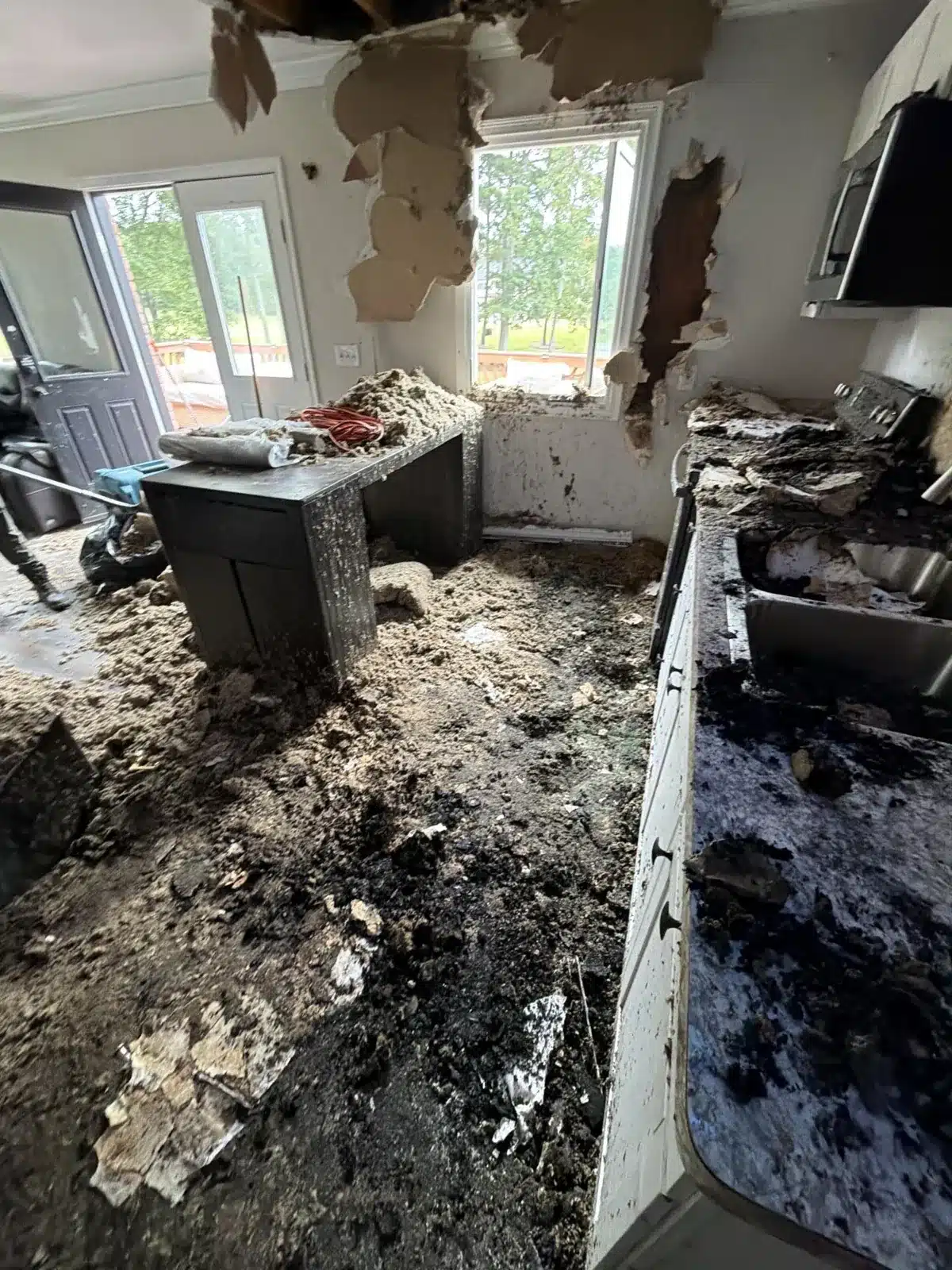
Next comes moisture mapping. We use thermal imaging and calibrated moisture meters to find water hidden inside walls and under floors. We map the readings and log them. Then extraction starts, pulling standing water from every affected area. We set drying equipment, take baseline moisture readings, and return every day to log the numbers until materials reach dry standard. Drying to a measured standard means we pull equipment when the data says the structure is dry, not when it looks dry to the eye.
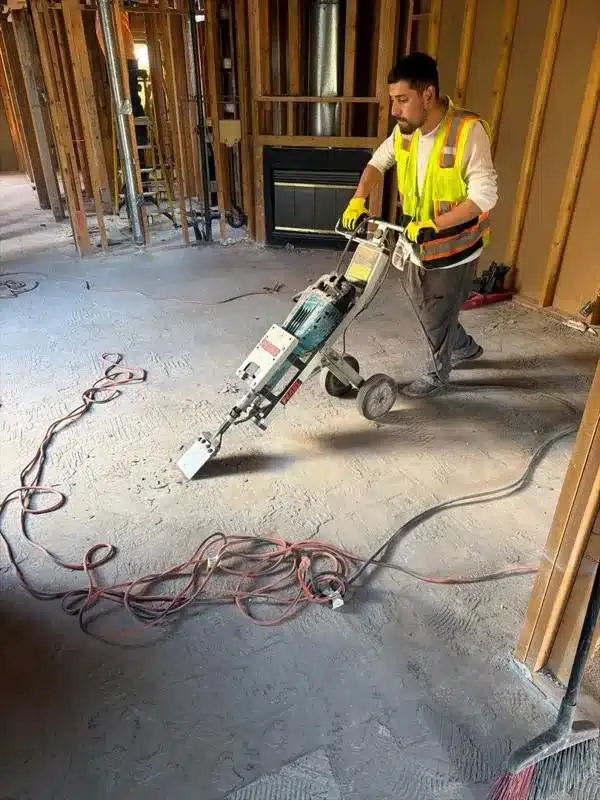
At the same time, we begin controlled demolition of unsalvageable materials. Burned drywall, insulation, and flooring come out in contained areas so soot and debris do not spread to unaffected parts of the home. Everything removed is documented before it leaves the property.
Smoke and Soot Cleaning: Why It Takes Longer Than People Expect.
Smoke cleaning is detailed, slow work. Different surfaces need different methods. Dry sponges on flat painted walls. HEPA vacuuming before any wet cleaning on porous surfaces. Ultrasonic cleaning for small contents like electronics, figurines, or cookware. Thermal fogging or hydroxyl treatment to address odor molecules that have bonded to structural materials.
We test surfaces before we clean them and after. If a wall reads clean on tape testing but still carries odor, we clean it again. The goal is pre-loss condition: the state the home was in before the fire. That standard guides every cleaning decision we make.
Contents that can be restored are inventoried, packed, cleaned off-site, and returned. Contents that cannot be restored are documented with photos and descriptions so your adjuster has a defensible contents list for the claim. We do not decide what is a total loss without documentation to back it up.
Working With Your Insurance Adjuster.
We have worked alongside adjusters on fire claims across Cumming, Alpharetta, and the surrounding north metro Atlanta area. We know what a well-organized claim file looks like. We provide daily drying logs, timestamped photo sets, a written quote within 24 hours of the initial walkthrough, and a clear scope of work that uses industry-standard line items your adjuster recognizes.
We never promise insurance coverage. That decision belongs to your carrier. What we can do is give you documentation that is accurate, complete, and organized so the process moves as smoothly as possible. We talk to your adjuster directly when needed. We answer questions about methodology. We keep records from day one to the final walk-through.
If a supplement is needed because hidden damage is found during demolition, we document the finding, photograph it, and present it in writing before any additional work starts. No surprises on your end or the adjuster's end.
Your insurance claim
Why One Team Matters on a Fire Claim.
Some restoration jobs involve a mitigation company handing off to a separate reconstruction contractor. That handoff creates gaps. Documentation does not always transfer completely. The crew doing the rebuild does not know what was found during drying. Disputes about who is responsible for what slows the job down and complicates the claim.
The same team that did the board-up knows what was found in the walls during moisture mapping. The project lead who spoke with your adjuster is the same person overseeing the rebuild. That continuity keeps the job on schedule and the claim file consistent.
A person answers our line 24 hours a day, every day. If you have had a fire, call before you go back inside.
What we commit toEvery job
We handle fire damage restoration from the first call to the final repair.
We serve homeowners in Cumming and across Forsyth County, as well as Fulton, Cherokee, Cobb, north DeKalb, and west Gwinnett.
We will walk you through what to expect, honestly, before any work begins.
Questions
Common questions, answered straight.
Still not sure? Ask the advisor in the corner, it can look at a photo too, or call and a person will answer.
How soon should I call a fire damage restoration company after a fire in Cumming?
Call as soon as the fire department clears the property. Soot begins corroding surfaces within hours. The sooner extraction, board-up, and stabilization begin, the more of the home and its contents can be saved. Waiting even a day increases secondary damage from both soot and suppression water.
Is it safe to go back inside my home after a fire?
Not until a professional has assessed the structure. Fire can compromise load-bearing walls, floor joists, and roof members in ways that are not obvious from the outside. We do a safety walk before any other work begins and document any structural concerns before you re-enter.
Will my homeowner's insurance cover fire damage restoration?
Most standard homeowner's policies cover fire damage restoration, but coverage details vary by policy and carrier. We never promise coverage outcomes. What we do is provide thorough, accurate documentation so your adjuster has what they need to process the claim efficiently. We recommend calling your carrier to open the claim while we begin the initial assessment.
What is the difference between fire damage restoration and cleanup?
Cleanup typically refers to removing debris and ash. Restoration is the full process: emergency stabilization, extraction of suppression water, structural drying to a measured standard, smoke and soot cleaning on all affected surfaces, odor treatment, and rebuilding damaged areas back to pre-loss condition. Fire damage restoration is a complete, documented process, not a one-day job.
How long does fire damage restoration take?
It depends on the size of the fire, the extent of smoke migration, how much suppression water entered the structure, and the scope of repairs needed. Mitigation, meaning stabilization, drying, and cleaning, often takes one to two weeks. Reconstruction varies widely. We give you a written timeline with the quote so you know what to expect at each stage.
Do you handle both the mitigation and the rebuild after a fire?
Yes. One team, from the first call to the final repair. We handle board-up, extraction, structural drying, smoke cleaning, contents packing, and full reconstruction. Having one team on the job keeps the documentation consistent, reduces delays, and gives you a single point of contact throughout the process.
Can I start cleaning myself?
Please don't. The wrong method on the wrong residue sets the damage permanently.
Do the ducts need cleaning?
Almost always after a significant fire, and always after a furnace puff-back.
Why does it smell worse on humid days?
Moisture reactivates residue in porous materials. A smell that comes back in summer means untreated residue somewhere.
Can everything be cleaned?
Most hard surfaces, yes. Heavily soot-soaked porous materials are often cheaper to replace than clean, and we scope that honestly.
If you are dealing with fire damage at your home in Cumming or anywhere in north metro Atlanta, the first step is a call. A person answers 24 hours a day at (470) 201-2929. We will ask you a few questions about what happened, tell you honestly what to expect, and get a team to your property fast. We document before we touch anything, dry to a measured standard, and stay on the job through every stage of the fire damage restoration process until your home is restored right. Call (470) 201-2929 now.
A person answers, 24 hours a day, every day of the year
We contact your insurer directly and send you a written quote
 What to Do FirstIf your home or business in Cherokee County has fire damage, the first hours matter.Learn more
 What to ExpectA house fire leaves more than char and ash.Learn more
 Contents Cleaning & Pack-OutThe structure is the visible loss.Learn more
 Fire & Smoke CleanupThe type of soot decides the method.Learn more
 Fire Damage overviewSmoke and soot keep working long after the trucks leave.Learn more